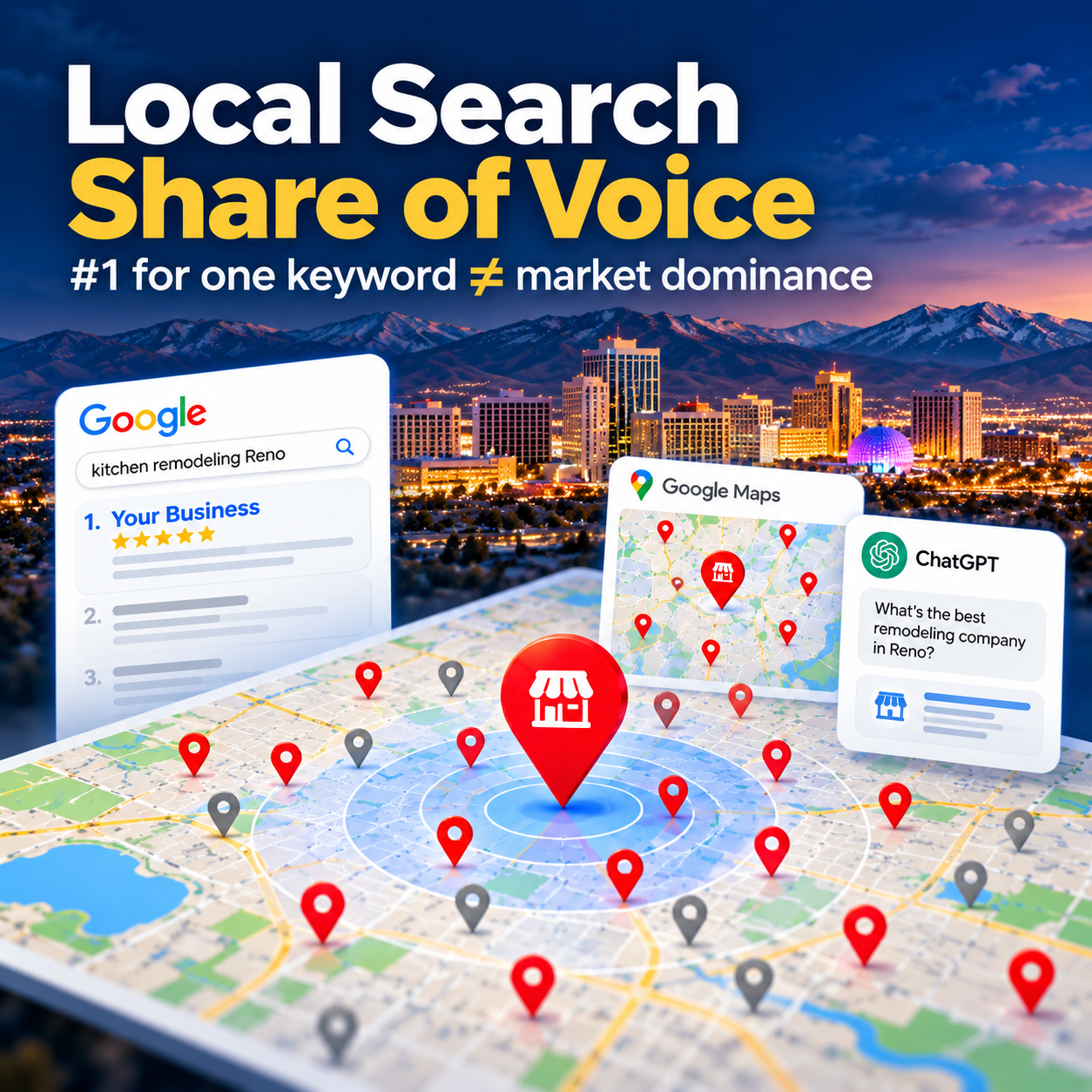
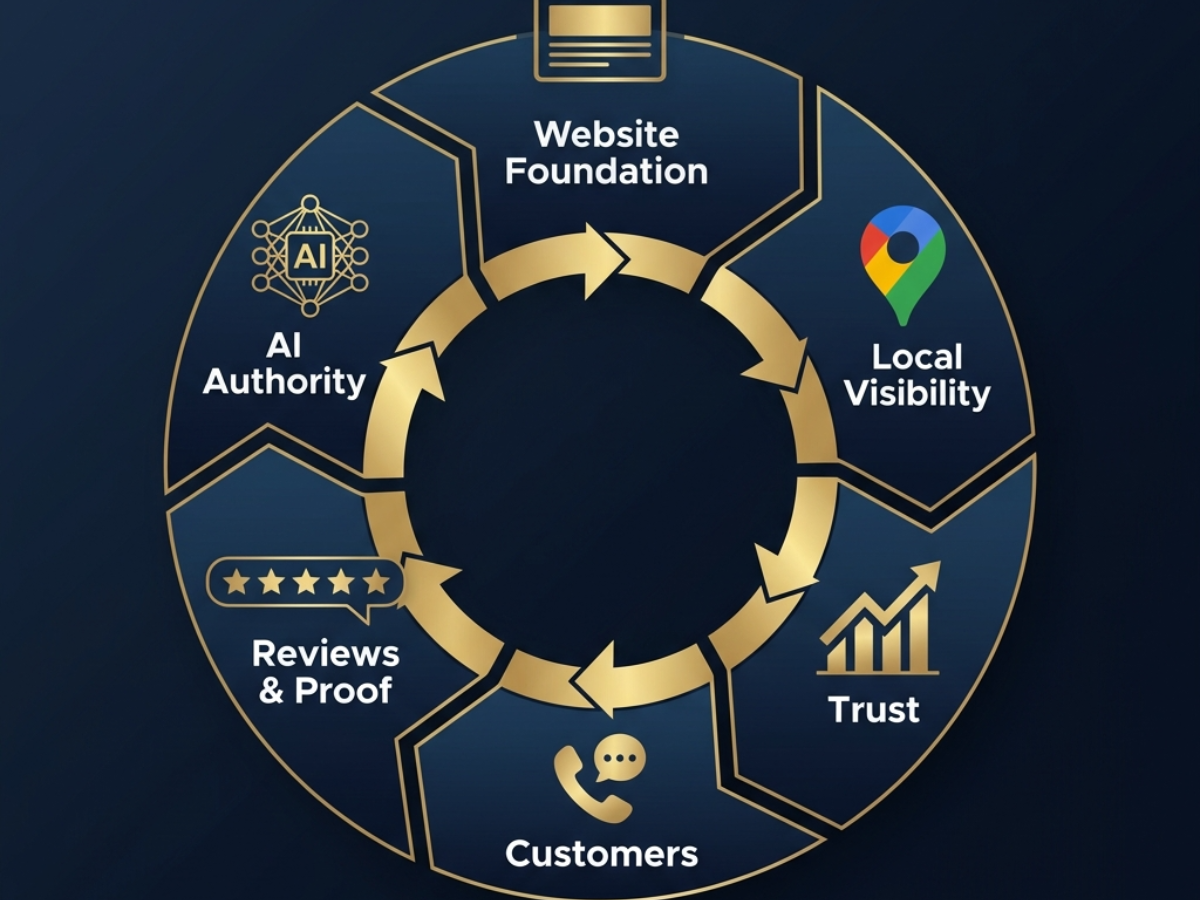
Google Maps rankings now drive more high-intent local traffic than traditional organic search results for many businesses. For local businesses, appearing in the Local Pack, the map-based results that appear at the top of Google Search, can be more valuable than ranking on page one through conventional SEO alone.
Every business owner wants to be found on Google. For years, that meant chasing page-one rankings with blog posts, backlinks, and keyword strategies. But something has quietly shifted. When someone searches "coffee shop near me" or "Reno plumber open now," they rarely scroll past the map.
That map and the three businesses listed beneath it are called the Local Pack. Getting there is no longer optional for local businesses. It's the difference between being seen and being skipped.
Google Maps rankings are increasingly the frontline of local search visibility. Traditional SEO still matters. But for businesses that serve customers in a specific area, Google Maps optimization has become the higher-leverage strategy, and most business owners don't realize it yet.
This guide breaks down why Maps rankings matter more than ever, how they differ from traditional SEO, and what you can do right now to improve your local visibility.
Why Google Maps Drives Higher-Intent Traffic Than Organic Search
Search intent tells you why someone is searching, and Maps searches reveal some of the most valuable intent signals available. A person who types "Italian restaurant Reno" is not doing research. They're hungry, they want to go somewhere specific, and they're about to make a decision.
That behavioral pattern is why Google continues to prioritize Maps results for commercial searches. According to Google, 76% of people who search for something nearby on a smartphone visit a related business within a day. Nearly 30% of those searches result in a purchase.
Compare that to informational blog traffic. A reader who finds your article through organic search may appreciate your content, subscribe to your newsletter, and come back in six months, or never. Maps traffic converts differently. It brings people through your door.
"Near me" searches have grown dramatically over the past decade, with Google reporting a 900% increase in "near me tonight/today" searches in a relatively short period. The searches are more specific, the intent is stronger, and the window for conversion is narrower. That's why local businesses need to focus on Google Maps ranking, not just traditional organic results.
Traditional SEO vs. Google Maps SEO: What's the Difference?
Traditional SEO and Google Maps SEO share some common ground; both reward relevance, authority, and quality content, but they operate through different ranking systems and require different strategies.
Traditional SEO focuses on your website. Ranking factors include:
- On-page optimization (keywords, headings, meta tags)
- Backlink authority and domain reputation
- Content quality, depth, and freshness
- Technical performance (page speed, mobile-friendliness)
Google Maps SEO, on the other hand, is centered on your
Google Business Profile (GBP),
a separate entity from your website. Google's local ranking algorithm evaluates three core factors:
relevance,
distance, and
prominence.
Relevance refers to how well your profile matches the searcher's query. Distance refers to how close your business is to the user or to the location specified in the search. Prominence captures how well-known and trusted your business appears, based on reviews, citations, links, and online activity.
A business with a mediocre website but a fully optimized Google Business Profile can easily outrank a competitor with a polished website but a neglected GBP. That's the fundamental shift.
What Are the Local Ranking Signals That Affect Google Maps Positions?
How your Google Business Profile affects your local ranking
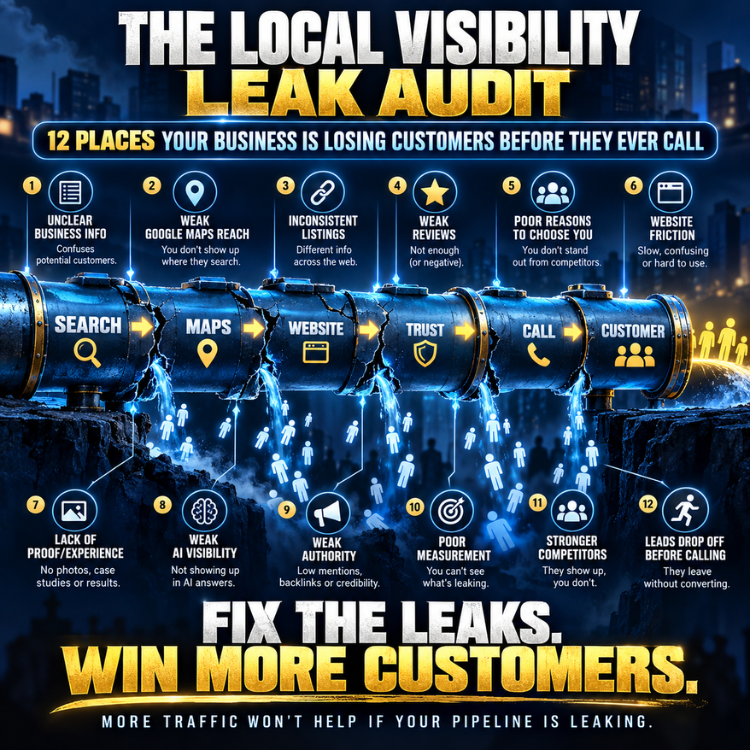
Your Google Business Profile is the foundation of your Maps ranking. An incomplete or poorly maintained profile sends negative signals to Google and erodes trust with potential customers.
Key profile elements that influence ranking include:
- Business name, address, and phone number (NAP): These must be accurate and consistent across every platform.
- Primary and secondary categories: Choose the most specific category available (e.g., "Italian Restaurant" rather than just "Restaurant").
- Business description: Use natural language that includes your primary keywords without stuffing.
- Photos and videos: Profiles with photos receive 42% more requests for directions and 35% more website clicks, according to Google.
- Services and attributes: List every service you offer and every relevant attribute (e.g., "wheelchair accessible," "outdoor seating").
- Regular posts and updates: Active profiles signal relevance and engagement to Google.
For Reno businesses, this means clearly listing your service area, accurately categorizing your business, and keeping your hours updated, especially around local events, holidays, and seasonal changes.
How reviews and behavioral signals influence Local Pack rankings
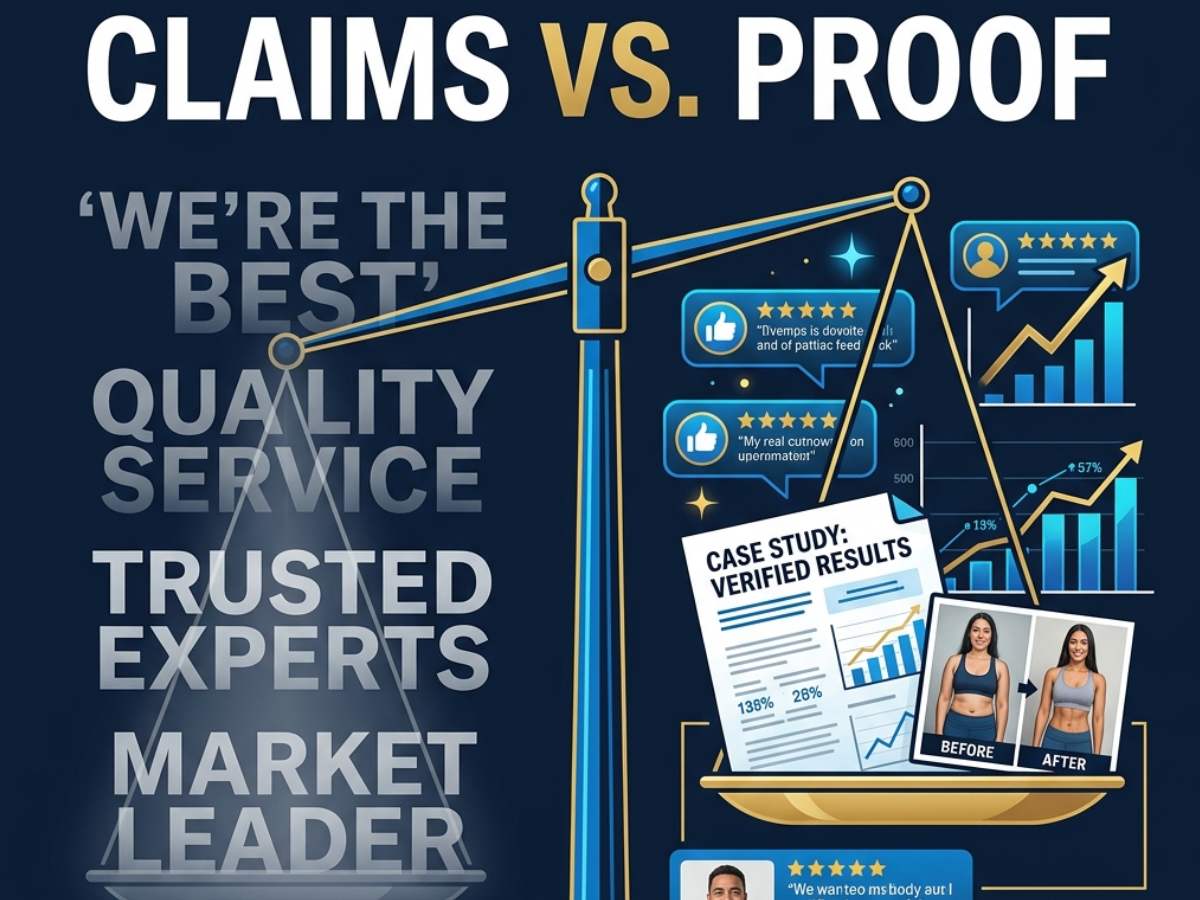
Reviews are among the most powerful ranking signals in local SEO and among the most visible trust indicators for potential customers. Google evaluates review quantity, quality, recency, and diversity.
A Reno-based HVAC company with 200 reviews averaging 4.7 stars will almost always outrank a competitor with 15 reviews, regardless of how good the competitor's website is.
What matters beyond star ratings:
- Review velocity: A steady stream of new reviews signals ongoing activity.
- Review responses: Businesses that respond to reviews, especially negative ones, demonstrate accountability. Google favors active, engaged profiles.
- Keywords in reviews: When customers mention specific services ("They fixed my AC quickly") or locations ("best mechanic in Reno"), these terms can strengthen your relevance signals.
Behavioral signals also play a role. Google tracks how users interact with your listing, how many people click "call," "get directions," or "visit website." High engagement relative to your competitors can push your ranking upward.
How Citations and NAP Consistency Support Google Maps Rankings
A citation is any online mention of your business's name, address, and phone number. Directories like Yelp, the Better Business Bureau, Apple Maps, and industry-specific platforms all contribute to your local authority.
Consistency matters here. If your address appears as "123 Main St" on Google but "123 Main Street, Suite A" on Yelp and "123 Main St." elsewhere, Google's algorithms may struggle to confirm your business's legitimacy. Those discrepancies can suppress your Maps ranking.
Audit your citations regularly and correct any inconsistencies. For Reno businesses, prioritize locally relevant directories, regional chambers of commerce, neighborhood business associations, Nevada-specific platforms, and national directories.
How AI Tools Use Google Maps Data in Local Search Results
This is where the future becomes relevant. AI-powered search tools, including Google's AI Overviews, ChatGPT with browsing enabled, and Google Gemini, are increasingly pulling structured local data to answer queries like "What's the best plumber in Reno?" or "Find a dog groomer open Sunday near me."
Google's AI systems rely heavily on Google Business Profile data, structured citations, and review sentiment when generating location-based recommendations. A business with a clean, complete, and well-reviewed GBP is far more likely to surface in AI-generated answers than one with sparse or inaccurate information.
This is why GEO (Generative Engine Optimization) for local businesses starts with the same fundamentals as Maps SEO: complete your profile, generate consistent reviews, maintain citation accuracy, and keep your information current. These signals don't just feed Google Maps; they feed the AI systems learning from that data.
How to Measure Google Maps SEO Success
Tracking Maps performance requires different tools than those used for traditional SEO analytics.
Google Business Profile Insights provides data on:
- Search queries that triggered your listing
- Total profile views (Search vs. Maps)
- Actions taken (calls, direction requests, website clicks)
- Photo views compared to competitor averages
Local ranking trackers such as BrightLocal and Whitespark allow you to monitor your Local Pack position for target keywords across different zip codes or neighborhoods. For a Reno business, this means checking your ranking in different parts of the city, central Reno, Sparks, South Reno, not just at your business address.
Track these metrics monthly and correlate changes with profile updates, review surges, or citation corrections. That feedback loop is what separates businesses that improve systematically from those guessing in the dark.
Your Next Step for Local Search Visibility
Google Maps rankings aren't a niche tactic or a secondary concern for local businesses; they're the primary battleground for local search visibility, and that trend is accelerating. As AI-powered search becomes more mainstream, structured local data will carry even more weight in determining which businesses get found and which get overlooked.
Start with a full
Google Business Profile audit. Verify your categories, update your services, add recent photos, and develop a consistent strategy for generating new reviews. Then audit your citations and correct any inconsistencies. These foundational steps can produce meaningful ranking improvements within weeks.
If you're a Reno-area business or operate anywhere with strong local competition, the question is no longer whether to invest in Google Maps optimization; it's how quickly you can start.