The way customers find local businesses is changing fast. Gone are the days when ranking on Google's first page was the only goal. Today, AI-powered tools like ChatGPT, Google AI Overviews, Gemini, and Siri are answering customer questions directly, often without users ever clicking a link.
If your business isn't optimized for these AI-driven experiences, you're invisible to a growing segment of your market. This guide explains what Generative Engine Optimization (GEO) is, why it matters right now, and exactly what you can do to make your business the one AI tools recommend, feature, and trust.
What Is Generative Engine Optimization (GEO)?
Generative Engine Optimization is the practice of structuring your website, content, and online presence so AI-powered search engines can easily understand, trust, and surface your business in their responses.
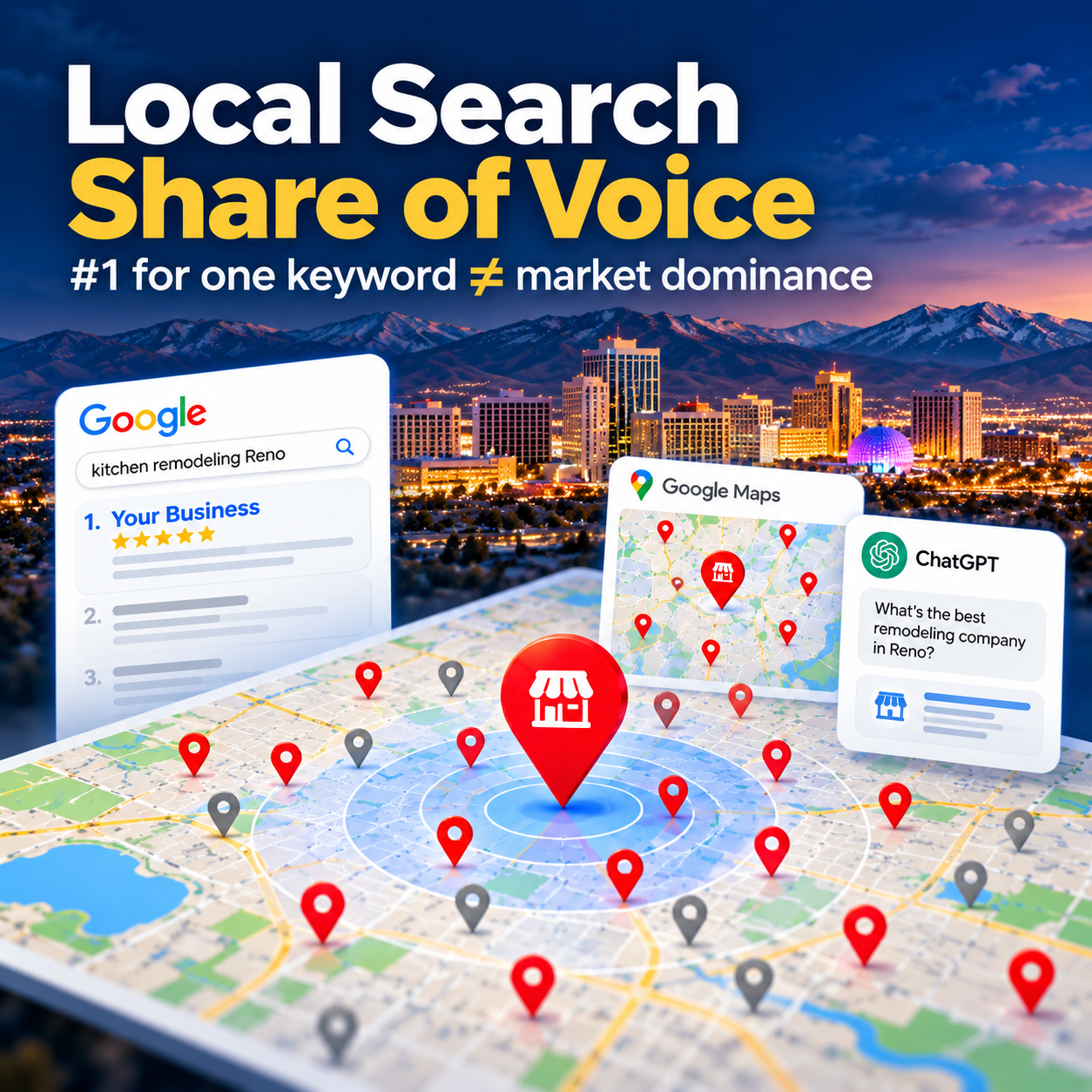
Traditional SEO focused on getting Google to rank your pages. GEO goes further. It ensures that when someone asks ChatGPT "Who's the best HVAC contractor near Reno?" or asks Alexa "What's a good local dentist?" — your business is the answer that comes back.
Why GEO Matters for Local Businesses Right Now
AI search tools are now handling questions that once directed users directly to your website. Google AI Overviews appear at the top of search results and summarize answers before users see any organic links. Voice assistants respond with one answer, not ten options.
This shift means:
- Fewer clicks to your site if you're not the featured source
- More visibility for businesses whose content AI tools trust and understand
- Higher-quality leads because users who find you through AI recommendations are already informed and intent-driven
Small businesses that adapt now build a lasting competitive advantage. Those who wait will find it much harder to catch up.
How AI-Powered Search Tools Decide What to Recommend
Understanding what AI engines look for helps you optimize effectively. Here's what drives GEO visibility:
1. Content That Directly Answers Questions
AI tools scan content for clear, direct answers. If your web pages beat around the bush, AI systems skip you. Write content that mirrors the exact questions your customers ask and gives crisp, accurate answers.
Example: Instead of a vague service description like "We offer roofing solutions for residential clients," write: "We repair and replace residential roofs in Reno, NV, including flat roofs, shingles, and metal roofing. Most projects are completed within one to three days."
2. Structured, Scannable Content
AI systems process well-organized content more efficiently. Use:
- Clear H1, H2, and H3 headings
- Bullet points and numbered lists
- Short paragraphs (two to four sentences)
- FAQ sections that mirror real search queries
3. Entity Authority and Consistency
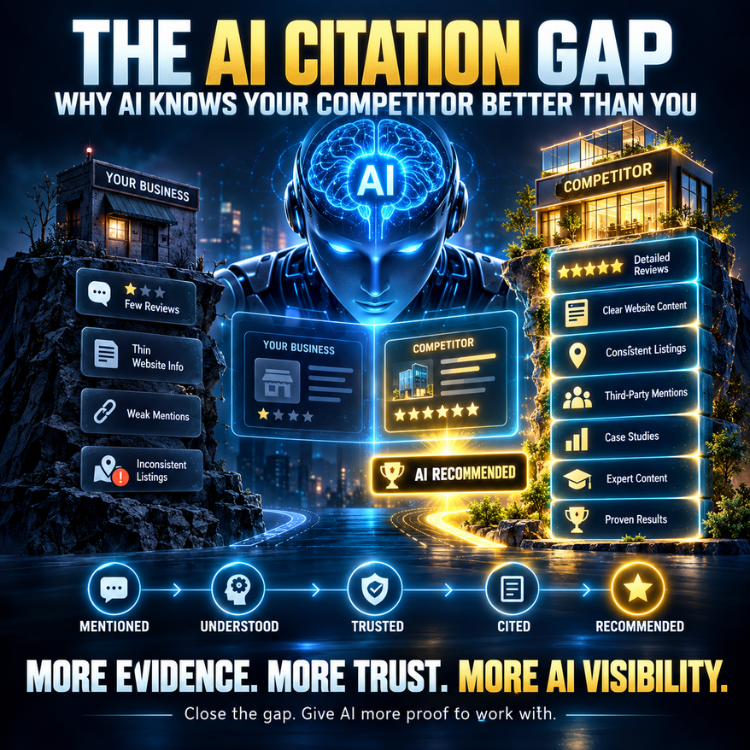
AI engines verify your business against multiple sources. Consistent business information — your name, address, phone number, website, and hours — across every platform signals legitimacy and trustworthiness.
4. Reviews and Social Proof
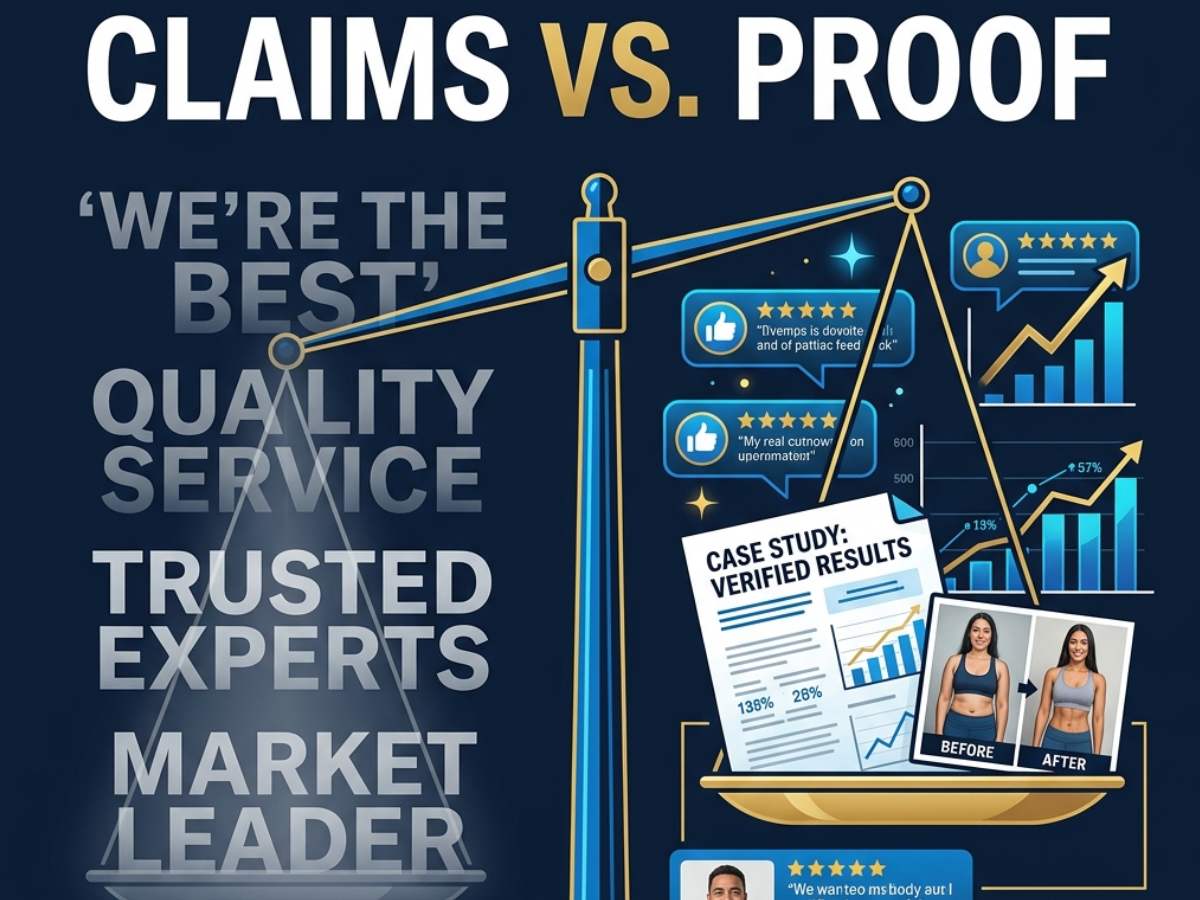
AI tools prioritize businesses that real customers validate. A steady flow of authentic, detailed reviews strengthens your authority in AI-generated recommendations.
7 Actionable GEO Strategies for Local Businesses
These are the moves that produce real results. Start with the ones that align most closely with where your business stands today.
1. Optimize Your Google Business Profile Completely
Your Google Business Profile is one of the most powerful GEO assets you have. AI tools pull directly from this data to answer local queries.
Do this:
- Add every relevant service category
- Write a detailed, keyword-rich business description
- Upload fresh photos regularly
- Post updates, offers, and announcements consistently
- Answer every question customers submit in the Q&A section
2. Build a Strong FAQ Section on Your Website
FAQ pages are GEO gold. They mirror the exact way people phrase questions to AI assistants and voice search devices. Every FAQ answer you publish becomes a candidate for an AI-generated response.
Write questions the way your customers actually ask them:
- "How much does it cost to replace a roof in Reno?"
- "What's the difference between local SEO and GEO?"
- "How long does it take to see SEO results?"
Keep answers between 40 and 100 words — direct and complete.
3. Create Location-Specific Content
AI tools understand geography. Pages and blog posts that specifically address your service area build local entity relevance. Mention your city, neighborhood, and surrounding areas naturally throughout your content.
Example: A blog post titled "Reno Homeowners Guide to Water Heater Replacement" performs better in local AI searches than a generic article about water heaters.
4. Maintain Consistent Business Listings Everywhere
Inconsistent business data confuses AI systems and reduces your trustworthiness score. Audit your listings across:
- Google Business Profile
- Yelp
- Bing Places
- Apple Maps
- Industry-specific directories
Every listing should match exactly — the same phone number, the same address format, the same business name.
5. Earn and Respond to Reviews Consistently
Reviews do double duty in GEO. They provide social proof and supply AI systems with natural language descriptions of your business and services. Detailed reviews that mention your services and location carry the most weight.
Do this: Ask satisfied customers to mention the specific service they received and the city in their review. Respond to every review — positive or negative — to show engagement and reliability.
6. Use Conversational Language in Your Content
Voice search and AI chat queries are conversational. People ask AI assistants questions the same way they'd ask a friend. Your content should sound natural and answer those conversational queries clearly.
Shift from: "We provide superior HVAC installation services."
To: "Looking for a reliable HVAC installer in Reno? We install, replace, and maintain heating and cooling systems for homes and businesses throughout Northern Nevada."
7. Add Schema Markup to Your Website
Schema markup is structured code that tells AI systems and search engines exactly what your content means. For local businesses, the most valuable schema types include:
- LocalBusiness schema (name, address, phone, hours)
- FAQPage schema (for your FAQ sections)
- Review schema (for displaying star ratings)
- Service schema (for individual service pages)
If you're not technical, ask your web developer or digital marketing partner to implement these. The payoff in AI visibility is significant.
Common GEO Mistakes to Avoid
Even well-intentioned businesses make these errors. Here's what to watch for:
Inconsistent NAP data: Your Name, Address, and Phone number must match exactly across every platform. Even minor differences — "St." vs. "Street" — can reduce your AI trustworthiness signals.
Ignoring voice search phrasing: Content written only for desktop keyword searches misses voice queries. Include conversational question-and-answer formats throughout your site.
Thin or vague service pages: A page that just says "We offer plumbing services" gives AI systems nothing useful to recommend. Build out detailed, specific service pages for every offering.
No FAQ content: If your site has no FAQ section, you're missing one of the easiest wins in GEO. Add one to your homepage and each major service page.
Neglecting reviews: An outdated or sparse review profile weakens your AI authority. Build a consistent review generation process into your customer follow-up routine.
Putting It All Together: Your GEO Checklist
Use this quick checklist to assess where you stand today:
- Google Business Profile is fully completed and updated
- Business listings are consistent across all major platforms
- Website includes FAQ sections with conversational questions and direct answers
- Service pages are detailed and location-specific
- Schema markup is implemented (LocalBusiness, FAQ, Service)
- Review generation process is active and consistent
- Content uses natural, conversational language throughout
Work through this list systematically. Each completed item strengthens your visibility in AI-powered search experiences.
The Bottom Line
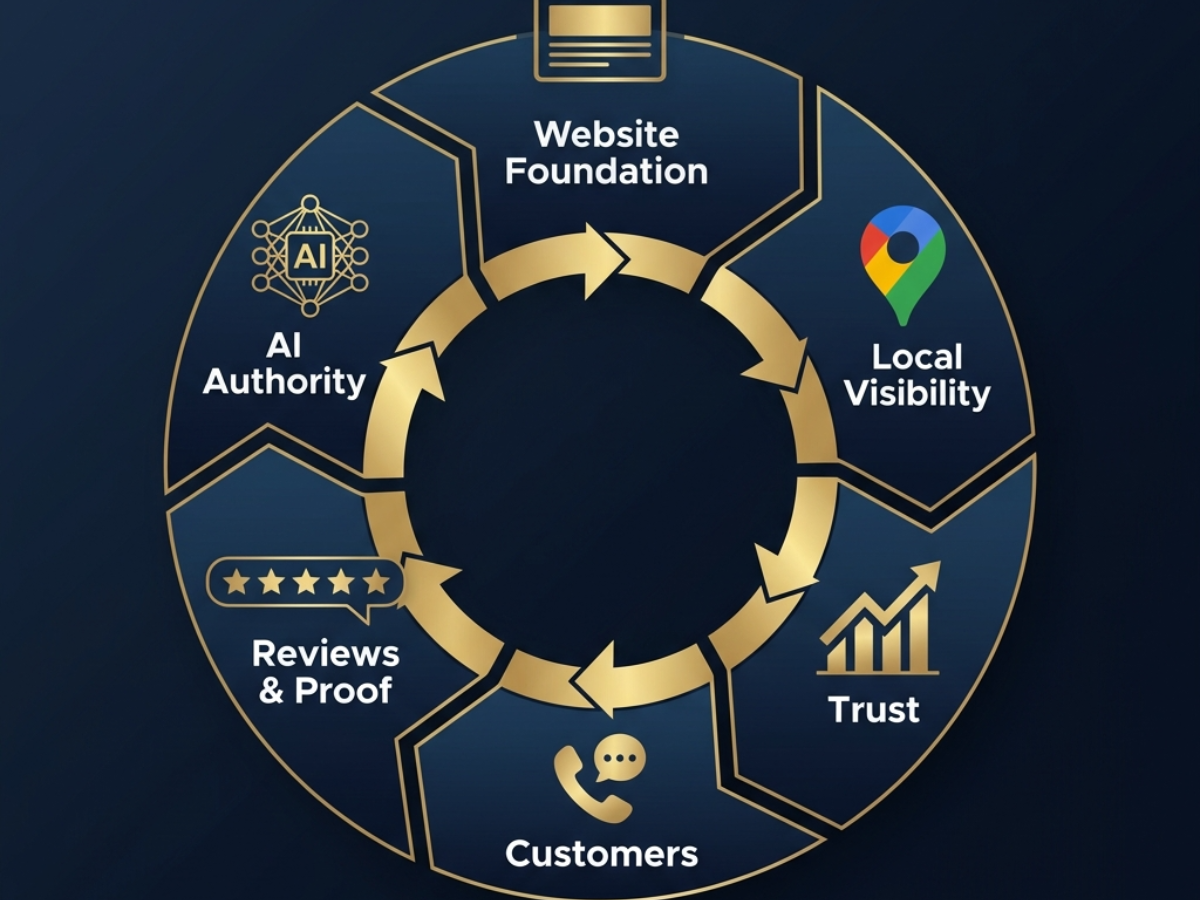
GEO isn't a trend — it's the new foundation of local search visibility. Businesses that structure their content, maintain consistent listings, build genuine authority, and write for real human questions will dominate AI-generated recommendations. Those who don't will find themselves increasingly invisible as AI search continues to grow.
At
Relentless Business Mastery, we love helping local businesses take control of their online presence and turn digital visibility into real revenue. The good news? You don't have to figure this out alone.
Book your free strategy session today, and let our team build a custom GEO and local SEO plan designed specifically for your business and market. Sign up to hear from us about exclusive specials and upcoming events that can help your business stay ahead of every algorithm shift. Reach out anytime, we're here and ready to help your business grow.