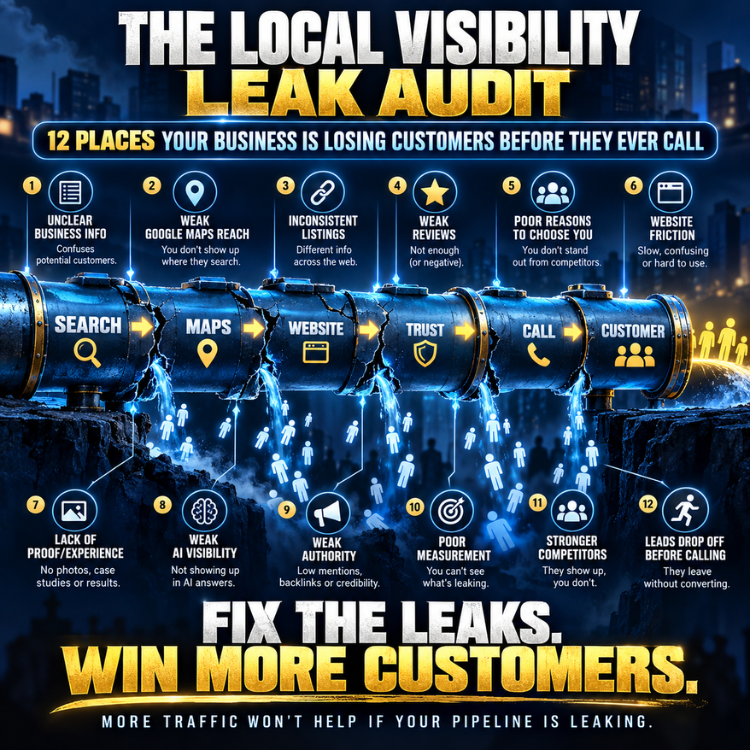
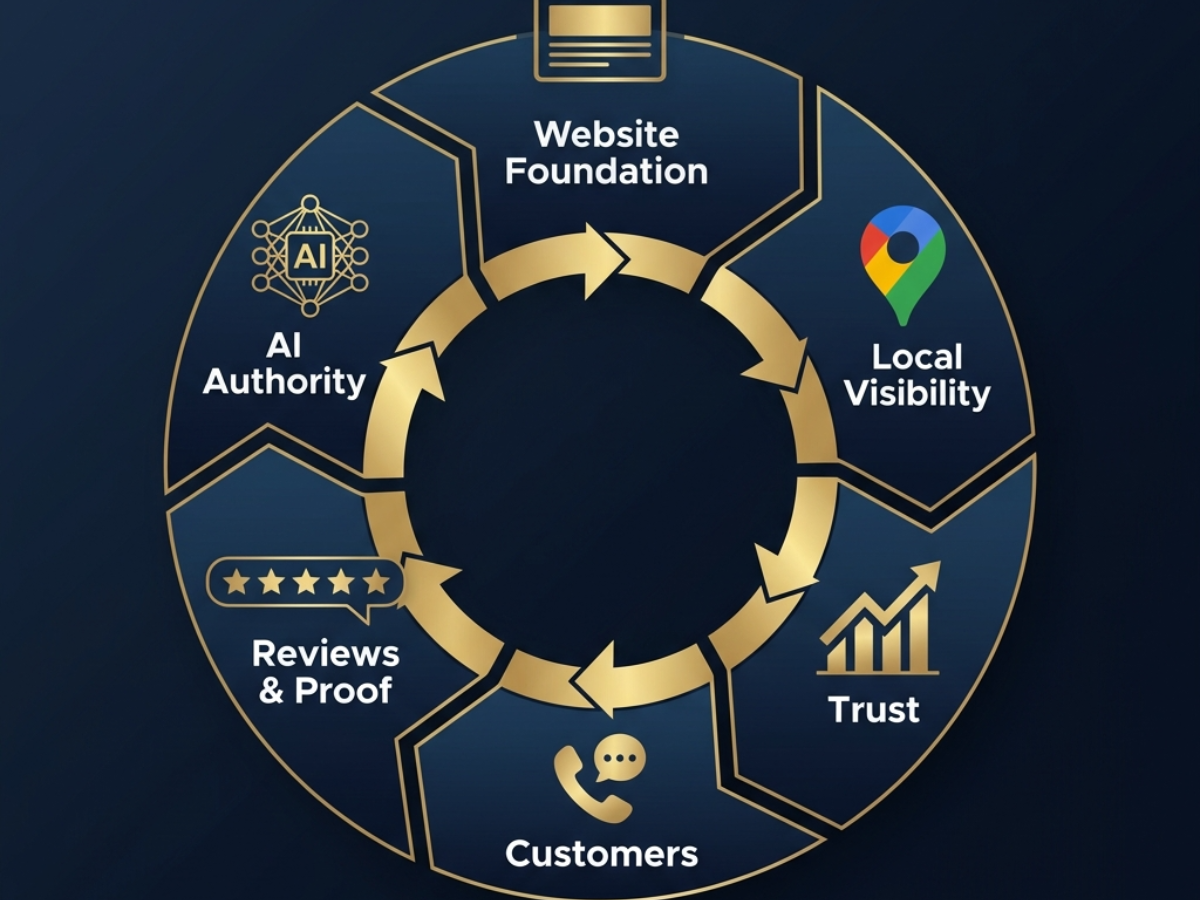
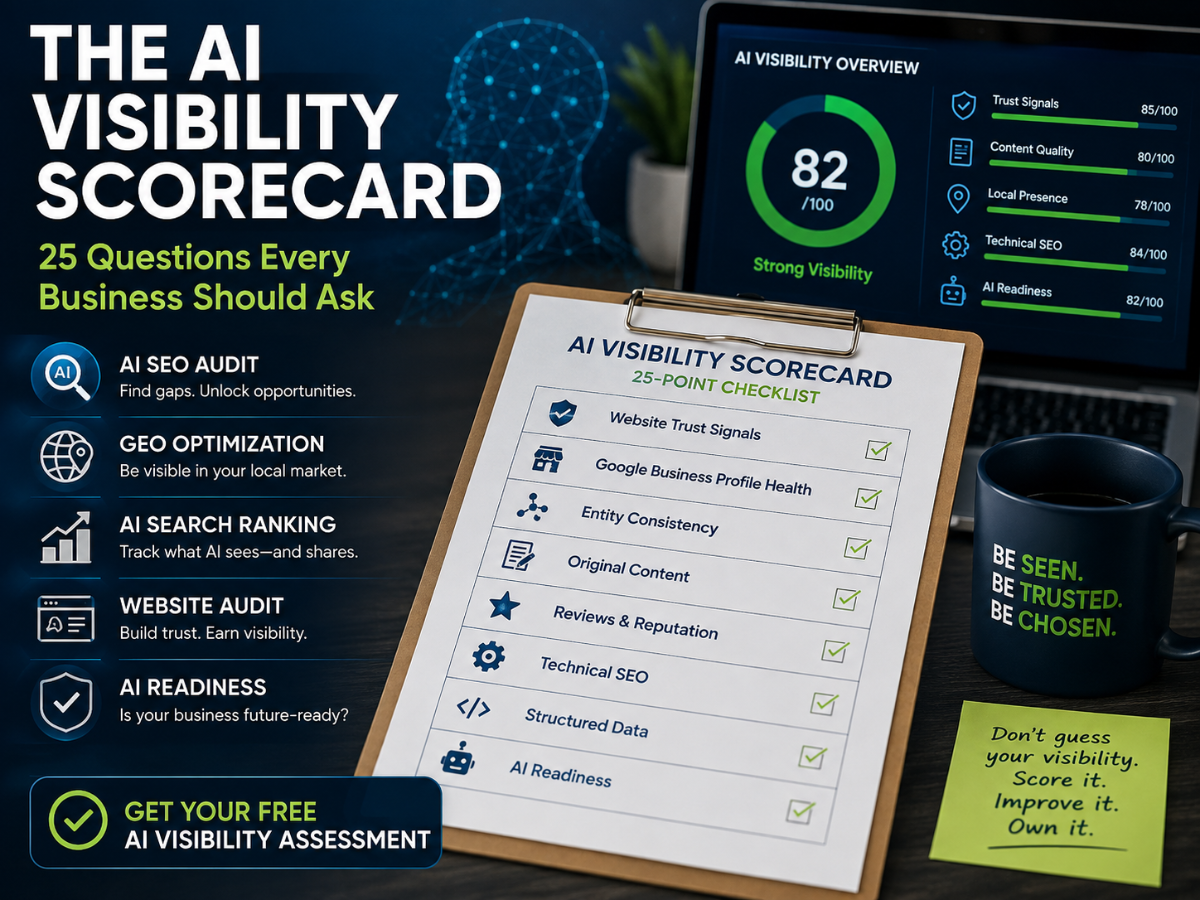
The 2026 local marketing stack combines Google Maps optimization, accurate business listings across the web, and AI search visibility. Local businesses that win customers now do three things well: they make Maps work for them, keep their listings consistent everywhere, and structure content so AI tools like ChatGPT and Google's AI Overviews recommend them by name.
The way customers find local businesses has shifted significantly. A few years ago, ranking on Google's first page was the whole game. Today, your future customer might never see a traditional search result. Instead, they ask ChatGPT for "the best HVAC company near me," tap a Google Maps pin, or trust an AI Overview that summarizes options before they scroll.
That means a single tactic won't cut it anymore. You need a stack, a connected set of tools and practices that reinforce each other. When your Google Maps profile, your business listings, and your AI search presence all point to the same accurate information, you become the obvious choice.
This guide breaks down each layer of that stack. We'll cover why old-school SEO falls short on its own, how to optimize for Google Maps, why listing distribution matters, how AI recommendation engines pick businesses, and what Search Box Optimization looks like. Then we'll hand you a 90-day roadmap you can actually follow. Let's get into it.
Why isn't traditional SEO enough for local businesses anymore?
Traditional SEO still matters. But on its own, it leaves money on the table. Here's why.
Search behavior has changed. More people now get answers without clicking a single website. Google's AI Overviews answer questions right at the top of the page. AI chat tools like ChatGPT, Perplexity, and Gemini hand users a short list of recommendations instead of ten blue links. If your business isn't part of those answers, you're invisible to a growing slice of customers.
Local intent also works differently from general search. Someone typing "plumber Reno NV" wants a fast, trustworthy answer near them, not a 2,000-word blog post. They want a name, a phone number, reviews, and directions. Traditional SEO was built to rank pages, not to feed the data that powers Maps results and AI recommendations.
Think of it this way: classic SEO is one room in the house. The new local marketing stack is the whole home. You still need that room, but the rooms next to it, Maps, listings, and AI visibility, are where most of the action happens now.
The takeaway? Treat SEO as a foundation, not the finished building. The businesses pulling ahead in 2026 layer Maps, listings, and AI optimization atop solid web content.
How do you optimize a Google Maps profile for more customers?
Your Google Business Profile (the listing that powers Google Maps) is often the first thing a potential customer sees. For many local businesses, it drives more calls and visits than the website does. Here's how to make it work harder.
Complete every field. Fill out your business name, categories, hours, phone number, service area, and description in full. Google rewards complete profiles with better visibility, and customers trust businesses that don't leave gaps.
Choose the right categories. Your primary category carries a lot of weight. Pick the one that matches your core service, then add relevant secondary categories. A roofing company might add "gutter cleaning service" if it offers that too.
Post regularly. Google Business Profile lets you publish updates, offers, and events. Fresh posts signal that your business is active, which helps your ranking and keeps customers informed.
Collect and respond to reviews. Reviews are one of the strongest local ranking factors. Ask happy customers to leave one, and reply to every review, good or bad. A thoughtful response to a tough review shows new customers you care.
Add real photos. Listings with quality photos get more clicks and direction requests. Show your storefront, your team, and your work.
Use keywords naturally. Work your main services and city into your description and posts. For a
digital marketing agency in Reno NV, that might mean mentioning "local SEO strategy" and "Reno" where it reads naturally, never stuffed.
A polished Google Maps profile feeds clean data into the rest of your stack. That's why it's step one.
What is business listings management, and why does it matter?
Business listings are the entries about your company across directories, apps, and platforms. Yelp, Apple Maps, Bing Places, Facebook, industry-specific sites, and dozens more. Business listings management means keeping all of those entries accurate and consistent.
Why does consistency matter so much? Search engines and AI tools cross-check your information across the web to verify your legitimacy. If your phone number says one thing on Yelp and another on Bing, that mismatch creates doubt. Doubt hurts your rankings and, worse, sends a customer to a dead-end number.
The key phrase here is NAP consistency: Name, Address, Phone number. These three details should be identical everywhere they appear, down to the punctuation.
Here's what strong listings distribution looks like:
- Claim your profiles on the major platforms first: Google, Apple Maps, Bing, Yelp, and Facebook.
- Standardize your NAP across every listing so the data matches exactly.
- Add your details to industry and local directories that fit your business.
- Audit regularly to catch outdated info, duplicate listings, or changes that slipped through.
When your listings line up, you build trust with both algorithms and people. AI search tools pull from this web of data when deciding which businesses to recommend, so consistent listings directly improve your odds of being named.
How do AI recommendation engines choose which businesses to suggest?
AI tools like ChatGPT, Perplexity, and Google's AI Overviews don't rank pages the way classic search does. They synthesize information from across the web and present a recommendation.
So how do they decide who makes the list?
A few signals carry real weight:
Consistent, structured information. AI engines favor businesses with clear, matching data across the web. Your NAP consistency and complete listings pay off here.
Reviews and reputation. AI tools often weigh review volume and sentiment. A business with many positive, recent reviews is more likely to be recommended than one with a thin or stale review profile.
Clear, quotable content. AI pulls from content it can extract cleanly. Pages that answer specific questions in plain language, such as "What does an HVAC tune-up cost in Reno?" are easier for AI to cite than vague marketing copy.
Authority signals. Mentions on trusted sites, local news, and reputable directories help AI tools view your business as credible.
The practical lesson: optimizing for AI isn't a separate project. It's the natural result of doing the other layers well. Clean listings, strong reviews, and clear content all feed the data AI relies on.
Explicitly name your business, your services, and your city in your content so AI tools can build the right associations.
What is Search Box Optimization, and how does it help local businesses?
Search Box Optimization focuses on how your business shows up the moment someone starts typing, and in the suggestions that appear before they finish a query.
When a user types "best marketing agency in R..." into a search box, autocomplete and predictive suggestions try to finish the thought. Showing up in those suggestions, and in the rich results that follow, puts your business in front of customers at the exact moment of intent.
To improve your presence here:
- Build brand searches. The more people search for your business by name, the more search engines associate your name with your services and location.
- Earn consistent mentions. Listings, reviews, and citations across the web strengthen the signals that feed predictive results.
- Use natural, conversational keywords that match how people actually type and speak, since voice and AI search lean conversational.
Search Box Optimization
works best as part of the full stack. Strong Maps presence and consistent listings make your business a more likely candidate for those valuable early suggestions.
How do you build a future-proof local marketing strategy?
A future-proof strategy doesn't chase every shiny tactic. It builds a connected system where each layer strengthens the others. Here's the mindset to carry forward:
Treat your data as the core asset. Accurate, consistent business information is the fuel for Maps, listings, and AI visibility alike. Get this right, and everything else gets easier.
Prioritize reviews and reputation. Reviews influence rankings, AI recommendations, and human trust all at once. Make collecting them a routine, not an afterthought.
Write for people and machines. Clear, helpful content that answers real questions serves both your customers and the AI tools deciding whom to recommend.
Stay adaptable. The platforms will keep changing. A stack built on accurate data, strong reviews, and clear content adapts far better than one built on a single trick.
For local businesses, say, a company searching for a digital marketing agency in Reno, NV, to handle this, the goal is the same: one connected system that shows up wherever customers look.
Your 90-day local marketing roadmap
Big changes feel manageable when you break them into phases. Here's a practical 90-day plan.
Days 1–30: Build the foundation
- Claim and fully complete your Google Business Profile.
- Audit your existing listings and note every inconsistency in your NAP.
- Claim profiles on Apple Maps, Bing Places, Yelp, and Facebook.
- Set up a simple system to request reviews from happy customers.
Days 31–60: Strengthen and distribute
- Standardize your NAP across every listing so the data matches exactly.
- Add your business to relevant industry and local directories.
- Start posting weekly updates and offers on your Google Business Profile.
- Reply to every review you've received, old and new.
- Add fresh, quality photos to your Maps profile.
Days 61–90: Optimize for AI and refine
- Create clear, question-based content that answers what your customers actually ask.
- Naturally include your services and city in your content and profiles.
- Review your analytics, calls, direction requests, and website clicks, to see what's working.
- Fix any duplicate or outdated listings you uncover.
- Set a recurring schedule to audit listings and request reviews going forward.
By day 90, you'll have a connected stack that feeds accurate data into Maps, listings, and AI search. From there, it's about consistency: keep posting, keep collecting reviews, and keep your information clean.
Ready to put the stack to work?
The local marketing landscape of 2026 rewards businesses that show up everywhere their customers look, on Google Maps, across business listings, and inside AI-generated recommendations. No single tactic gets you there. A connected stack does.
Start with the foundation: a complete Google Business Profile and consistent listings. Layer on strong reviews and clear, helpful content. Then watch as Maps, search, and AI tools start pointing customers your way.
If managing all of this feels like a lot, you don't have to do it alone.
Relentless Business Mastery
helps local businesses build and run a complete local marketing stack, from Google Maps optimization to listings management to AI search visibility.
Reach out to get started, and let's make your business the one customers find first