How to Rank in Google's Map Pack in 2026: A Local Guide

June 12, 2026

Share this article

To rank in Google's Map Pack in 2026, optimize your Google Business Profile (the top factor at 32% of local pack rankings), build a steady stream of reviews, keep your hours accurate, and maintain consistent business listings across the web. Strong on-page SEO and citations now also help you show up in AI search results.


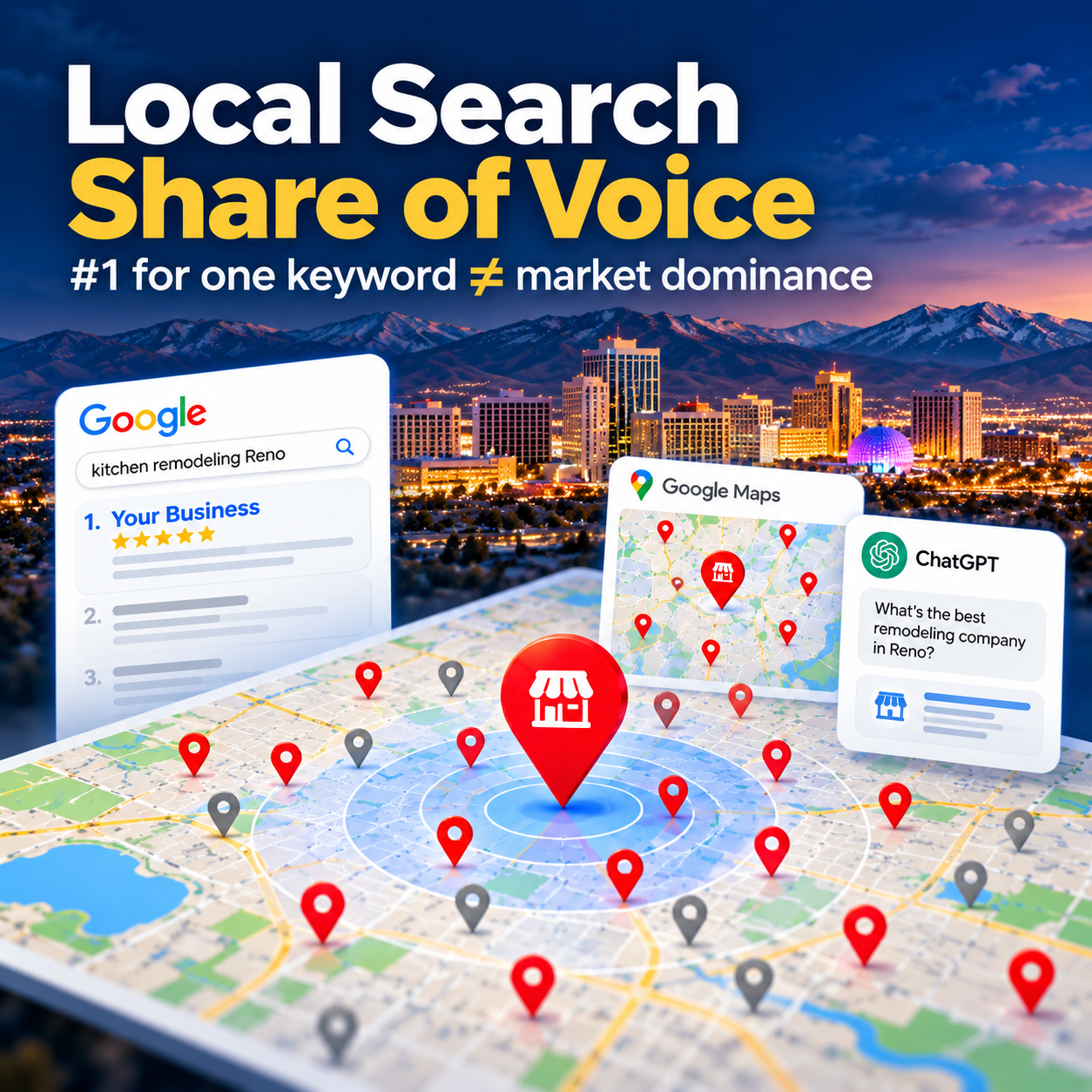
If your business doesn't show up in the top three Google Maps results, you're missing out on the majority of local customers. Those three listings, known as the Map Pack, capture between 40% and 50% of all local clicks, according to industry data. That means the businesses shown on the map below are fighting over scraps.


The good news? Ranking in the Map Pack isn't luck. It comes down to a handful of factors you can actually control. In this guide, we'll walk you through what the Map Pack is, why it matters so much, and the exact steps to climb to the top in 2026, including how AI is reshaping the way customers find you.


What is the Google Map Pack?

The Google Map Pack (also called the Local Pack or Local 3-Pack) is the boxed section of three business listings that appears alongside a map at the top of local search results. When someone searches "plumber near me" or "best coffee shop in Reno," Google serves up this map with three handpicked businesses.


Each listing typically shows the business name, star rating, reviews, hours, and a quick way to call or get directions. It's prime real estate, and it sits above the regular organic results that most people never scroll down to see.


Why 40%+ of local clicks go to the top listings

Here's the reality: most people don't look past the Map Pack. Studies show that Google's Map 3-Pack receives between 40% and 50% of all local clicks. Searchers trust these results because Google has already vetted them as the most relevant, closest, and most trustworthy options.

When your business lands in those three spots, you get more calls, more direction requests, and more walk-ins. When you don't, your competitors get them instead. For local businesses, the Map Pack isn't just a nice-to-have; it's where customers are.


What is the Google Business Profile optimization checklist?

Your Google Business Profile (GBP) is the single most important factor for ranking in the Map Pack. According to a 2026 Local Search Ranking Factors report, GBP signals account for 32% of Local Pack rankings, more than any other factor.


Here's your optimization checklist:

  • Pick the right primary category. This tells Google exactly what you do. If you're a personal injury lawyer but list yourself only as "Lawyer," you're losing relevance for specific searches. Audit your top competitors and match or beat their category choices.
  • Keep your hours accurate. Google's "openness" signal now plays a big role. For urgent searches like "emergency plumber," Google often hides closed businesses. Make sure your hours are always correct, and don't claim 24-hour service you can't deliver.
  • Complete every field. Add your services, attributes, photos, and a detailed description. A complete profile signals trust.
  • Upload fresh photos regularly. Google's AI analyzes your images to confirm you're a real, active business. Add one new photo of your work, storefront, or team each week.
  • Verify your profile. An unverified listing won't rank well, if at all.


How do reviews help you rank in the Map Pack?

Reviews are the second-biggest ranking factor, accounting for 20% of Local Pack signals. They prove to both Google and customers that you're trustworthy and popular.


Research shows a clear boost in ranking when a business moves from 9 reviews to 10. Hitting that first 10-review milestone signals to Google that you're an established business. After that, keep the momentum going, review velocity (a steady flow of new reviews) matters more than a one-time burst.


Pro tip: When you ask for a review, prompt customers to mention the specific service they used. A review that says "great kitchen remodel" directly links that keyword to your business and strengthens your relevance for those searches.


What local citation strategies should you use?

Citations are mentions of your business name, address, and phone number (NAP) across the web on sites like Yelp, Facebook, Bing, and industry directories. They might rank lower as a direct factor, but they remain foundational.


Why? Because consistency builds trust. If your phone number is different on Yelp than it is on your website, both Google and AI tools get confused. And confused algorithms won't recommend you. Three of the top five AI search ranking factors are tied to citations, which makes NAP consistency more important than ever.


Keep your name, address, and phone number identical across all appearances, and claim listings on the major platforms your customers actually use.


What are the key "near me" search ranking factors?

Google's local algorithm rests on three core pillars:

  • Relevance: Does your business match what the searcher wants? Your primary category and on-page content drive this.
  • Distance: How close are you to the searcher? You can't move your building, but you can strengthen every other signal to reach a bit farther.
  • Prominence: Are you popular and trustworthy? Reviews, links, and citations feed this pillar.

Beyond the big three, behavioral signals carry real weight. When people request directions, click to call, or stay on your website, Google reads those actions as votes of confidence. A fast, mobile-friendly website keeps visitors from bouncing back to the search results; a negative signal you want to avoid.


What common mistakes prevent Map Pack rankings?

A few avoidable errors can tank your visibility:

  • Business name stuffing. Google's August 2025 spam update cracked down hard on stuffing keywords into your business name. Use your real, legal name only or risk suspension.
  • Fake reviews. Buying reviews will get you caught. Losing them can drop you below the 10-review threshold and crush your rank.
  • Inconsistent NAP data. Conflicting phone numbers or addresses across directories confuse both Google and AI agents.
  • Inaccurate hours. Saying you're open when you're not leads to missed calls, which Google tracks as a negative behavioral signal.


How is AI changing local search?

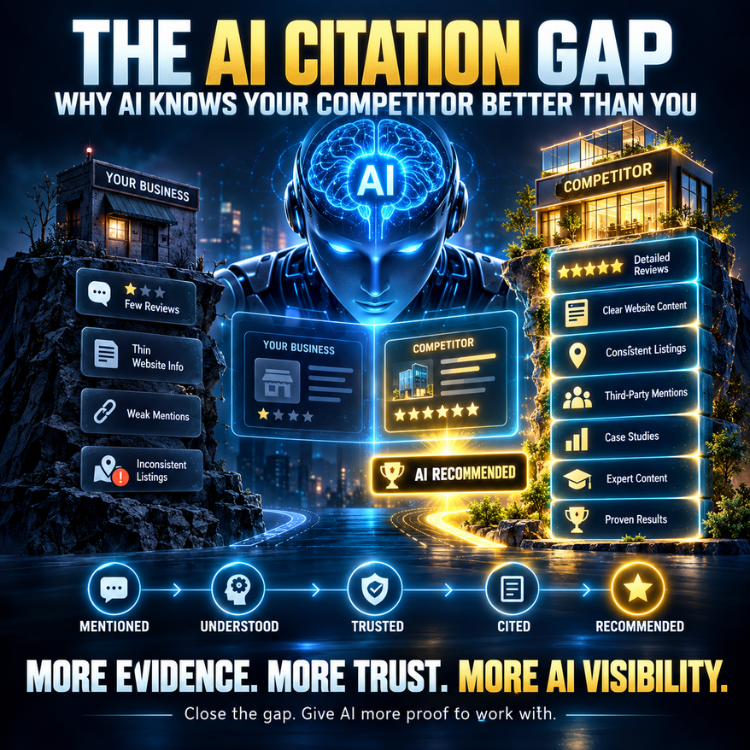
Search is shifting fast.  35% of searches will shift to AI engines such as ChatGPT, Gemini, and Copilot by the end of 2026. Unlike Google, these tools don't show a long list of options; they hand back just one to five recommendations. If your business isn't named, you're invisible.


At the same time, traditional Google search still drives 75% of search volume, with the Map Pack capturing 40% or more of that. So you need to win in both places.


The factors that help AI tools recommend you overlap heavily with classic local SEO: strong on-page content, consistent citations, genuine reviews, and a complete Google Business Profile. ChatGPT, for example, pulls much of its local data from Bing; so syncing your profile to Bing Places helps you appear in AI results. Adding LocalBusiness schema markup to your website also helps AI tools read your hours, address, and services without guesswork.


Your next step toward local search domination

Ranking in the Map Pack in 2026 comes down to fundamentals done consistently: a fully optimized Google Business Profile, a steady flow of genuine reviews, accurate hours, clean citations, and a website built for both people and AI. Get these right, and you'll capture the calls and customers your competitors are leaving on the table.


If keeping up with Google's algorithm and the rise of AI search feels overwhelming, you don't have to tackle it alone. At Relentless Business Mastery, we help local businesses get found everywhere, on Google's traditional search, in the Map Pack, and across leading AI engines like ChatGPT, Gemini, and Copilot. Ready to stop letting customers pass you by? Book your free strategy session today, and let's get your business to the top.


Frequently Asked Questions:



  • What is the most important factor for ranking in the Map Pack?

    Your Google Business Profile is the top factor, accounting for 32% of Local Pack rankings in 2026. Optimizing your primary category, hours, photos, and services gives you the biggest head start.

  • How many reviews do I need to rank in Google Maps?

    Aim for at least 10 reviews first. Research shows a notable ranking boost when a business moves from 9 to 10 reviews. After that, focus on a steady flow of new reviews rather than chasing a single large total.

  • How long does it take to rank in the Map Pack?

    It varies by industry and competition, but many businesses see meaningful movement within 60 to 90 days of consistent optimization. Dense, competitive markets typically take longer than suburban or rural areas.

  • How do I rank in ChatGPT and other AI search results?

    ChatGPT pulls much of its local data from Bing, so sync your Google Business Profile to Bing Places. Consistent citations, genuine reviews, on-page content, and LocalBusiness schema markup also help AI tools trust and recommend your business.

  • Does hiding my business address hurt my ranking?

    No. If you're a service-area business that doesn't serve customers at a physical location, hiding your address follows Google's policy and won't hurt your rank. Storefronts with staffed hours should keep their address visible.

Recent Posts

Woman working on a laptop at a desk with analytics dashboards on screens in a modern office
By Jason Messick June 4, 2026
Discover what Generative Engine Optimization is and how to keep your business visible in ChatGPT, Google AI Overviews, and voice search.
Team meeting in a modern office, presenting charts beside a laptop on a conference table.
May 27, 2026
Learn how pay-per-result SEO gives you a completely risk-free way to maximize ROI and guarantee success. Read our ultimate guide and grow with us today!
Local SEO illustration with map pins, charts, and a small shop in a bright city scene
May 21, 2026
Want to attract more nearby customers? Learn how to master local SEO for your small business and grow your revenue with these proven search strategies.
Marketing agency promo graphic with bold yellow text, charts, icons, and a laptop showing rising analytics.
By Jason Messick May 18, 2026
One of the most important questions businesses ask before hiring a marketing agency is: “What results should I realistically expect?” It’s the right question. Because while every agency promises “growth,” very few explain what real, measurable marketing success actually looks like — especially in today’s rapidly changing SEO, AI search, and local marketing landscape. At Relentless Business Mastery , we believe marketing should be transparent, strategic, measurable, and focused on long-term business growth — not vanity metrics that look impressive but fail to generate revenue. If you’re investing in SEO, digital marketing, local visibility, AI search optimization, or lead generation in 2026, here’s what you should realistically expect. First: Good Marketing Is Momentum, Not Magic One of the biggest misconceptions in digital marketing is expecting overnight success. Sustainable business growth rarely happens instantly. Real marketing results typically build in stages: Increased visibility More website traffic Better lead quality Higher conversion rates Improved authority and trust Consistent revenue growth Businesses looking for “instant rankings” or “overnight leads” are often targeted by agencies using risky tactics that create short-term spikes but long-term problems. Strategic growth is different. What Results Should SEO Deliver? SEO in 2026 is no longer just about rankings. Modern SEO includes: Google search visibility AI-generated search results Answer engine optimization (AEO) Geographic relevance (GEO) local SEO voice search optimization content authority user experience signals A strong SEO strategy should help your business: rank higher locally, appear in AI-generated answers, increase qualified traffic, improve authority in your market, and generate consistent inbound leads. Realistic SEO Timelines Most businesses begin seeing measurable SEO traction within: 30–90 days for foundational improvements 3–6 months for stronger keyword movement 6–12 months for significant authority growth and lead consistency Competitive industries may take longer. SEO is a long-term asset, not a short-term hack. What Results Should You Expect From Paid Advertising? Paid advertising can often generate results faster than SEO, but success depends heavily on: targeting, landing pages, offer quality, conversion systems, and budget strategy. A properly managed campaign should improve: lead quality, cost per acquisition, conversion rates, and overall ROI over time. If an agency only reports: impressions, clicks, or reach, Without connecting campaigns to actual business growth, that’s a problem. Marketing should ultimately drive revenue. The Most Important Marketing Metrics in 2026 Not all metrics matter equally. The businesses growing fastest today focus on: qualified leads, booked appointments, customer acquisition cost, conversion rates, local visibility, customer lifetime value, and revenue growth. Vanity metrics like: random traffic spikes, social media likes, or broad impressions mean very little if they don’t produce actual business results. At Relentless Business Mastery , the focus is on building measurable growth systems designed around visibility, authority, and conversion strategy. AI Search Is Changing What “Results” Look Like One of the biggest shifts happening in 2026 is the rise of AI-powered search. Businesses are no longer competing only for traditional Google rankings. They now need visibility across: AI-generated answers, voice assistants, local map searches, featured snippets, and answer engines. That means effective marketing today requires: structured content, semantic SEO, local authority signals, optimized website architecture, and AI-readable content formatting. Businesses ignoring these changes are already losing visibility. What a Good Marketing Agency Should Be Able to Show You Before hiring an agency, ask: How do you measure success? What KPIs do you track? How often will we receive reports? What results are realistic in our market? How do you adapt strategy if performance stalls? How do you optimize for AI search and local SEO? Can you show examples of past growth? A reputable agency should be honest about: timelines, challenges, competition, and realistic expectations. If an agency guarantees instant results, be cautious. What Businesses in Local Markets Should Expect For local businesses in markets like Reno, strong marketing should eventually lead to: increased Google Maps visibility, more local phone calls, higher search rankings, improved reputation signals, more website inquiries, and stronger local brand authority. Local SEO combined with conversion optimization can become one of the most profitable long-term growth channels for service-based businesses. Final Thoughts The best marketing results rarely happen overnight. But with the right strategy, businesses should expect: improved visibility, higher-quality leads, increased authority, stronger conversions, and sustainable long-term growth. The key is working with a marketing partner that understands: SEO, AI search optimization, local market dominance, conversion strategy, and measurable business growth.  Because real marketing success is not about chasing trends. It’s about building systems that consistently help your business grow.
Marketing cost infographic with a city skyline, blue night sky, icons, and a rising chart on a signboard
May 13, 2026
Discover how much marketing costs in Reno, NV for SEO, AI search, local SEO, and lead generation strategies that help small businesses grow.