Quick answer: AI search engines, including Google AI Overviews and ChatGPT, prioritize businesses that demonstrate genuine expertise, real-world experience, and verifiable trust signals. Under Google's E-E-A-T framework, businesses that publish original data, customer success stories, and transparent operations consistently outperform those relying on generic, AI-generated content.
Key Takeaways:
- Google's E-E-A-T framework now includes "Experience" as a standalone ranking signal, not just expertise
- AI search tools cite sources that are specific, credible, and verifiable
- Original assets, photos, case studies, and proprietary frameworks, give your content a competitive edge
- Reviews, author bios, and transparent operations build the trust signals AI systems look for
- Businesses that document real outcomes rank higher than those that describe theoretical ones
Most articles about E-E-A-T stop at definitions. They explain what the acronym stands for, list a few bullet points, and call it a day. But knowing what E-E-A-T means and knowing how to demonstrate it are two entirely different things.
AI search is changing how visibility works. Google's AI Overviews, ChatGPT search, Perplexity, and voice assistants don't just crawl your keywords; they evaluate whether your business is worth recommending. They're looking for signals that prove you've actually done the work, served real customers, and earned the right to be cited as a trusted source.
This post goes beyond the basics. We'll break down how AI systems evaluate your content, and more importantly, what your business can do right now to show up as the credible, experienced authority in your space.
What Does E-E-A-T Actually Mean in 2026?
Google's Search Quality Rater Guidelines define E-E-A-T as
Experience, Expertise, Authoritativeness, and Trustworthiness. The addition of "Experience" in December 2022 marked a significant shift; Google now distinguishes between someone who knows about a topic and someone who has lived it.
Here's how each component breaks down in practical terms:
- Experience: Has the person or business actually done this? Did a plumber write about plumbing, or did a content farm?
- Expertise: Does the content reflect deep, accurate knowledge of the subject?
- Authoritativeness: Do credible sources, other websites, publications, and industry peers recognize and reference this business?
- Trustworthiness: Is the business transparent about who they are, what they do, and how they operate?
Google's own documentation states that "Trust is the most important member of the E-E-A-T family." Without trust, the other three signals carry significantly less weight.
How Do AI Search Engines Evaluate Expertise?
AI systems like Google's Search Generative Experience and ChatGPT-powered search don't just match keywords; they assess the quality and credibility of the content they surface. According to Google's Search Quality Evaluator Guidelines, a page demonstrating first-hand experience with a topic will receive higher quality scores than a page written by someone with no direct involvement.
What does that look like in practice? AI models are trained to recognize:
- Specificity over generality: "We reduced a client's cost-per-lead by 62% in 90 days" outperforms "we help businesses get better results"
- Named entities: Mentioning real clients, real locations, and real outcomes creates verifiable associations that AI systems trust
- Consistency: Businesses whose content consistently reflects a clear identity, specialization, and track record are easier for AI systems to categorize and recommend
- Source quality: Content referenced by credible third-party sources (industry publications, review platforms, news mentions) signals authority
One of
Relentless Business Mastery's clients, Jim, a business owner in Reno, NV, shared that before working with a specialist, roughly 80% of his leads were low-quality tire-kickers. After implementing a focused digital strategy, that ratio flipped: approximately 80% of calls became qualified prospects. That's the kind of specific, verifiable outcome AI systems are designed to surface.
Why Original Photography and Media Signal Real Experience
Stock photos are everywhere. AI systems are increasingly sophisticated at distinguishing them from original content. Businesses that publish real photos of their team, their workspace, their completed projects, and their customers send a clear signal: we're a real operation with real people doing real work.
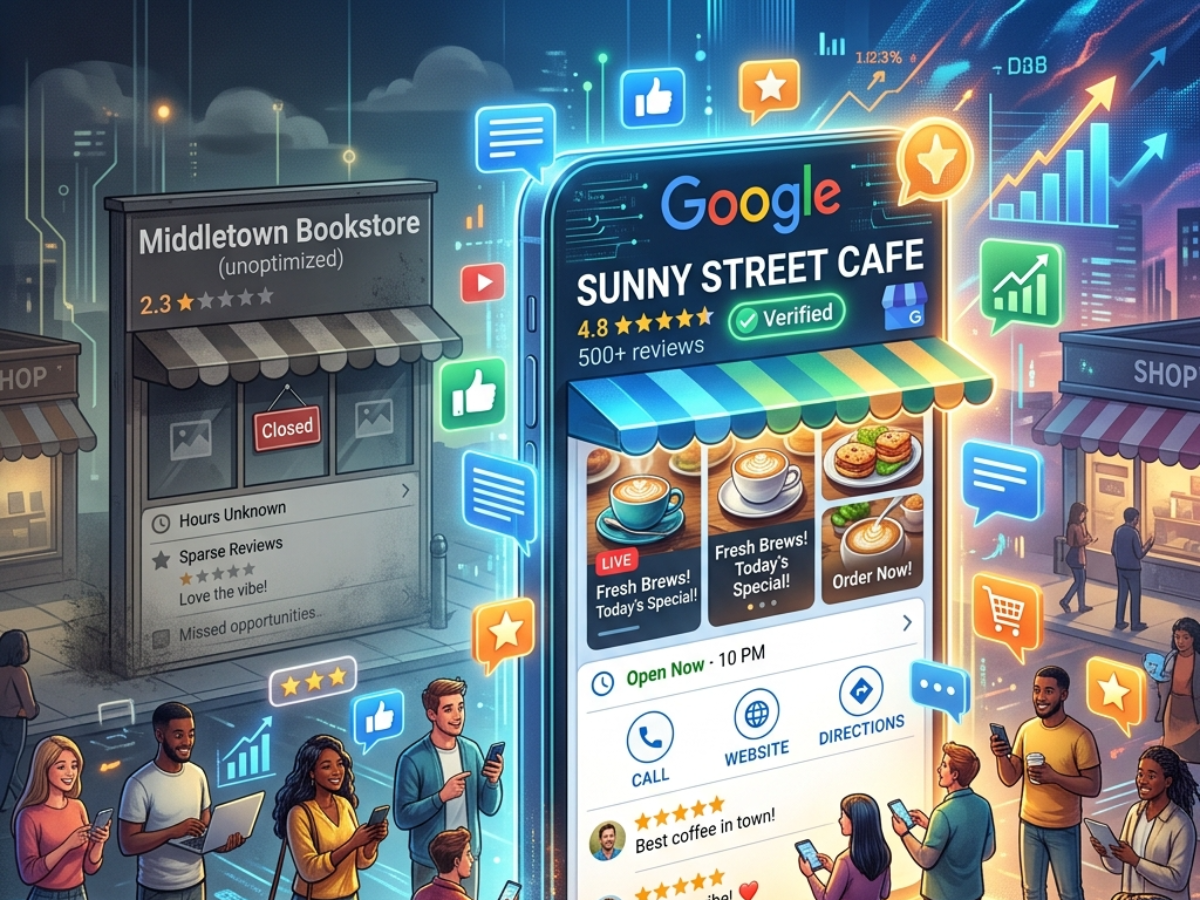
Original media also supports local SEO. Google's algorithms for Google Maps and local search reward businesses that maintain active, authentic Google Business Profiles with genuine photos, consistent updates, and real customer interactions.
Practical steps to strengthen your visual credibility:
- Upload before-and-after photos of completed work or transformed client results
- Include team photos with names and roles attached, not just stock imagery
- Post process videos or walkthroughs that show how your service actually works
- Screenshot real results:
analytics dashboards, customer feedback, rankings improvements, with dates and context
Each piece of original media is an asset that generic competitors simply can't replicate.
How Case Studies Demonstrate Real-World Experience to AI Systems
Case studies are one of the highest-value content formats for E-E-A-T, yet most businesses either skip them entirely or write them in vague, unmeasurable terms. A case study that says "we helped a client improve their online presence" is nearly worthless. A case study that says "within 90 days of optimizing their Google Business Profile and launching a local SEO campaign, this Reno-based contractor went from page 3 to ranking between positions 1 and 3 on Google" is actionable, specific, and credible.
A strong case study includes:
- The client's starting situation: What problem were they facing?
- The strategy implemented: What specific tactics were used?
- Measurable outcomes: Numbers, timelines, and results
- A direct client quote: First-person testimony adds authenticity
Client Michael's review of
Relentless Business Mastery captures this well: "Since doing business with Jason, I have tripled the amount of clients I get. I am now ranking on page one between one and three." That's a quotable, verifiable outcome. AI search tools are designed to surface exactly this kind of evidence.
Reviews, Reputation, and Why They're Trust Signals: Not Just Ratings
Online reviews serve a dual function in AI search. First, they influence how AI systems perceive your trustworthiness. Second, they provide natural-language content that reflects how real customers talk about your business, language that often mirrors the exact queries others are searching for.
Businesses with a high volume of detailed, genuine reviews, especially those mentioning specific services, outcomes, and locations, outperform competitors with sparse or generic feedback.
Key reputation-building strategies:
- Ask for reviews consistently, not just occasionally
- Respond to every review, positive and negative; this signals active engagement
- Encourage specificity: Ask customers to describe what they hired you for and what changed for them
- Maintain your Google Business Profile with accurate hours, services, and photos
Jolyn's review of Relentless Business Mastery demonstrates the impact a powerful testimonial can have: "Before working with Jason Messick and Relentless Business Mastery, I felt like I was whispering into a hurricane... Now the silence has been replaced with steady phone calls. My calendar isn't just booked—it's booked with the right people." That's not just a five-star rating. It's a trust signal that tells both humans and AI systems exactly what this business delivers.
Author Credibility: Why Who Writes Your Content Matters
Faceless content is a red flag for AI systems. Google's quality rater guidelines specifically call out the importance of identifying who is responsible for content on a website, and whether those individuals have relevant credentials or experience.
Building author credibility involves:
- Detailed author bios that list real qualifications, experience, and areas of focus
- Consistent bylines across blog posts, guides, and articles
- Links to professional profiles (LinkedIn, industry associations, certifications)
- Contributions to third-party publications that build external authority
For local businesses especially, attaching a real person's name and story to your content dramatically increases both reader trust and AI citability.
Trust-Building Content: Transparency as a Competitive Advantage
Operational transparency has become a differentiation strategy. Businesses that openly share their processes, pricing philosophy, client selection criteria, and values give AI systems clear, structured information to work with.
Relentless Business Mastery, for example, publishes detailed FAQs explaining how they work, who they work with, how they price their services, and why they typically partner with only one business per industry in a given market. That level of transparency doesn't just help potential clients; it gives AI systems reliable, structured content to extract and surface in response to relevant queries.
High-trust content formats include:
- Proprietary frameworks that explain your unique approach
- Process pages that walk through how you deliver your service
- FAQ sections with schema markup that answer common customer questions directly
- Comparison guides that honestly address when your service is, and isn't, the right fit
Turn Experience Into Visibility
The businesses that will dominate AI search over the next few years aren't necessarily the ones with the biggest budgets. They're the ones that document their real work, share genuine outcomes, and build a digital presence that reflects an authentic operation.
Generic content is easy to produce and easy to ignore. Original data, client success stories, named experts, and transparent processes are what separate a business that AI recommends from one that gets buried.
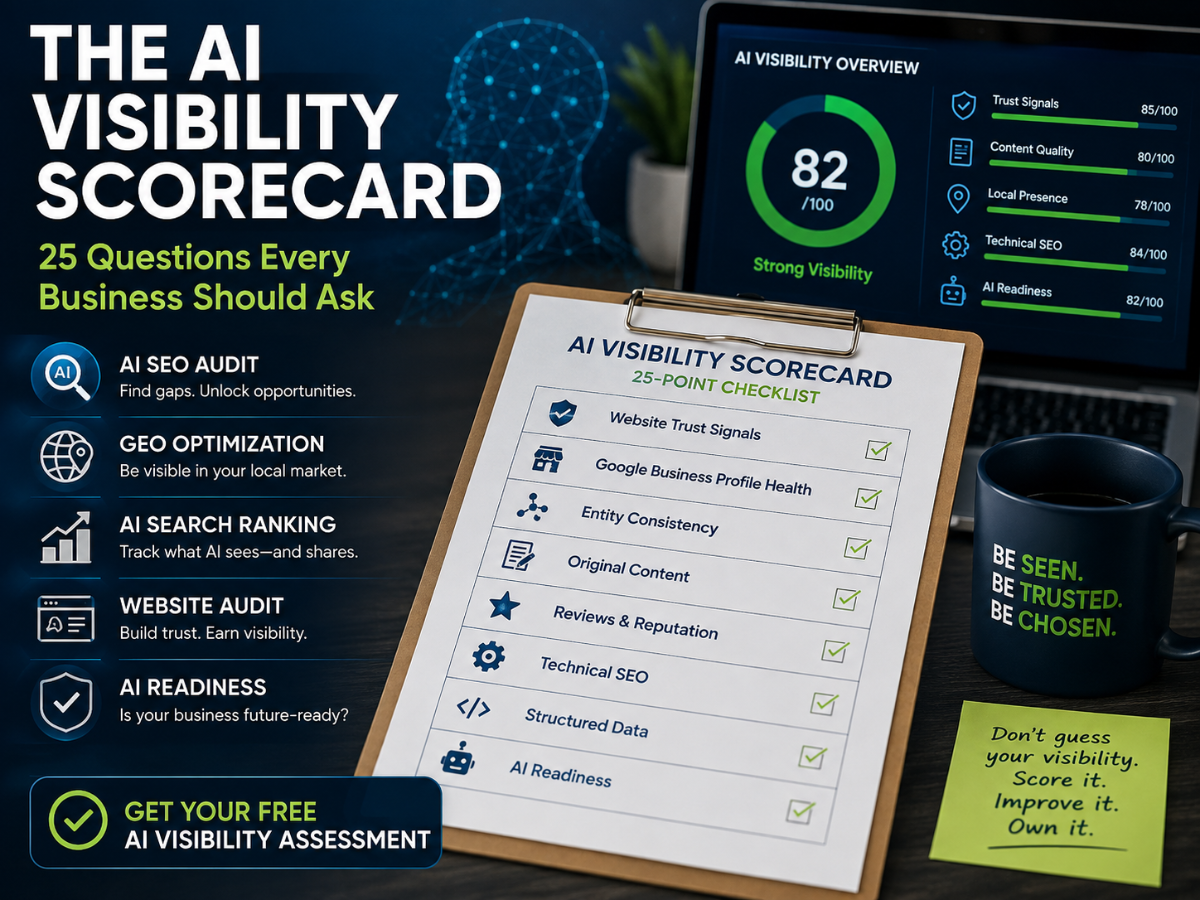
If you're not sure where your business stands, the first step is an honest audit of your current digital presence. Look at your website, your Google Business Profile, your reviews, and your content, and ask: does this reflect a business that AI would trust?
If the answer isn't a clear yes, it's time to build the assets that make it one.
Book a free marketing strategy session with Relentless Business Mastery
and get a clear picture of where you stand and exactly what to do about it.