Google Maps SEO in 2027: What to Prepare for Now
Quick answer: By 2027, Google Maps will function less like a directory and more like an AI-powered recommendation engine. Local businesses that build strong real-world signals now, reviews, accurate profiles, genuine customer interactions, and local authority, will hold a major advantage over businesses scrambling to catch up later.
Google Maps used to be simple. You searched for a service, you got a list, you picked a business. That era is ending.
Search is changing fast. AI now shapes what people see, how they discover businesses, and which companies get recommended. Google Maps sits right in the middle of that shift. For local businesses, this is either a threat or an opportunity, and which one it becomes depends on the moves you make in the next 12 months.
At Relentless Business Mastery, we work with local businesses every day on exactly this problem: how to get found by the customers already looking for what they sell. This article breaks down where Google Maps is heading, what we predict based on current trends, and what we recommend you do now. We'll clearly separate what's already happening from our professional predictions, so you know exactly what you're acting on.
Here's the bottom line up front: the businesses preparing today will win the customers tomorrow.
Why Google Maps Is Becoming More Than a Navigation Tool
Think about how you use Google Maps now. You're probably not just getting directions. You're reading reviews, checking photos, comparing hours, and deciding which business to call, all before you leave your house.
That behavior is the whole story. Google Maps has quietly become a decision-making engine, not a navigation app. People use it to choose who gets their business.
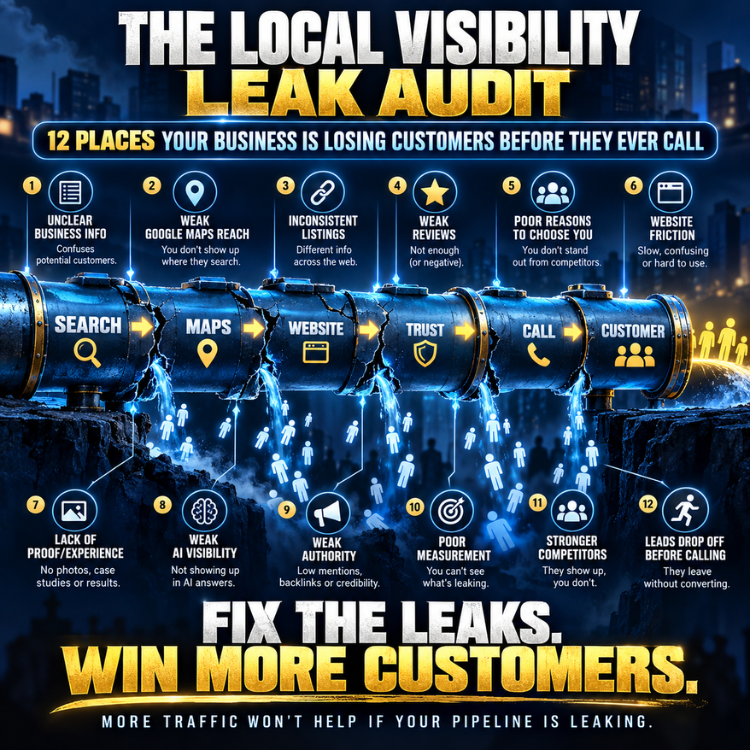
Here's what that means for you. When someone searches for your service nearby, the Map Pack- the top three local results- captures a huge share of the attention and the clicks. If you're not in those top spots, you're mostly invisible for that search. Someone else is taking the call.
By 2027, we expect this to intensify. Maps will surface richer information, more visual content, and increasingly personalized recommendations. The businesses with complete, active, trustworthy profiles will keep rising. The ones with thin, neglected profiles will keep falling.
Google Maps isn't just directions anymore. For a local business, it's some of the most valuable digital real estate you can own.
How Is AI Changing Local Recommendations?
Here's an observable change: AI is now filtering and ranking what people see in local search. Google's systems increasingly decide which businesses to recommend based on a growing set of signals, not just keywords and proximity.
This matters because AI doesn't work the way old-school SEO tricks did. You can't stuff a keyword and climb the rankings. AI-driven systems are trying to understand your business, what you do, how well you do it, and whether real customers trust you.
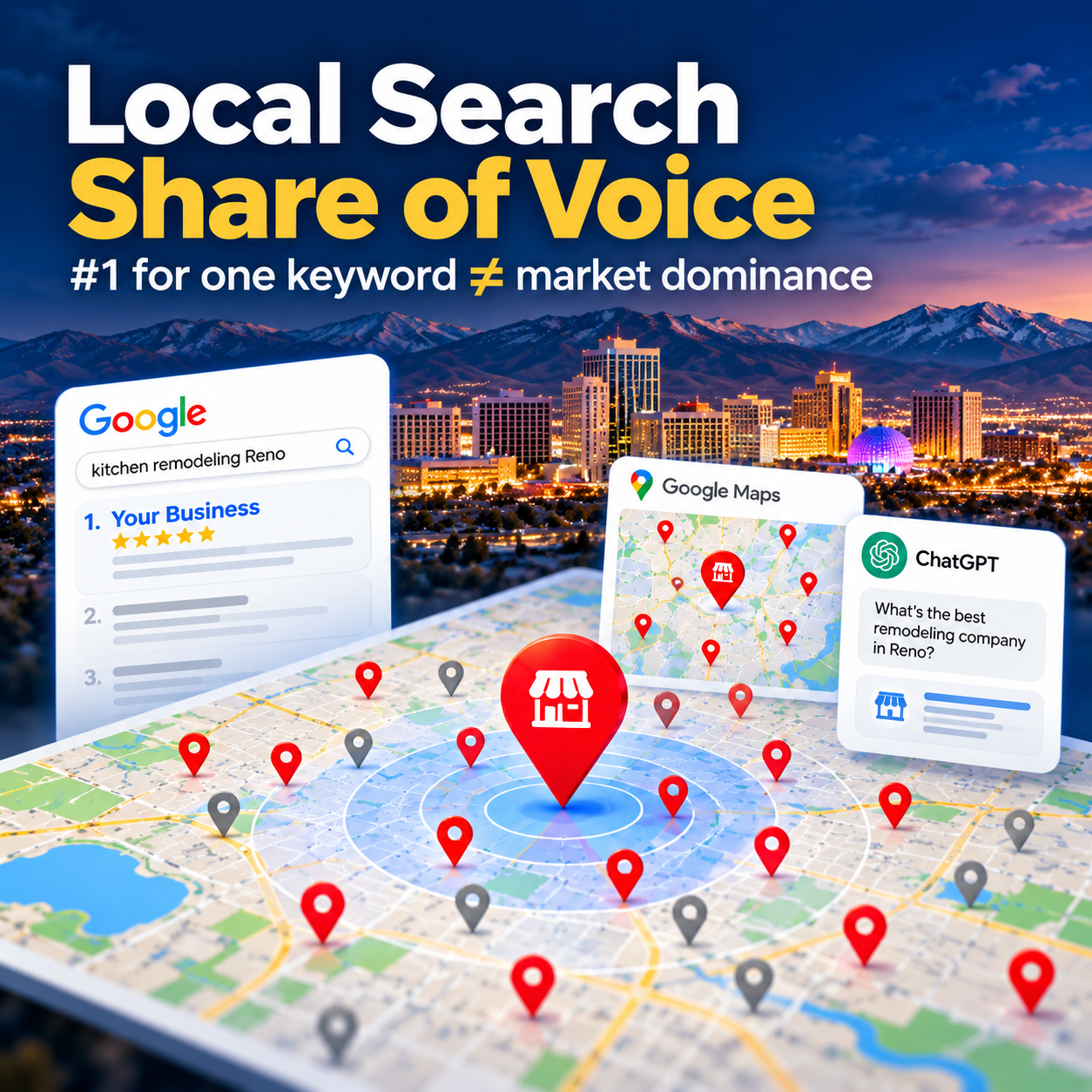
Our prediction: By 2027, local recommendations will lean even harder on AI. When a customer asks Google, or an AI assistant, "Who's the best kitchen remodeler near me?", the answer will be shaped by which business the AI understands and trusts most confidently.
So the question shifts. It's no longer only "How do I rank?" It becomes "Does Google's AI actually understand my business well enough to recommend it?"
That's a strategic difference. And it's the reason the next few sections matter so much.
Why Real-World Business Signals Will Matter More
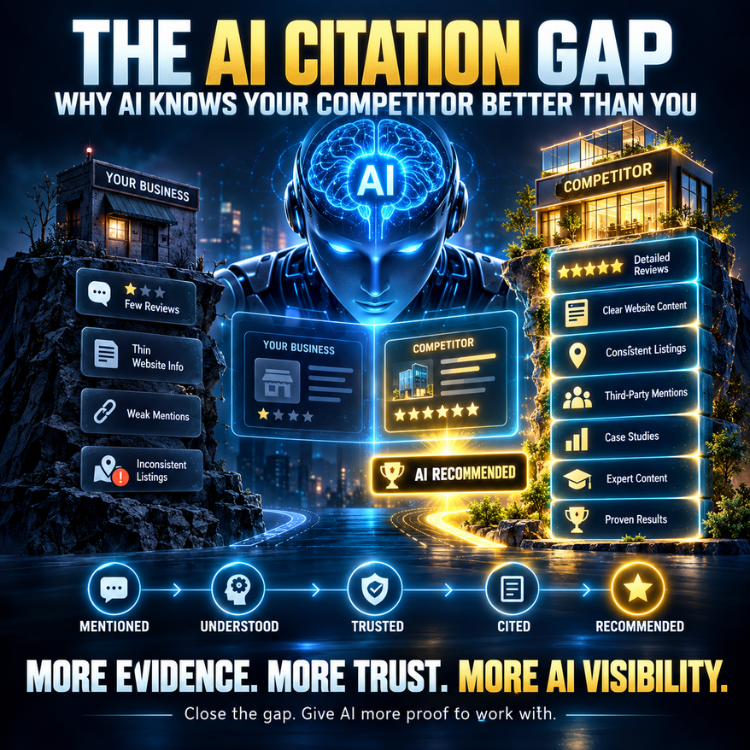
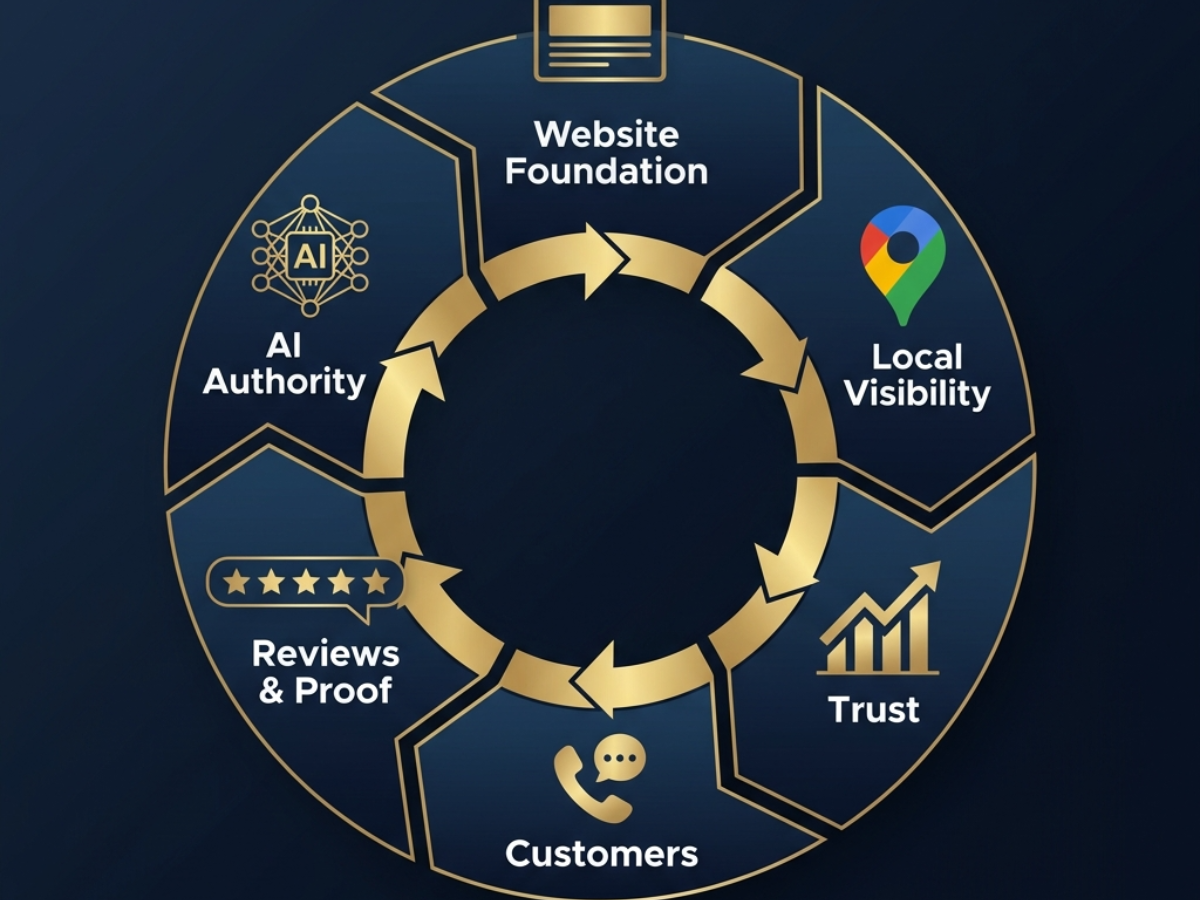
As AI gets better at understanding businesses, it leans harder on signals that are hard to fake. We call these real-world signals, the proof that you're a legitimate, active, well-regarded business.
Based on what we're seeing, these are the signals that will carry the most weight heading into 2027:
- Reviews. Not just star ratings, but volume, recency, and how you respond. A steady stream of recent, genuine reviews tells Google your business is active and trusted. Silence tells the opposite story.
- Photos. Fresh, real photos of your work, your team, and your location. AI is getting better at reading images. Businesses that show up visually will look more credible than those with a single stock image.
- Customer interactions. Calls, direction requests, clicks, messages, and bookings. These behaviors tell Google that real customers are choosing you.
- Accurate information. Your name, address, phone number, hours, and services—consistent everywhere online. Inconsistency confuses AI systems and hurts trust.
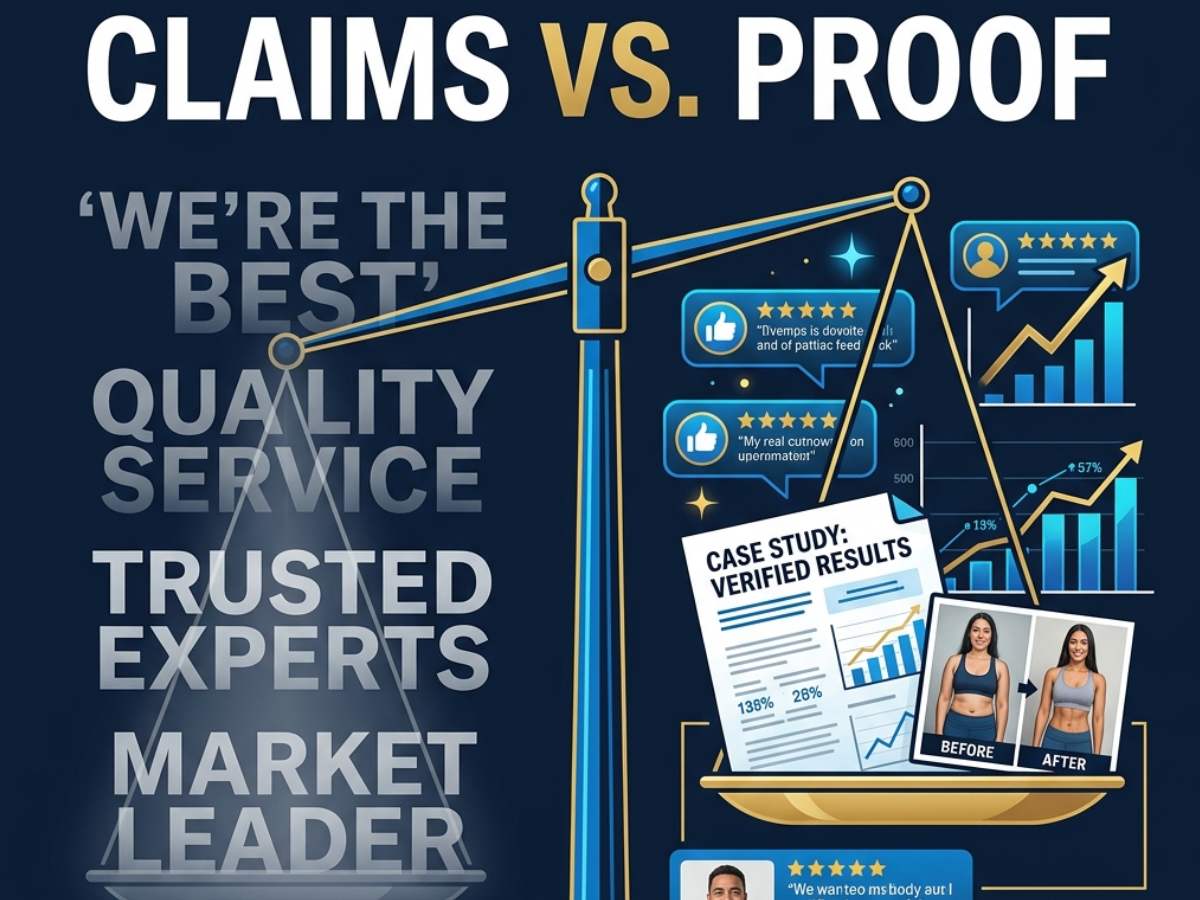
- Demonstrated experience. Content and profile details that prove you actually do the work you claim. This is where real expertise shows up in your online presence.
- Local prominence. How well-known and referenced your business is within your market. Mentions, citations, and links from local sources all build this.
Notice a pattern? None of these are tricks. They're the digital reflection of running a good business. That's exactly the point. Google's AI is being built to reward businesses that genuinely earn customer trust, and to spot the ones faking it.
You don't need to be an SEO expert to act on this. You need reviews, real photos, accurate info, and steady customer activity. That's a business-owner checklist, not a technical one.
How Will Conversational Search Change "Near Me" Searches?
"Near me" searches have been a goldmine for local businesses for years. Someone types "plumber near me," and the businesses at the top get the calls. That's high-intent traffic, people ready to hire.
Conversational search is changing how those searches happen. Instead of typing three words, people are starting to ask full questions out loud or into an AI tool: "Who's a reliable electrician near me that can come out today and has good reviews?"
Our prediction: By 2027, a large share of local searches will be conversational and question-based. Customers will describe exactly what they need, and AI will try to match them with the single best fit, not a list of ten options.
This raises the stakes. A conversational search often returns fewer choices. If AI narrows "best-reviewed emergency electrician in Reno" down to two or three businesses, you either make that shortlist or you don't exist for that customer.
To compete, your online presence needs to answer the questions customers actually ask. That means clear service descriptions, real reviews that mention specific jobs, and information structured so both people and AI can understand it quickly.
The old game was ranking for a keyword. The new game is being the obvious answer to a specific question.
Why Will Entity Authority Become More Important?
Let's define this in plain English. Entity authority is how well search engines and AI understand who your business is, what it does, and whether it can be trusted. Think of it as your business's reputation and identity in the eyes of the machines making recommendations.
Right now, AI systems are building a kind of profile of every business, connecting your website, your Google Business Profile, your reviews, your citations, and your mentions across the web. The stronger and more consistent those connections, the more confidently AI can recommend you.
Our prediction: By 2027, entity authority will be one of the biggest factors in local visibility.
Businesses that AI clearly understands and trusts will get recommended. Businesses that seem vague, inconsistent, or unknown will get skipped, even if they do great work.
Here's the frustrating part for business owners: you can be excellent at your craft and still lose to a competitor who's simply easier for AI to understand. That's not fair, but it's the reality we're moving toward.
Building entity authority isn't complicated in concept. Be consistent everywhere. Get mentioned by credible local sources. Keep your information accurate. Earn real reviews. Publish content that proves your expertise. Do it consistently, and your authority compounds over time.
The Rise of Personalized Local Search
Two people can search for the same thing and see different results. That's personalized local search, and it's growing.
Google already factors in location, search history, past behavior, and preferences when deciding what to show. As AI advances, this personalization will get sharper.
Our prediction: By 2027, local results will be heavily personalized. A customer who's clicked on eco-friendly businesses before may see different recommendations than someone who prioritizes lowest price. AI will try to match each customer with the business that best fits them specifically.
What does this mean for you? A single "ranking" matters less than it used to. You can't just aim for position one and call it done. Instead, you want your business to be an obvious match for the specific customers you actually want.
The practical takeaway: know your ideal customer, and make sure your online presence clearly signals who you're the best fit for. The clearer that signal, the more often AI will connect you with the right people.
How Does This Strategy Apply to Different Types of Businesses?
The principles above apply to everyone, but the strategy shifts depending on your situation. Here's how we think about it for different business types.
Local service businesses (renovation, contractors, home services): Your competition is often other local firms in the same market. Reviews and demonstrated experience are your biggest levers. Show your work with real photos. Collect reviews that mention specific projects. Because your customers are high-intent and your jobs are high-value, even a modest improvement in visibility can mean a meaningful jump in revenue.
Multi-location companies: Consistency is your challenge. Each location needs its own optimized Google Business Profile, its own reviews, and accurate local information. A common mistake is treating all locations as one entity. Google's AI wants to understand each location as a distinct, trusted business in its own market.
Businesses in major metropolitan markets: Competition here is fierce, and entity authority becomes the deciding factor. When dozens of businesses offer the same service, AI recommends the ones it understands and trusts most. In big markets, you have to build authority relentlessly: reviews, content, citations, and prominence, to break through the noise.
Businesses in smaller communities: You often have less competition, which is an advantage, but only if you claim it. Many smaller-market businesses have incomplete or neglected profiles. Getting the fundamentals right- accurate info, steady reviews, real photos- can put you at the top of local results while competitors sit still.
Different situations, same core truth: the businesses that build real signals now will be the ones AI recommends later.
What Businesses Should Do in the Next 12 Months
Predictions are only useful if they lead to action. Here's what we recommend, based on our experience helping local businesses compete for search visibility.
- Claim and fully optimize your Google Business Profile. Complete every field. Accurate name, address, phone, hours, categories, and services. This is the foundation everything else builds on.
- Build a steady review engine. Don't collect reviews in bursts. Set up a system that invites every customer to leave a review, and respond to the ones you get. Recency and consistency matter.
- Add real photos regularly. Show your work, your team, and your location. Refresh them often. Real beats stock every time.
- Fix your information everywhere. Make sure your business details are identical across your website, directories, and listings. Inconsistency quietly hurts your authority.
- Publish content that proves your expertise. Answer the real questions your customers ask. This builds authority with both search engines and AI.
- Strengthen your local prominence. Get mentioned and referenced by credible local sources. Local relevance compounds.
- Start thinking in questions, not keywords. Make sure your online presence clearly answers the specific things customers ask when they're ready to hire.
You don't have to do all of this alone, and you don't have to become an SEO expert to get it right. You do have to start now. Every month you wait is a month a competitor uses to build the signals that will win the recommendation.
The Businesses Preparing Now Will Win the Next Era of Search
Google Maps in 2027 won't reward the loudest business or the one with the flashiest website. It'll reward the business that AI understands best and trusts most—the one with real reviews, accurate information, genuine customer activity, and demonstrated experience.
Here's the encouraging part: none of that requires a secret trick. It requires doing the fundamentals consistently, starting today. That's the whole philosophy behind the word "relentless." Find the opportunity, build the strategy, execute, measure, and keep improving.
Your customers are already searching. The question is whether they'll find you or your competitor when AI narrows the choices down to a few.
If you want to know exactly where your business stands and what to fix first, we'll show you. Schedule a Future-Ready Local Visibility Review with Relentless Business Mastery today and get a clear picture of your current visibility, your gaps, and the specific moves that will position you to win.
Frequently Asked Questions about Google Maps SEO in 2027
What is Google Maps SEO?
Google Maps SEO is the process of optimizing your business so it appears higher in Google Maps and local search results when nearby customers search for what you sell. It involves your Google Business Profile, reviews, accurate business information, photos, and local relevance—all of which help you show up in the Map Pack, the top three local results.
Will AI replace Google Maps for local search?
No. AI isn't replacing Google Maps—it's changing how Maps works. Google is increasingly using AI to understand businesses and personalize recommendations. Customers are also asking AI tools like ChatGPT and Gemini for local recommendations. The smart move is to be visible and trustworthy across both traditional Maps and AI-powered search.
How long does it take to improve Google Maps rankings?
It varies by market, competition, and your starting point. Some improvements—like fixing inaccurate information or completing your profile—can help within weeks. Building the review volume, content, and local authority that drive lasting visibility is an ongoing effort that compounds over months. This is why starting now matters so much.
What's the difference between local SEO and GEO?
Local SEO focuses on getting your business found in traditional search and Google Maps. GEO—Generative Engine Optimization—focuses on helping AI-powered tools like ChatGPT, Gemini, and Google AI Overviews understand and recommend your business. GEO is an evolution of search visibility, not a replacement for local SEO. In 2027, you'll want both.
Do small businesses in smaller markets really need to worry about this?
Yes—and it's often a bigger opportunity for them. Smaller markets usually have less competition and more businesses with neglected profiles. A business that gets the fundamentals right—accurate info, steady reviews, real photos, and local prominence—can dominate local results while competitors do nothing.
How much does it cost to prepare for these changes?
Many of the most important steps cost only time and consistency—claiming your profile, collecting reviews, adding photos, and keeping your information accurate. Costs come in when you want expert help building strategy, content, and authority faster than you could alone. The bigger question isn't the cost of acting—it's the cost of letting competitors get found first.
Have any more questions?
Recent Posts