Quick answer: Digital trust signals are the pieces of evidence- consistent business information, authentic reviews, real people, proof of experience, third-party validation, transparency, and cross-web authority- that tell customers and AI search tools your business is the safe, credible choice. Businesses with strong trust signals get chosen more often, even before a customer visits their website.
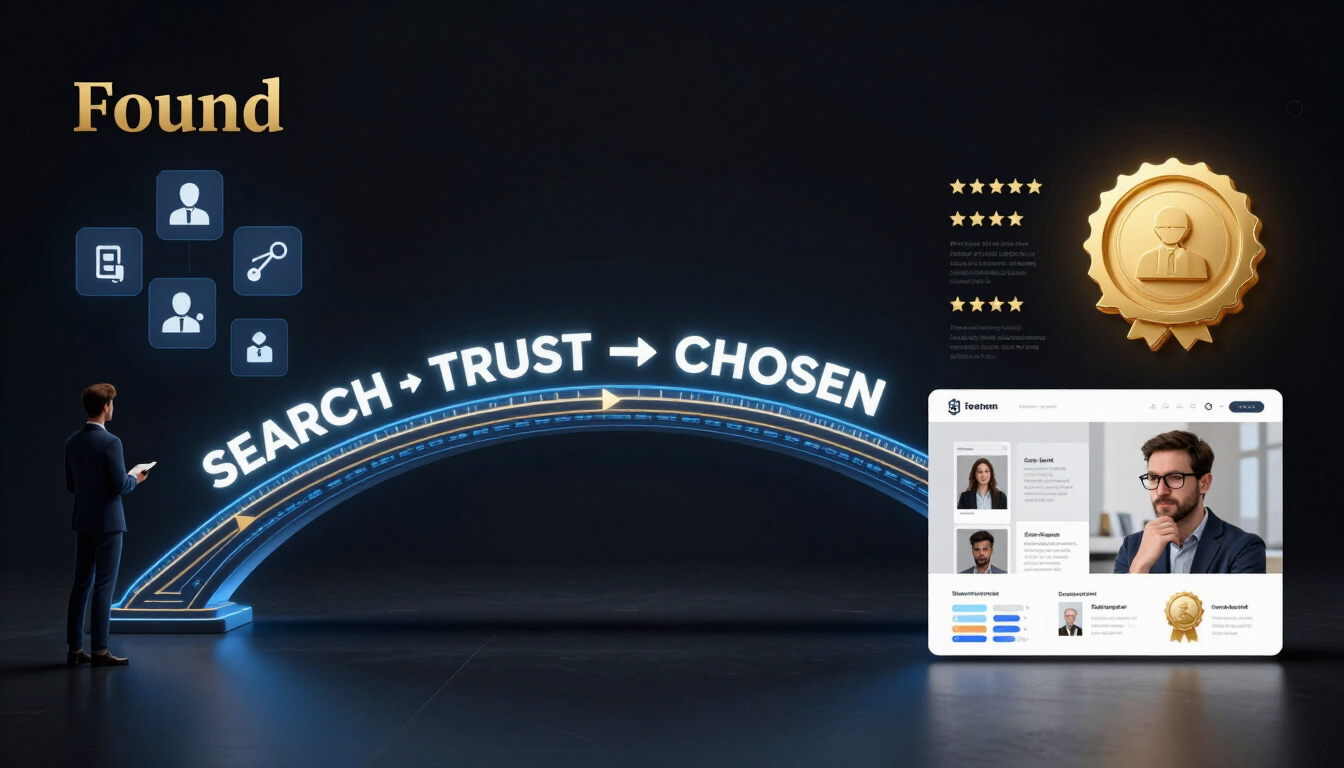
Being visible is only half the battle. You can rank on Google, show up in the Map Pack, and even appear in AI-generated answers; and still lose the customer to a competitor. Why? Because visibility gets you seen. Trust gets you chosen.
Before someone calls your business, books an appointment, or hands over their credit card, they're making one quiet calculation: Is choosing this business the safe decision? They look for proof. So does AI. When someone asks ChatGPT, Gemini, or Google's AI Overviews to recommend a contractor, dentist, or attorney, those tools scan the web for evidence of credibility before they suggest a single name.
This post breaks down the seven digital trust signals that shape those decisions. You'll learn what each one is, why it matters for your bottom line, and how to strengthen it—whether the person evaluating your business is a human customer or an AI system. Let's get into it.
Trust Signal #1: Consistent Business Identity
Your business name, address, and phone number should be identical everywhere they appear online. Google Business Profile, Yelp, your website, industry directories, social media- all of it needs to match.
This matters more than most business owners realize. When Google finds three different phone numbers or two slightly different addresses for your business, it loses confidence in which information is correct. That uncertainty can push you down in local search and out of the Map Pack.
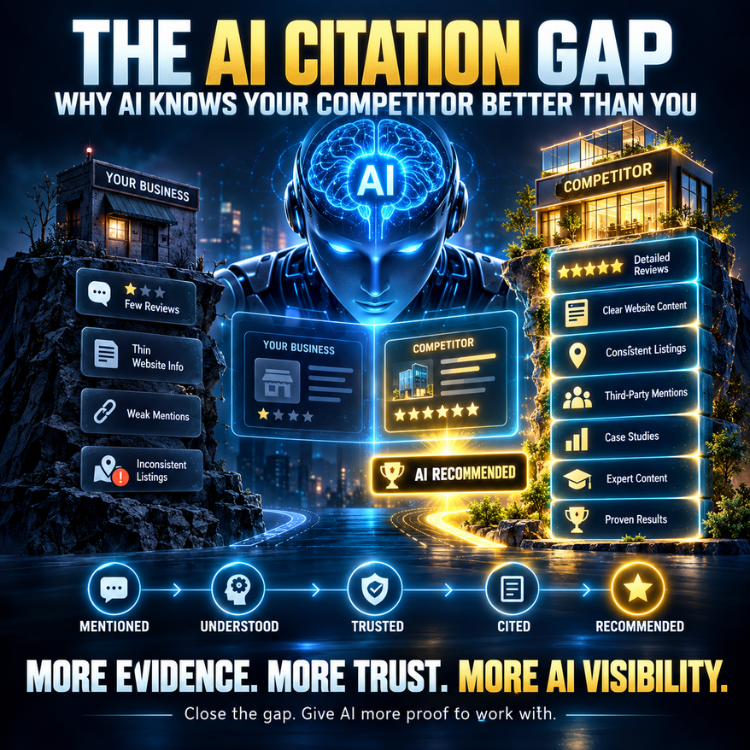
AI search works the same way. AI tools build a picture of your business by pulling data from across the web. Conflicting information makes it harder for them to understand and confidently recommend you.
How to strengthen it: Audit every listing. Make sure your name, address, and phone number are consistent down to the punctuation. Claim and verify your Google Business Profile. Fix outdated listings on directories you may have forgotten you're on.
Trust Signal #2: Detailed, Authentic Customer Reviews
Reviews are the closest thing to a personal recommendation a stranger can get. And they carry enormous weight, for humans and algorithms alike.
But not all reviews are equal. A profile with 4 vague five-star reviews is weaker than one with 60 detailed reviews that mention specific services, results, and names. Detailed reviews signal authenticity. They give customers the specifics they're looking for, and they give AI tools concrete language to understand what you do and how well you do it.
Consider the Reno business owner who told us: "Instead of 80% junk leads, roughly 80% of the calls were qualified." That kind of specific, results-focused feedback does more for trust than a wall of generic stars.
How to strengthen it: Ask every satisfied customer for a review. Make it easy, send a direct link. Respond to reviews, positive and negative, to show you're engaged. A steady stream of recent, detailed reviews beats a one-time burst every time.
Trust Signal #3: Real People Behind the Business
Customers trust businesses run by real people, not faceless brands. An "About" page with your name, photo, and story does more work than you'd think.
When someone can see the owner, meet the team, and understand who they'd actually be working with, hesitation drops. This is especially true for high-stakes services, home renovation, medical care, and legal work, where trust is everything.
AI systems also favor content that demonstrates real expertise and identity. Named authors, real credentials, and clear ownership signals help AI tools connect your business to genuine authority rather than anonymous content.
How to strengthen it: Put faces and names on your website. Add team bios. Share your story, why you started, what you stand for, how long you've been doing this. Real people build real trust.
Trust Signal #4: Evidence of Real Experience
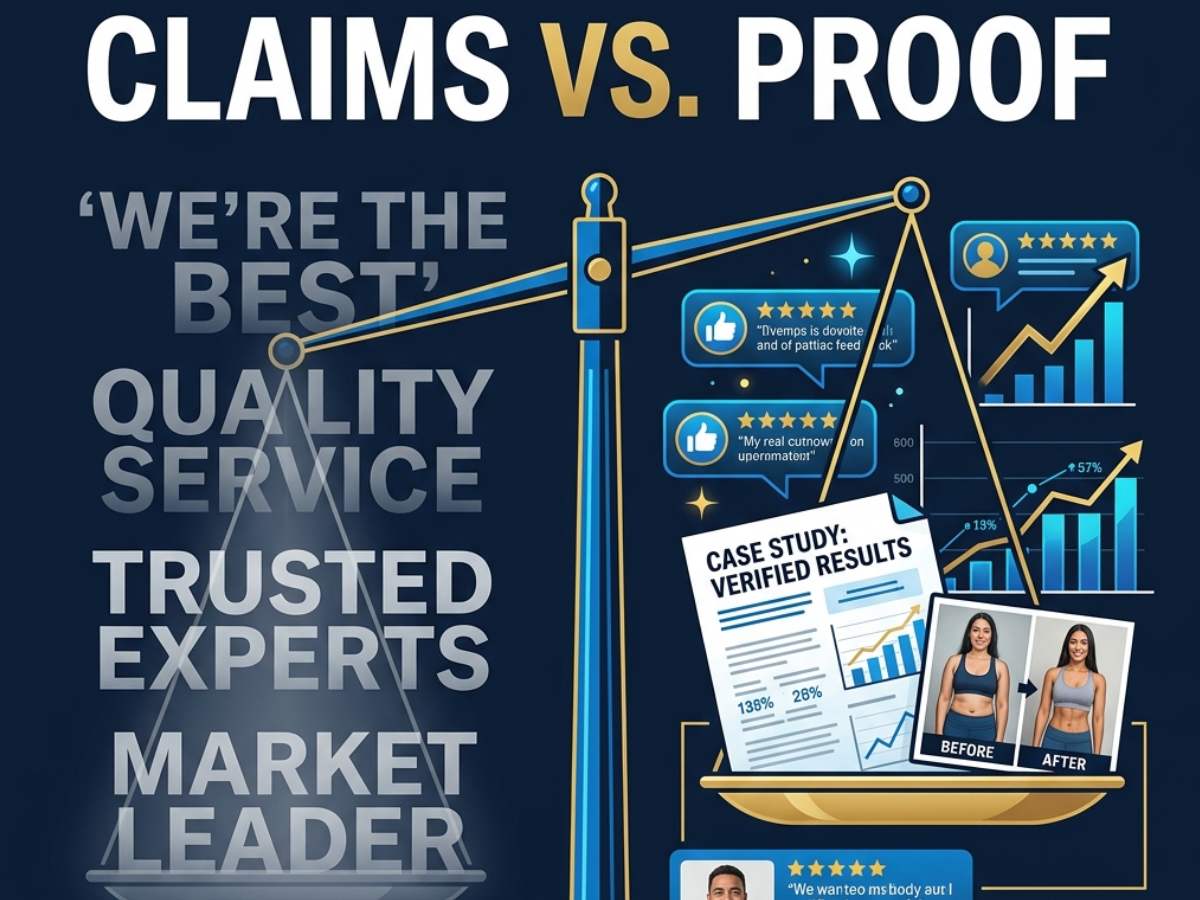
Anyone can claim they're good at what they do. Proof is what separates you from the competitor making the same claim.
This is where evidence does the heavy lifting:
- Before-and-after examples that show the transformation you deliver
- Case studies that walk through a real project from problem to result
- Project photos that let customers see your actual work
- Documented results with real numbers
- Testimonials tied to specific outcomes
Take the Reno client who reported tripling their client base: "I am now ranking on page one, positions one through three." That's not a vague promise. It's evidence.
Google's E-E-A-T framework, Experience, Expertise, Authoritativeness, and Trustworthiness, rewards exactly this kind of proof. The "Experience" piece was added specifically to prioritize content from people who have actually done the thing they're writing about.
How to strengthen it: Document your work. Photograph completed projects. Turn your best customer wins into short case studies. Show the results, not just the promises.
Trust Signal #5: Third-Party Validation
There's a difference between telling people you're trustworthy and having someone else vouch for you. Third-party validation is that outside stamp of approval.
This includes:
- Industry certifications and licenses
- Better Business Bureau accreditation
- Awards and recognitions
- Media mentions and press coverage
- Ratings on trusted platforms like Google and Trustpilot
These signals carry weight because they can't be self-manufactured. When a respected third party endorses your business, both customers and AI tools treat that as stronger evidence than anything you say about yourself.
How to strengthen it: Display your certifications and accreditations prominently. Pursue relevant industry awards. If you've been featured anywhere, showcase it. Every credible endorsement adds to the case for choosing you.
Trust Signal #6: Transparent Information
Vagueness breeds doubt. When customers can't find your pricing approach, service area, hours, or clear answers to common questions, they hesitate, and hesitation sends them to a competitor who makes the decision easier.
Transparency removes friction. A business that clearly explains what it does, who it serves, how it works, and what to expect feels safer to choose. This is why detailed service pages and honest FAQ sections convert so well.
Transparency also feeds AI visibility. When your website clearly answers the questions customers ask, AI tools can pull those answers directly into their recommendations. Clear, structured information isn't just good for humans—it's how you get surfaced in AI-generated results.
How to strengthen it: Spell out your services in detail. Explain your process. Answer the questions customers actually ask. Don't hide behind vague language or force people to call just to learn the basics.
Trust Signal #7: Consistent Authority Across the Web
The final signal is the sum of all the others working together, everywhere. Your reputation isn't built on one page; it's built across your website, Google Business Profile, review platforms, directories, social media, and any mention of your business online.
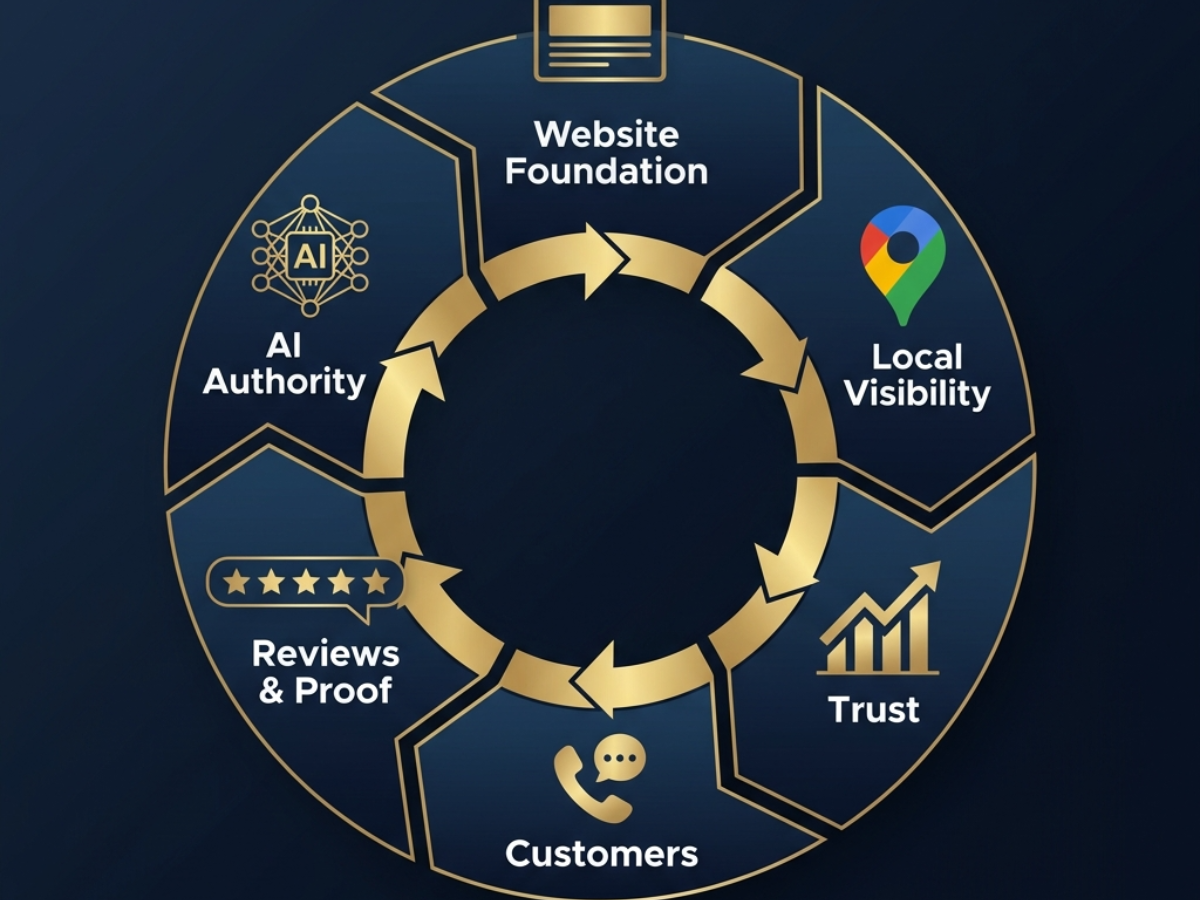
When those sources tell a consistent, credible story, they reinforce each other. A strong website backed by strong reviews, backed by accurate listings, backed by third-party validation creates a picture of authority that's hard to fake and hard to ignore.
This is what entity authority means in practice. Search engines and AI systems don't evaluate your business from a single source; they assemble a profile from everything they find. The more consistent and credible that profile, the more confidently they can rank and recommend you.
How to strengthen it: Think of your online presence as one connected reputation, not a collection of separate accounts. Keep everything aligned, accurate, and active. Authority compounds when every signal points the same direction.
How AI Search Uses Trust Signals
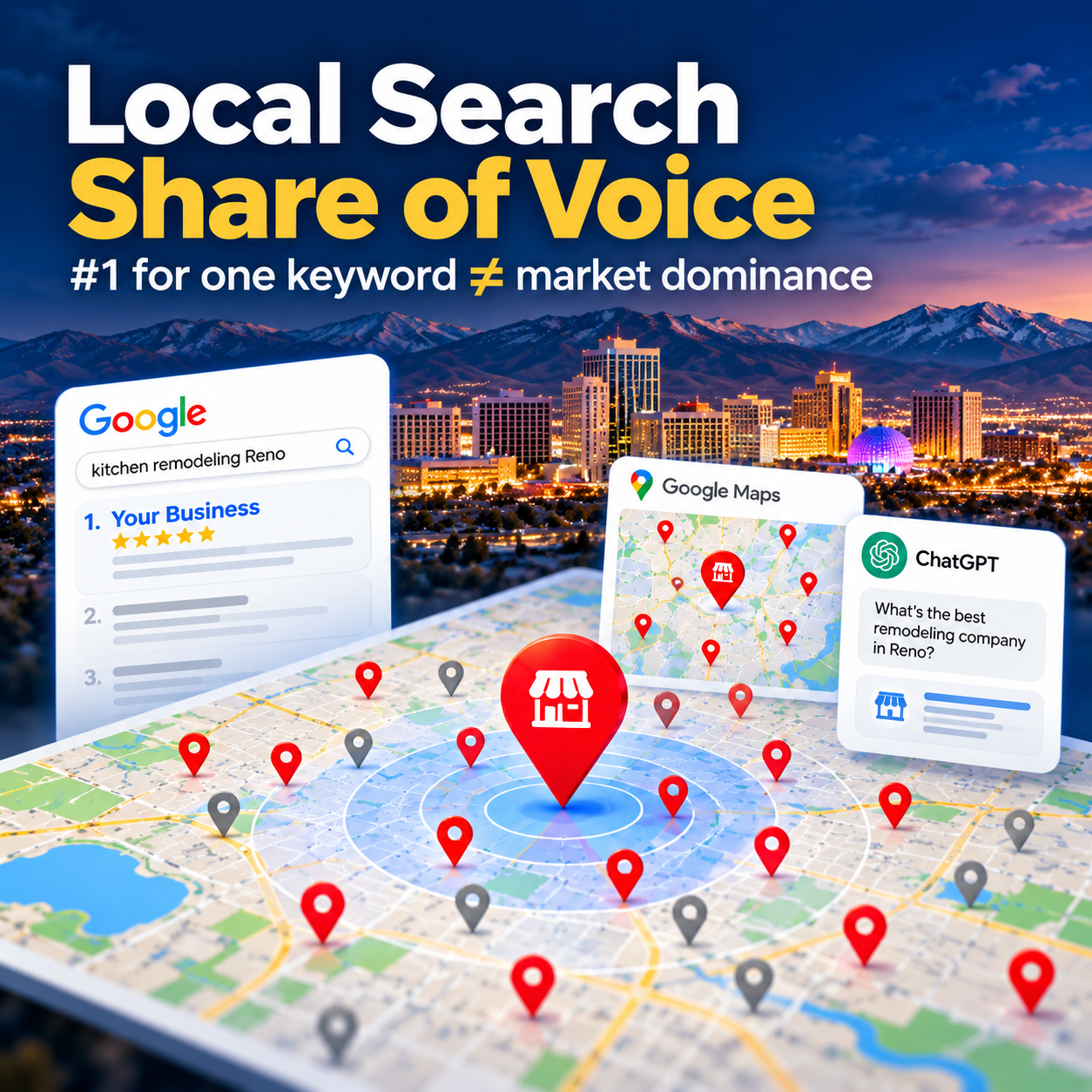
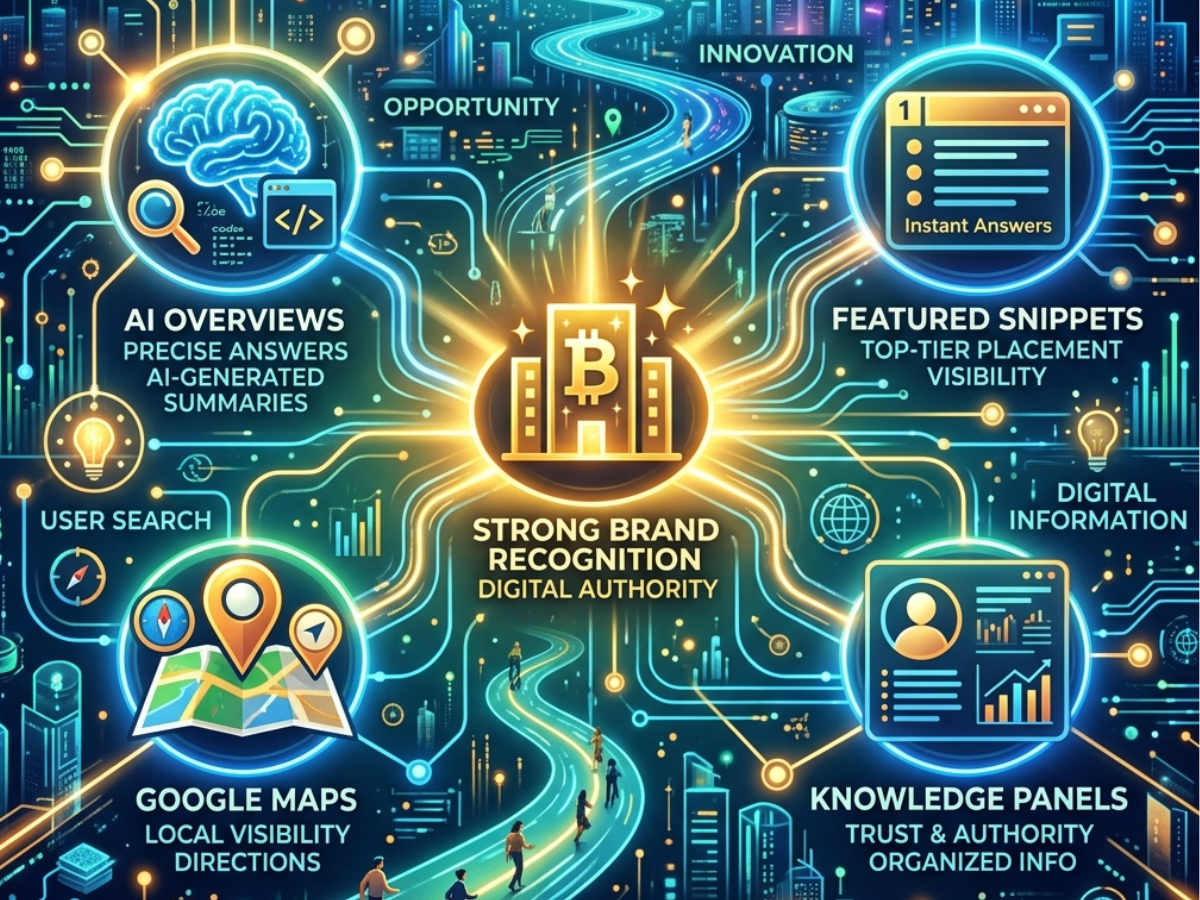
Here's what's changing in how customers find businesses. Search is expanding beyond the traditional list of blue links. More people are asking AI tools, ChatGPT, Gemini, Copilot, Perplexity, and Google's AI Overviews, to just recommend a business for them.
When someone types "best home renovation company near me" into an AI tool, that tool doesn't show ten options and let the customer sort it out. It often names a few, sometimes just one. To decide who makes that short list, AI systems lean heavily on the same trust signals customers use: consistent information, strong reviews, clear expertise, and cross-web authority.
This is the heart of GEO, Generative Engine Optimization. GEO is about helping AI-powered search tools understand and trust your business well enough to confidently recommend it when customers ask for what you offer. It's not a replacement for traditional SEO. It's the next layer.
The businesses that win in AI search are the ones already doing the trust-building work. If your signals are strong, AI is more likely to put your name in front of a customer before they ever visit a website, or call a competitor.
The Digital Trust Audit Checklist
Want to know where your business stands right now? Run through this quick self-audit. Give yourself one point for each item you can confidently check off.
Consistent Business Identity
- My name, address, and phone number match everywhere online
- My Google Business Profile is claimed and verified
Customer Reviews
- I have a steady stream of recent, detailed reviews
- I respond to reviews regularly
Real People
- My website shows real names, faces, and our story
- Team bios or ownership info are visible
Evidence of Experience
- I display project photos, before-and-afters, or case studies
- I show specific, documented results
Third-Party Validation
- My certifications, licenses, or accreditations are displayed
- Any awards or media mentions are showcased
Transparency
- My services, process, and service area are clearly explained
- I answer common customer questions on my site
Consistent Authority
- My website, listings, reviews, and social profiles tell one consistent story
- My online presence is active and up to date
Score yourself: 12–14 means you're building serious trust. 7–11 means you have real gaps costing you customers. 6 or below means competitors are almost certainly getting business that should be yours.
What to Do With This
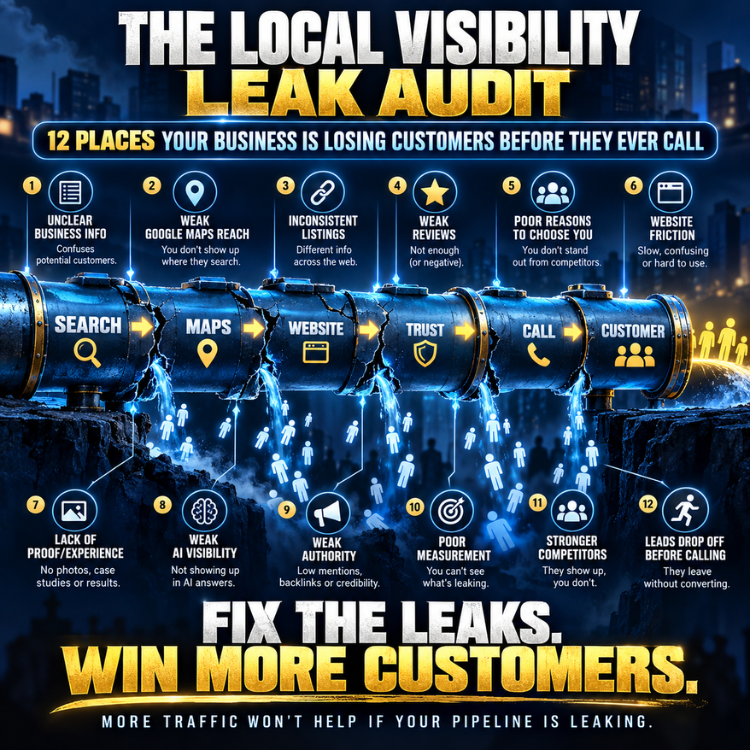
Visibility without trust is a leaky bucket. You can pour money into ranking and advertising, but if your trust signals are weak, customers and AI will keep choosing the business that feels safer to pick.
The good news? Every one of these seven signals is something you can control and improve. Start with the gaps. If your reviews are thin, build a system to collect them. If your listings are inconsistent, clean them up. If your website hides who you are, put your name and your proof front and center.
You don't need to become an SEO expert to compete. You need to know where your trust signals are strong, where they're weak, and what those gaps are costing you.
Want a clear picture of exactly where your business stands?
Get Your Digital Trust Score,
a straightforward assessment of how customers and AI search tools see your business, and where you're losing customers to competitors who are simply easier to trust.