Quick answer: The one-market advantage is the competitive benefit a business gains by building concentrated authority in a specific geographic market. Instead of spreading marketing thin across too many locations or audiences, you focus your content, reputation, reviews, and expertise where you can become the most recognizable and trusted choice.
You don't need to be known everywhere. You need to be impossible to ignore where your best customers are.
That's the idea most local business owners miss. They watch national brands and try to copy the playbook: broad reach, wide targeting, a message built to appeal to everyone. But a local contractor, medical practice, or home service company doesn't win by being everywhere. It wins by owning one market so completely that competitors struggle to get a foot in the door.
This article breaks down what the one-market advantage actually is, why geographic focus creates real competitive strength, and how to become the obvious choice in your service area. You'll finish knowing what to focus on, what to stop wasting money on, and when it makes sense to expand into a second market.
The Problem With Trying to Market to Everyone
Here's what happens when a local business tries to market like a national brand: the message gets watered down, the budget gets stretched thin, and the results disappear.
National brands have massive budgets. They can afford to spend across dozens of cities and still show up strong in each one. Your business can't; and shouldn't try to. When you spread your marketing across too many locations, too many audiences, and too many services, you become forgettable in all of them.
Think about it from the customer's side. When someone searches for a service near them, they're not looking for a company that serves "the entire western United States." They're looking for the business that clearly serves their area, understands their neighborhood, and shows up first when they search.
Trying to reach everyone usually means reaching no one with enough force to matter. You end up paying for activity, impressions, clicks, broad reach, without producing the calls, leads, and customers that actually grow the business.
More reach isn't the goal. More business is.
What Is the One-Market Advantage?
The one-market advantage is the strategic decision to build concentrated authority in a defined geographic market instead of chasing broad, unfocused visibility.
It means putting your content, reviews, local relevance, reputation, and expertise behind the area where your best customers actually live and search. Rather than being a small player in ten markets, you become the dominant player in one.
That's why
Relentless Business Mastery typically partners with only one business per industry within a specific market. The goal is to protect that client's competitive advantage and focus full strategic effort on helping them dominate their local area, not split attention among competitors fighting for the same customers.
The advantage compounds over time. The more authority you build in one market, the harder it becomes for a competitor to displace you. Reviews stack up. Local relevance strengthens. Your business becomes the name people already know before they even start searching.
Why Geographic Relevance Creates Competitive Strength
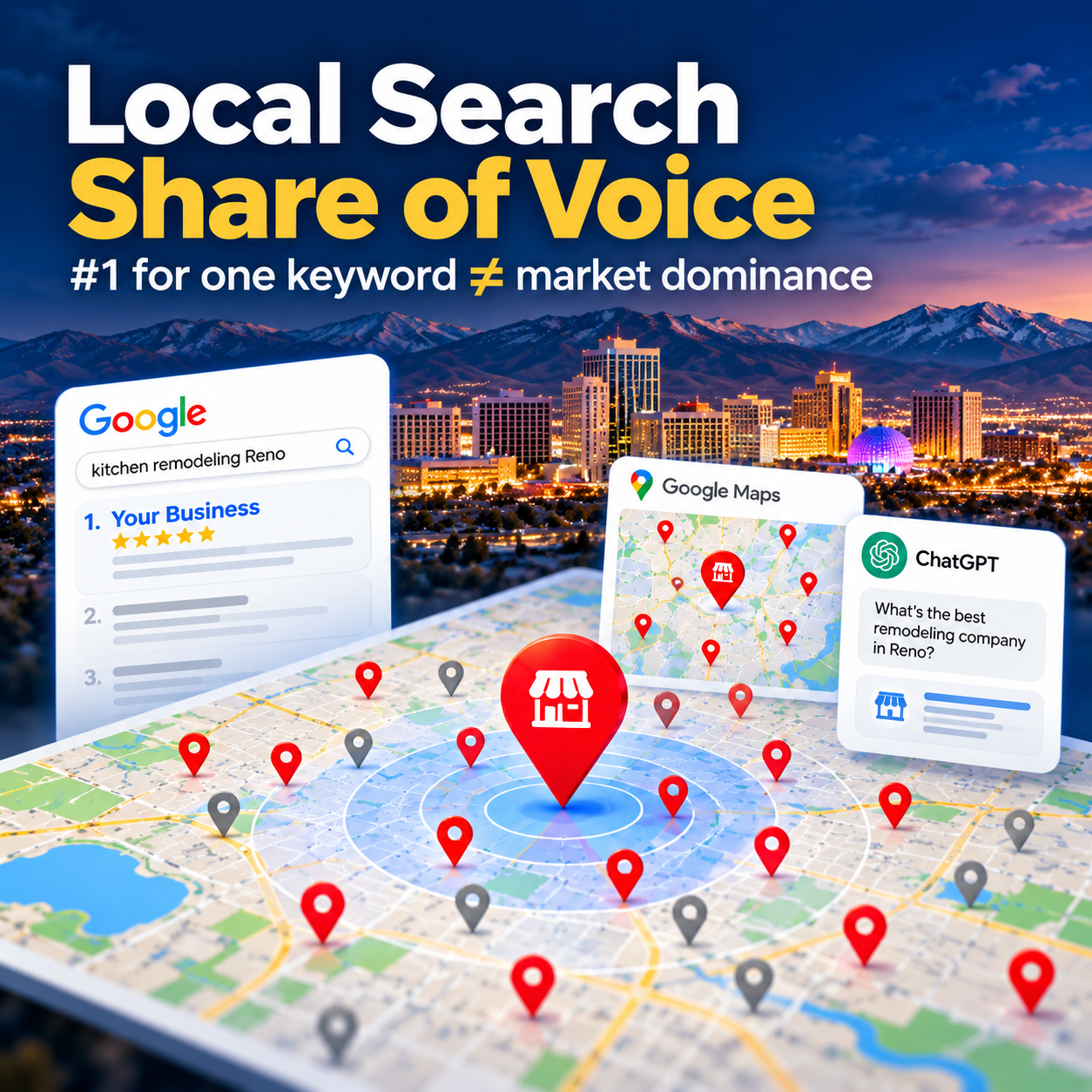
Search has limited real estate. Google's Map Pack shows three businesses at the top. AI tools like ChatGPT, Google AI Overviews, and Gemini increasingly hand back a short list of recommendations, not a page of options.
That means the businesses that win are the ones search engines and AI systems clearly associate with a specific place and service. Geographic relevance is what earns that association.
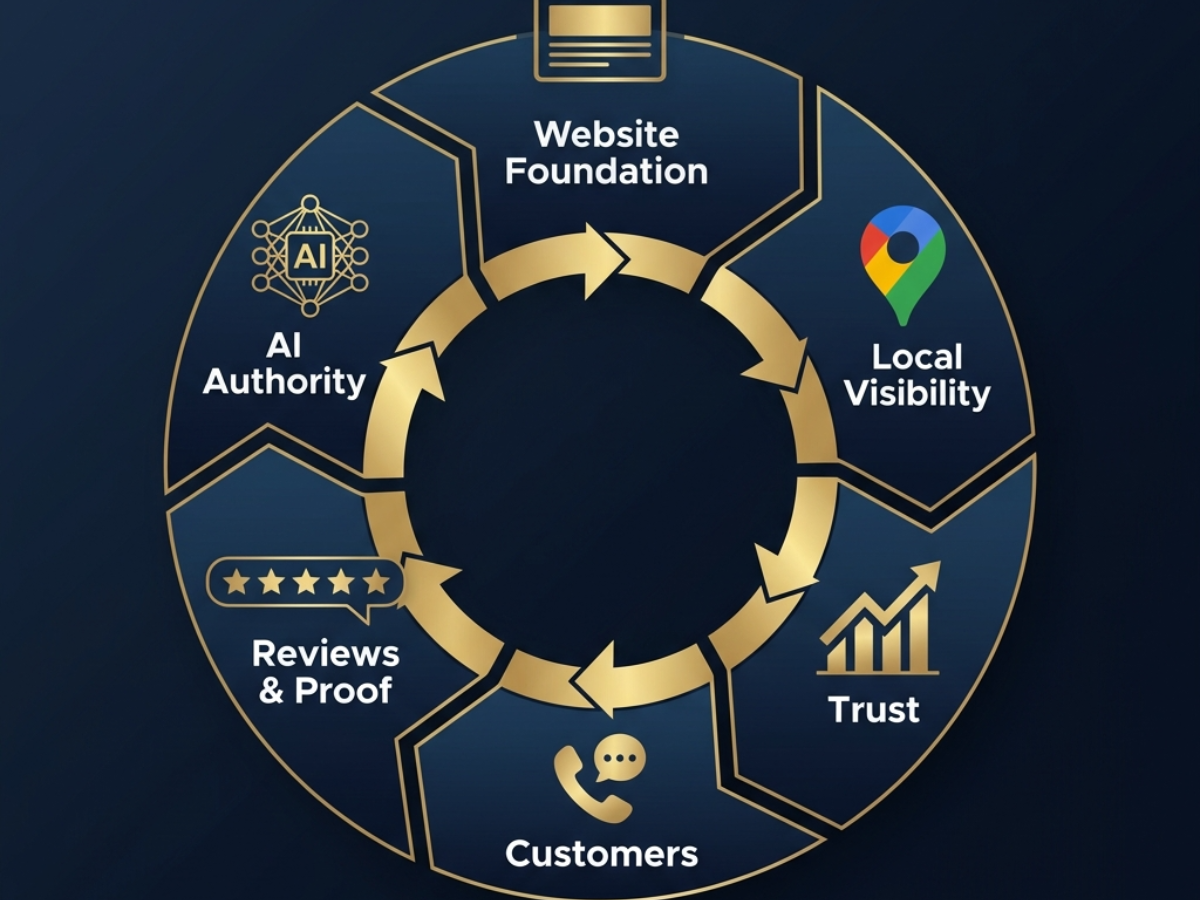
When your website, Google Business Profile, reviews, and content all point to the same market and the same services, you send a consistent signal: this business belongs here, serves these customers, and does this work. Search engines reward that clarity with visibility. AI systems reward it by recommending you when someone asks for a business like yours nearby.
A business trying to serve everyone sends a muddy signal. A business focused on one market sends a sharp one. Sharp signals win.
How Customers Define a "Local Expert"
Customers don't read your marketing plan. They form an impression based on a few simple signals, and those signals decide whether they trust you.
Here's what tells a customer you're the local expert:
- You show up first when they search for your service in their area.
- You have real reviews from people in their community, not vague five-star ratings from unknown places.
- Your content speaks to their situation:
the local climate, common problems in their type of home or business, the questions they actually have.
- Your business feels rooted in the area, not like a faceless company operating from three states away.
Notice that none of these signals require you to serve a huge territory. They require depth, not breadth. A customer in Reno trusts the business that clearly serves Reno, not the one claiming to cover half the country.
Build Authority Around Your Best Market
Building the one-market advantage isn't about doing more. It's about focusing on the right things. Concentrate your effort on five areas:
Service Area
Define the geographic area where your best customers actually live and where you can realistically compete. Make it clear across your website, your Google Business Profile, and your content. Vagueness costs you visibility.
Core Services
Focus on the services that drive the most revenue and the best customers. Trying to rank for everything dilutes your authority. Owning a few high-value services in one market beats being a generalist nobody remembers.
Customer Problems
Speak directly to the problems your customers are trying to solve. When your content answers the questions real customers ask, search engines and AI tools see you as a relevant, helpful authority, and customers see you as the business that gets it.
Local Expertise
Show that you understand your market. Reference local conditions, common issues in the area, and the specifics that a national brand can't speak to. This is where a focused local business beats a bigger, broader competitor.
Community Relevance
Reviews, local relationships, and community presence all strengthen the signal that you belong in your market. This reputation is hard for a competitor to copy, and it's one of the biggest reasons customers choose you.
How to Become the Obvious Choice in One Market
Becoming the obvious choice comes down to consistency across the places customers and AI systems look. Here's the practical approach:
- Optimize for Google Maps. The Map Pack is prime real estate for local businesses. Strengthen your Google Business Profile, local citations, review signals, and proximity relevance so you show up in the top three when customers search nearby.
- Win "near me" searches. High-intent searches like "near me" are customers ready to act. Make sure your business is optimized to capture them in your service area.
- Keep your business listings accurate and consistent. When your name, address, and details match everywhere online, search engines trust your information, and that trust improves your visibility.
- Build reviews continuously. Reviews are proof. They shape both customer decisions and search rankings, and they compound your authority over time.
- Optimize for AI search (GEO). GEO, Generative Engine Optimization, helps AI tools like ChatGPT, Google AI Overviews, and Gemini understand your business well enough to recommend it when customers ask. Structured content, FAQs, and clear local relevance all help.
None of these is a one-time trick. Local market domination is built through consistency, testing, optimizing, and improving until you're the business competitors have to work around.
The Difference Between Geographic Reach and Geographic Authority
This distinction trips up a lot of business owners, so let's be clear about it.
Geographic reach is how many places your marketing touches.
Geographic authority is how strongly customers and search engines associate you with a specific market.
Reach without authority is expensive and weak. You can technically "serve" twenty cities while dominating none of them. You show up faintly everywhere and strongly nowhere.
Authority in one market is the opposite. You become the clear, trusted choice in a defined area, the business that shows up first, earns the reviews, and captures the high-intent searches. That authority produces calls, leads, and customers. Reach alone rarely does.
Choose authority in one market over reach across many if your goal is measurable growth rather than a bigger map with weaker results.
When It Makes Sense to Expand Into a Second Market
Focusing on one market first doesn't mean you can never grow. It means you earn the right to expand.
Consider a second market when you've built genuine dominance in your first one, you're consistently in the Map Pack, your reviews outpace competitors, your pipeline is full of qualified leads, and your local authority is strong enough that it wouldn't collapse if you shifted some attention.
The mistake is expanding too early. A business that jumps into a second market before owning the first usually ends up with two weak positions instead of one strong one. Build the foundation. Prove the model. Then extend it.
GEO optimization should support your actual market, not force unnecessary geographic expansion. Reno, Nevada. Sacramento, California. Dallas, Texas. A smaller regional service market. The right move is different for each, and it depends on where your best customers already are, not on how big a territory you'd like to claim.
The One-Market Authority Checklist
Use this to gauge how strong your position is in your primary market:
- You have a clearly defined service area across your website and Google Business Profile.
- You focus on a few core, high-value services rather than trying to rank for everything.
- Your content speaks directly to your local customers' problems.
- You consistently appear in Google's Map Pack for your key services.
- You're capturing high-intent "near me" searches in your area.
- Your business listings are accurate and consistent everywhere online.
- You generate reviews continuously from real local customers.
- Your content and structure help AI tools understand and recommend your business.
- Your local reputation would be hard for a competitor to copy.
If you checked most of these, you're building real local authority. If you couldn't check many, that's exactly where the opportunity is.
Own Your Market Before Your Competitors Do
The businesses that win locally aren't the ones spreading themselves across the widest map. They're the ones who commit to a market, build authority customers can feel, and become the obvious choice when someone searches.
You don't need to be everywhere. You need to be the first name people find and trust, where your best customers already are. That's the one-market advantage, and it's a position competitors can't easily take from you once you've earned it.
Get a Free Marketing Gap Evaluation and identify the opportunities that can help your business build stronger local authority. Let's see where you stand against your competition and build the strategy to help you own your market.