Quick answer: A local visibility flywheel is a marketing system where SEO, Google Maps, reviews, business listings, content, AI search visibility, and customer trust reinforce one another. Instead of treating each channel separately, businesses build momentum; every result makes the next result easier to achieve.
Most business owners have experienced it. You spend money on marketing. For a few weeks, the phone rings a little more. Then the campaign ends, the budget shifts, and everything goes quiet again. You're back to square one, waiting and wondering where the next customer will come from.
Here's the problem: that stop-and-start pattern isn't a strategy. It's a treadmill. And it's exactly why so many local businesses feel like they're spending money without building anything that lasts.
The best marketing works differently. It doesn't create a one-time spike in visibility. It creates a system where every result makes the next result easier to achieve. Better content strengthens your authority. Stronger authority helps AI and search engines understand you. Better understanding means more visibility. More visibility means more customers. More customers mean more reviews, and more reviews strengthen your Google Maps presence and branded searches, which drives even more visibility.
That's the Local Visibility Flywheel. In this post, we'll break down how it works, walk through its five stages, and show you how to find the weakest point that may be slowing your growth right now.
Why Do Most Businesses Experience Stop-and-Start Marketing?
Marketing that starts and stops rarely builds momentum. It resets. Understanding why helps explain why the flywheel approach produces better long-term results.
The problem with campaign-based thinking
A campaign has a beginning and an end. You launch it, it runs, and then it stops. When it stops, so does the visibility it created. Campaign-based thinking treats marketing like a light switch, on when the budget allows, off when it doesn't.
The trouble is that customers don't search on your schedule. They search when they need you. If your visibility disappears the moment a campaign ends, you're invisible during the exact moments a potential customer is looking.
Why isolated tactics produce isolated results
Run a single Facebook ad, and you might get a handful of leads. Update your Google Business Profile once, and you might climb a few spots. But when these tactics operate in isolation, each one delivers a small, contained result that fades on its own.
Isolated tactics don't feed each other. A great website with no reviews still struggles to convert. Strong reviews with a broken website still lose customers. The power comes from connection, not isolation.
What happens when marketing stops every time the budget changes
Every time you pause marketing, you lose momentum. Rankings slip. Competitors move up. The trust signals you built start to fade. When you restart, you're not continuing; you're rebuilding from a lower position than where you left off.
That's the hidden cost of stop-and-start marketing. You pay repeatedly to recover ground you already covered, instead of building on it.
What Is the Local Visibility Flywheel?
The Local Visibility Flywheel is a marketing model where each part of your digital presence powers the next. Think of a heavy wheel. The first push takes real effort. But once it's turning, each additional push adds speed, and the momentum keeps building on itself.
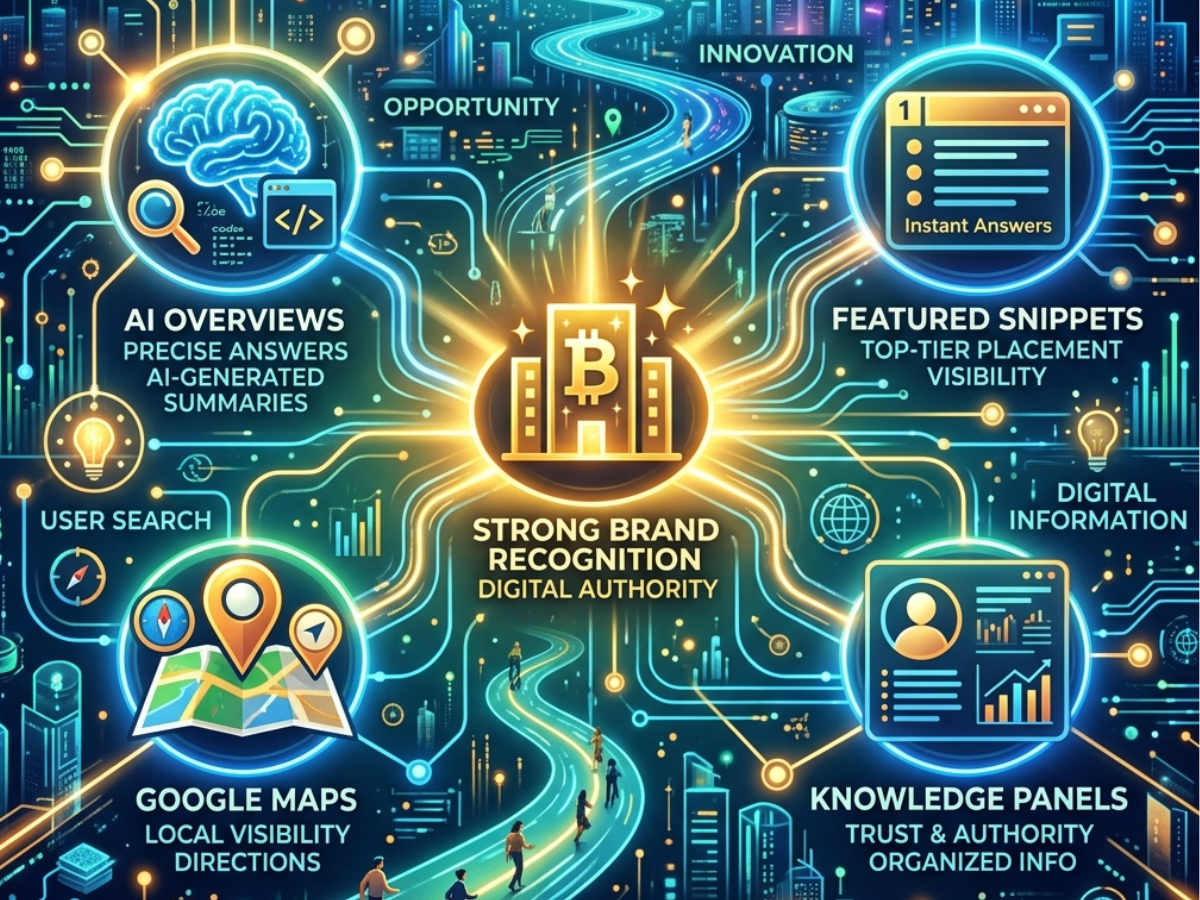
Applied to local marketing, the flywheel connects the signals that make you easier for customers, Google, and AI systems to find and trust. Your foundation feeds your visibility. Your visibility earns customers. Your customers generate trust signals. Those trust signals push you higher, which brings more customers, which generates even more signals.
This model fits how modern search actually works. Google, Google Maps, and AI tools like ChatGPT and Gemini all evaluate multiple, connected signals when deciding which businesses to recommend. A flywheel strengthens all of those signals together, which is why the results compound instead of fade.
Let's walk through the five stages.
Stage One: Build a Clear Digital Foundation
The flywheel can't turn without a solid foundation. This stage is about giving customers, search engines, and AI systems clear, consistent information about your business.
Your foundation includes:
- Website: A fast, mobile-friendly site that clearly explains what you do and who you serve.
- Business identity: Consistent name, brand, and messaging across every platform.
- Service information: Detailed pages that spell out exactly what you offer.
- Location relevance: Clear signals about the areas you serve.
- Entity consistency: Matching business details: name, address, phone, everywhere you appear online.
When your foundation is clear, search engines and AI tools can understand you with confidence. When it's inconsistent, they hesitate. And hesitation costs you visibility. Learn more in our guide to
Entity SEO.
Stage Two: Earn Local Visibility
With a strong foundation in place, the next push gets the wheel moving. Stage two is about getting found when local customers search for what you sell.
Key drivers include:
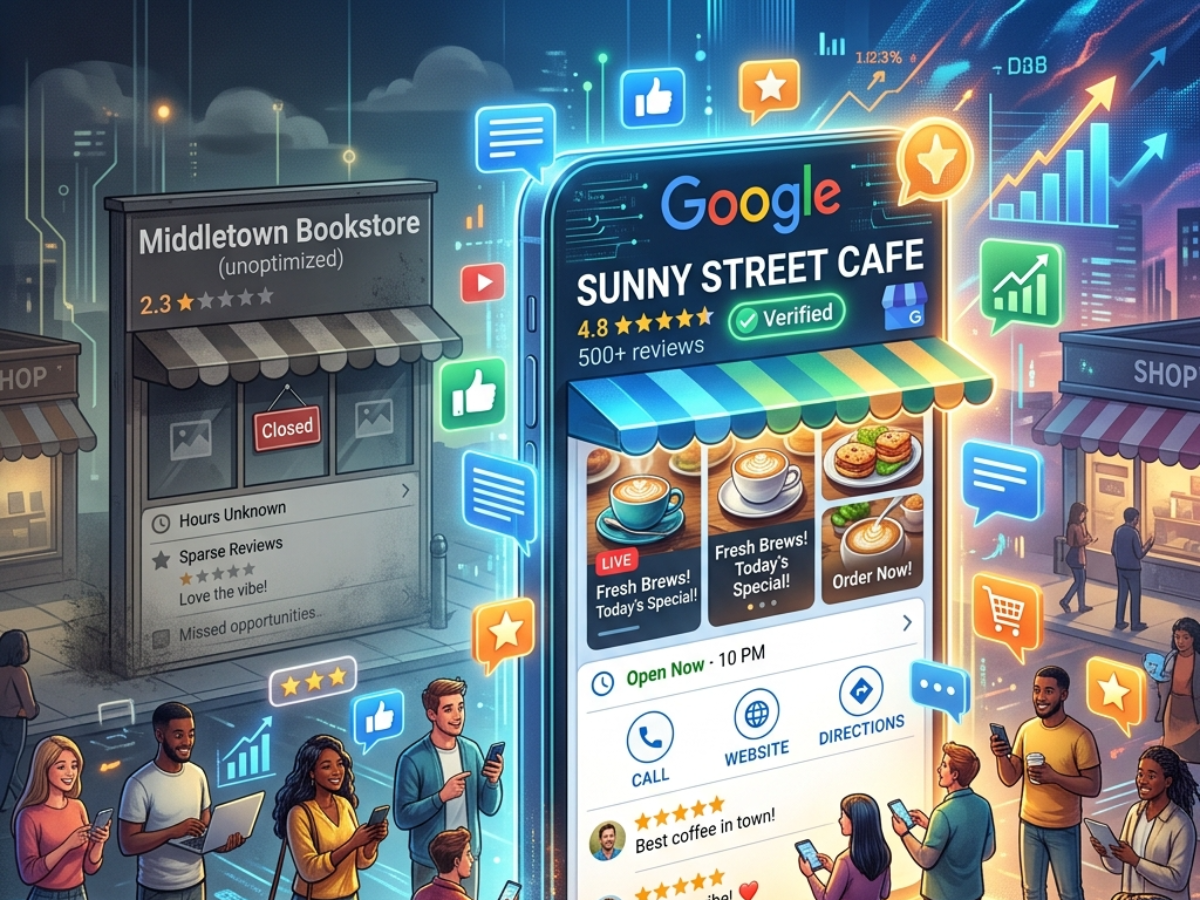
- Google Business Profile: The engine of local visibility, optimized to show up in local results.
- Google Maps: Prime digital real estate. When someone searches nearby, you want to be one of the first businesses they see. See our
Google Maps SEO breakdown.
- Local content: Pages and posts that answer the questions your local customers are asking.
- Citations: Consistent business listings across major directories. Explore
Business Listings & Voice Search.
- Near-me optimization: Positioning to capture high-intent "near me" searches from ready-to-buy customers.
Google Maps is some of the most valuable real estate a local business can own. If you're not in the top results, someone else is taking those calls.
Stage Three: Create Trust
Visibility gets you seen. Trust gets you chosen. Once customers can find you, they need a reason to pick you over the business listed right below.
Trust signals include:
- Reviews: A steady stream of genuine, positive reviews from real customers.
- Case studies: Documented examples of the results you deliver.
- Real customer outcomes: Specific, believable proof of the value you provide.
- Original media: Photos and videos of your actual work, team, and location.
- Author credibility: Content that demonstrates you know your field.
Trust does double duty. It convinces customers to choose you, and it signals to Google and AI systems that you're a legitimate, established business worth recommending.
Stage Four: Turn Visibility Into Customers
Visibility without conversion is just expensive attention. Stage four turns the people finding you into actual business.
This is where visibility becomes:
- Calls: Phone inquiries from customers ready to talk.
- Forms: Website submissions from interested prospects.
- Booked appointments: Scheduled consultations and jobs.
- Qualified leads: Inquiries from people who actually match your ideal customer.
More traffic isn't the goal. More business is. A flywheel that spins without producing calls, forms, and booked appointments isn't working; it's just spinning. This is why conversion matters as much as visibility.
Stage Five: Turn Customers Into New Authority Signals
Here's where the flywheel starts to power itself. Every customer you serve well becomes fuel for the next turn of the wheel.
Satisfied customers generate:
- New reviews: Fresh, positive feedback that strengthens your reputation.
- New testimonials: Stories you can share as social proof.
- Case studies: Documented wins that build authority.
- Brand searches: People searching for you by name, a powerful trust signal for Google.
- Word-of-mouth mentions: Referrals and online mentions that expand your reach.
These new signals feed directly back into Stage One and Stage Two. More reviews strengthen your Google Maps presence. More branded searches tell Google you're a trusted name. More authority helps AI systems recommend you with confidence. The wheel keeps turning, and each turn takes less effort than the last.
How Does AI Search Accelerate the Flywheel?
AI-powered search adds speed to the entire system. Tools like ChatGPT, Google AI Overviews, Gemini, and Perplexity are changing how customers find businesses. Instead of scrolling through ten blue links, people increasingly ask AI tools for direct recommendations.
Here's why that matters for the flywheel: AI systems rely on the same signals your flywheel is already building. They evaluate your content, your reviews, your consistency, and your authority to decide which businesses to recommend. GEO, Generative Engine Optimization, is the practice of helping AI tools understand your business well enough to recommend it confidently.
A business with a strong flywheel is already feeding AI systems exactly what they need. The clearer your foundation, the stronger your reviews, and the more consistent your presence, the more likely AI tools are to name you first. Dig deeper in our guide to
AI SEO & GEO.
How Do You Find the Weakest Point in Your Visibility Flywheel?
A flywheel is only as strong as its weakest stage. If one stage stalls, the whole system slows down.
Ask yourself:
- Foundation: Is your website clear, fast, and consistent everywhere it appears?
- Visibility: Are you showing up in Google Maps and local searches for your services?
- Trust: Do you have a steady stream of recent, positive reviews?
- Conversion: Are visitors actually calling, filling out forms, and booking?
- Authority signals: Are happy customers generating new reviews and branded searches?
Wherever you answer "no" or "not sure" is likely the point slowing your growth. Fix that stage, and the whole flywheel spins faster. For a complete view of how these pieces connect, see
The Complete Local SEO Ecosystem
and
Search Box Optimization.
The 90-Day Local Visibility Flywheel Plan
You don't build a flywheel overnight. But 90 days is enough to get it turning. Here's a practical sequence:
Days 1–30: Strengthen the foundation. Audit your website, fix inconsistent business listings, and make sure your name, address, and phone match everywhere. Optimize your Google Business Profile with complete, accurate information.
Days 31–60: Build visibility and trust. Create local content that answers real customer questions. Launch a system to consistently request reviews from every customer. Optimize for "near me" searches in your service area.
Days 61–90: Convert and compound. Tighten your website's calls-to-action so visibility turns into calls and forms. Track every lead so you know what's working. Turn new customers into fresh reviews, testimonials, and branded searches that feed the wheel again.
By day 90, you're not running a campaign that stops. You're operating a system that builds on itself.
What We Have Seen Working With Real Businesses
The compounding effect isn't theory. It shows up in real results.
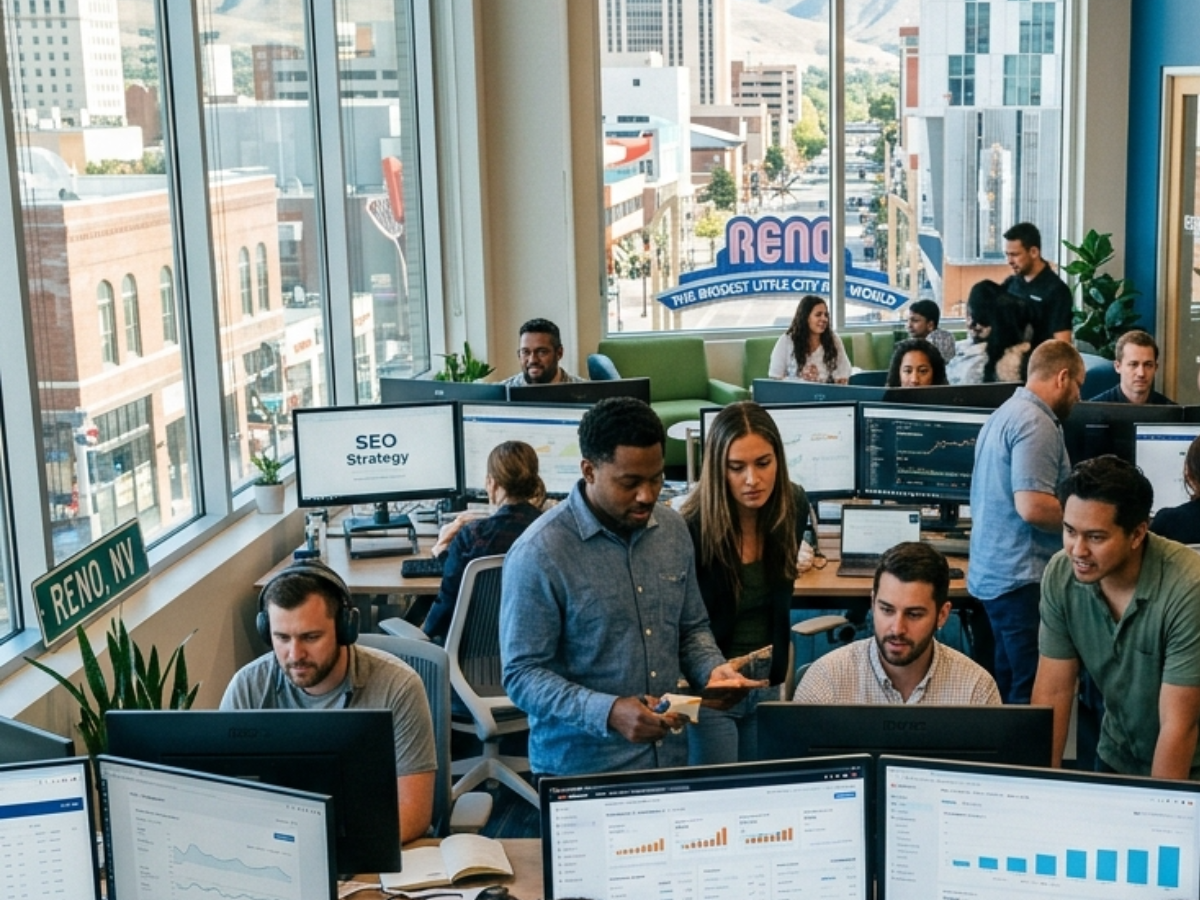
Take one Reno business owner's experience. As Jim from Reno put it: "Within 90 days the phone calls increased dramatically. But more importantly, the quality flipped. Instead of 80% junk leads, roughly 80% of the calls were qualified. That changes everything for a business owner."
Notice the sequence. Improved visibility led to more calls. Better optimization improved lead quality. Higher-quality customers meant better outcomes, and better outcomes generate the reviews and referrals that push the flywheel forward. One improvement created secondary benefits that kept building.
Another client, Michael, described a similar chain reaction: "Since doing business with Relentless Business Mastery, I have tripled the amount of clients I get. I am now ranking on page one, positions one through three." Page-one rankings brought visibility. Visibility brought clients. And a tripled client base becomes a growing engine of new reviews and referrals.
That's the flywheel in action. No single tactic did it. The connected system did.
Find the Weakest Point in Your Local Visibility Flywheel
Your competitor isn't necessarily better than you. They may simply have a flywheel that's already turning, while yours is stuck at the first push.
The good news? You don't have to guess where the problem is. A clear diagnosis tells you exactly which stage is slowing your growth, so you can fix it and let the momentum build.
Get a Free Marketing Gap Evaluation and discover which part of your digital presence may be holding you back. Stop paying for marketing activity. Start building a system that compounds.