Quick answer: Your competitor showing up in AI search before you doesn't always mean they're better. It usually means AI systems have more evidence, clearer business information, stronger reviews, better content, and more third-party validation, which makes them the safer recommendation. Close that evidence gap, and you can catch them.
You've probably done it yourself. You open ChatGPT or type a question into Google, and instead of scrolling through ten blue links, you get a short list of recommended businesses. Now imagine a customer in your area doing the same thing, and your competitor's name comes up while yours doesn't.
That's the frustrating question we hear more and more from business owners: "Why is my competitor showing up when I'm not?"
Here's the truth most agencies won't tell you. Your competitor may not offer a better product or service. They may simply be easier for AI systems to understand, trust, and recommend. AI tools don't reward the best business. They reward the business with the most evidence behind it.
This post breaks down exactly why that happens, how to check where you stand, and what to do about it over the next 90 days. Let's get into it.
What Does It Mean to "Show Up" in AI Search?
AI search visibility means your business gets mentioned, cited, or recommended when someone asks an AI-powered tool a question related to what you sell.
That includes tools like:
- ChatGPT — when someone asks for the "best plumber in Reno" or "a good family dentist near me"
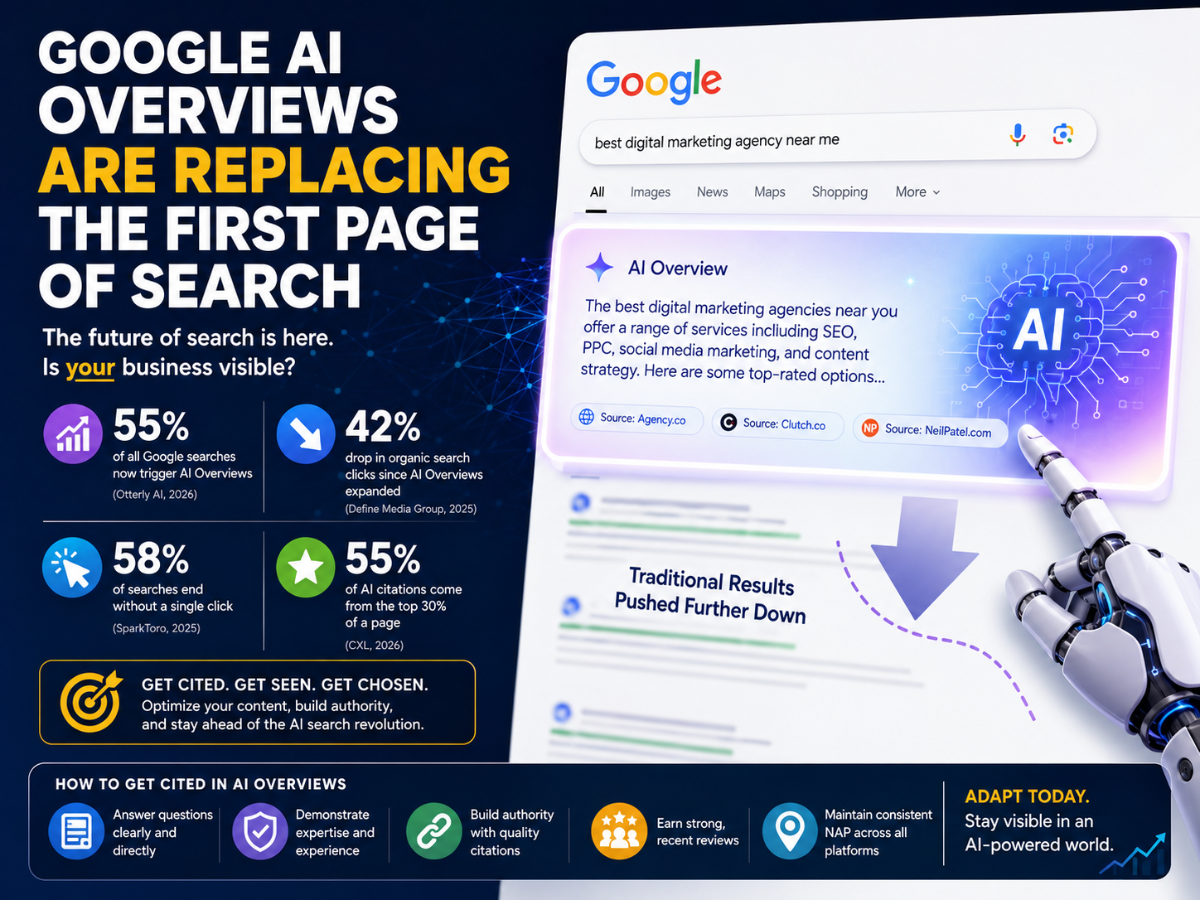
- Google AI Overviews — the AI-generated summary that now sits at the top of many search results
- Perplexity — an AI search engine that cites specific sources and businesses
- Gemini — Google's AI assistant, built into search and Android devices
- Voice assistants — Siri and Alexa pulling answers from structured data
Traditional SEO was about ranking on a page. AI search is different. Instead of listing every option, these tools often recommend just a few businesses, or sometimes only one. That limited real estate makes visibility even more competitive than a standard Google search.
If your business isn't part of that short list, you're invisible at the exact moment a customer is ready to choose.
How to Check Whether AI Is Recommending Your Competitors
Before you fix the problem, confirm it exists. Here's a simple test you can run in about 15 minutes.
Open each AI tool, ChatGPT, Google AI Overviews, Perplexity, and Gemini, and ask the kinds of questions your customers ask.
For example:
- "Who are the best [your service] providers in [your city]?"
- "I need a [your service] near [your area]. Who should I call?"
- "Compare the top [your industry] companies in [your city]."
Write down which businesses get named. Then ask yourself three questions:
- Does my business show up at all?
- Which competitors show up consistently?
- What does the AI say about them: reviews, experience, specialties?
If competitors appear and you don't, you have an AI search visibility gap. The rest of this article explains the seven most common reasons that gap exists.
Reason #1: AI Understands Your Competitor Better Than It Understands You
AI systems recommend businesses they can clearly understand. If your online presence is vague, inconsistent, or incomplete, AI has little to work with.
Think of it this way. When AI scans the web for a recommendation, it's looking for a clear answer to "Who is this business, what do they do, and who do they serve?" If your competitor's website, listings, and content answer those questions plainly, AI trusts them more.
The fix starts with clarity. Your business name, services, location, and specialties should be spelled out consistently everywhere a customer, or an AI system, might look.
Reason #2: Your Competitor Has Stronger Entity Signals
An "entity signal" is simply the collection of information that tells search engines and AI systems exactly who your business is. Your name, address, phone number, website, categories, and how often other trusted sources mention you—all of it adds up.
When those signals are strong and consistent, AI connects the dots with confidence. When they're weak or scattered, AI hesitates. And hesitation means your competitor gets the recommendation.
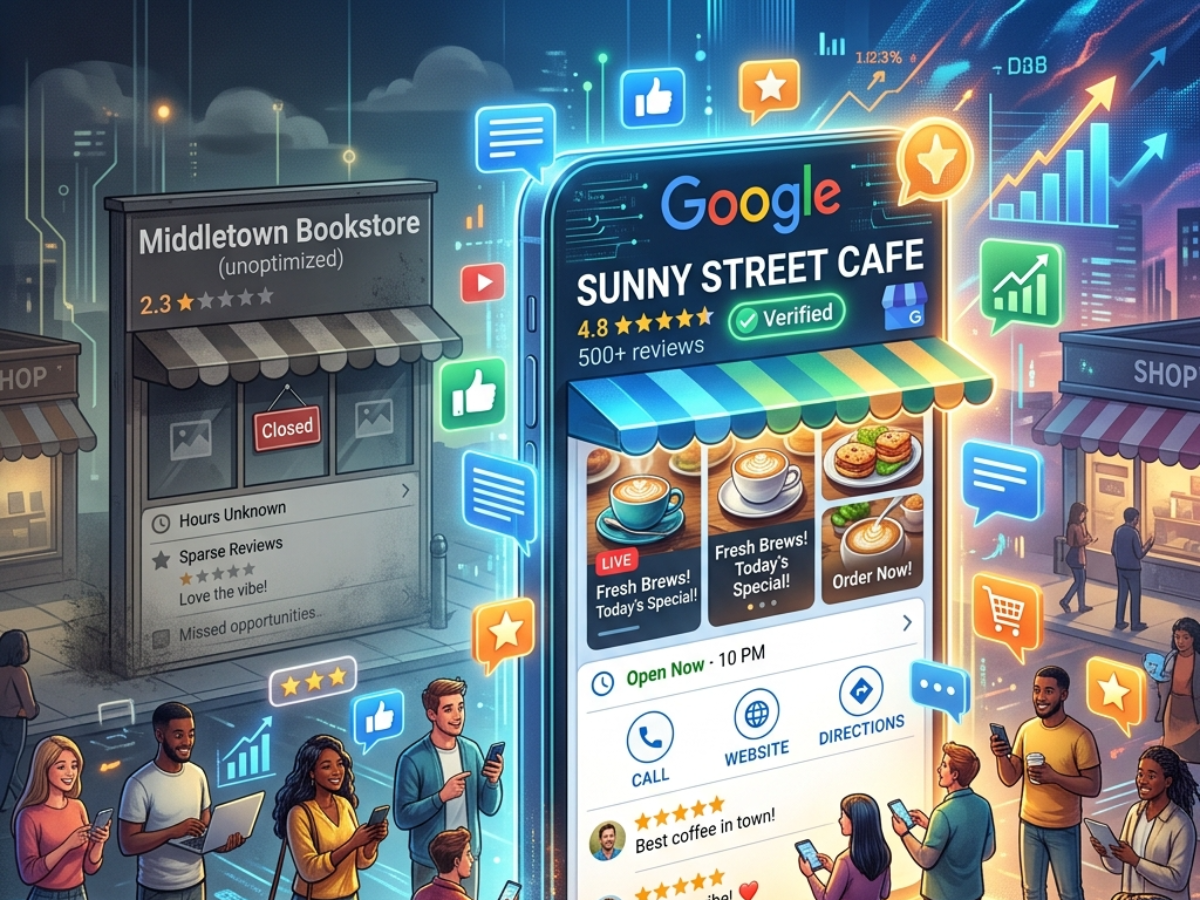
Strong entity signals come from a well-optimized Google Business Profile, accurate listings across major directories, and consistent mentions of your business across the web. This is the foundation of Generative Engine Optimization (GEO), helping AI tools understand your business well enough to recommend it with confidence.
Reason #3: They Have More Evidence of Real Experience
AI systems increasingly favor businesses that show proof of real-world experience. This lines up with how search engines already evaluate expertise, authoritativeness, and trustworthiness.
Your competitor might be publishing case studies, sharing project photos, answering customer questions, or featuring detailed service pages. Every one of those signals tells AI: this is a real, experienced business doing real work.
If your online footprint is thin, AI has no proof to point to. Building evidence of experience, through content, examples, and specifics, gives AI a reason to choose you.
Reason #4: Their Reviews Tell a Better Story
Reviews do more than build trust with customers. AI systems read them too.
It's not just about your star rating. AI looks at how many reviews you have, how recent they are, how often new ones come in, and what those reviews actually say. A competitor with a steady stream of detailed, recent five-star reviews sends a much stronger signal than a business with a handful of old ones.
If your reviews are sparse or outdated, AI has less confidence recommending you. A consistent review generation system, one that invites every customer to leave feedback, keeps that signal fresh and strong.
Reason #5: Their Content Answers Questions More Clearly
AI pulls answers from content that directly addresses what people ask. If your competitor's website answers customer questions in plain, clear language, AI can easily lift and cite that information.
Ask yourself: does your website actually answer the questions your customers have? Things like pricing, process, service areas, and common concerns. Or does it just list services with no real substance?
Content structured around real questions, with clear, self-contained answers, gives AI exactly what it needs to recommend you. Vague marketing copy does not.
Reason #6: They Have Stronger Third-Party Validation
AI systems don't just trust what you say about yourself. They trust what others say about you.
Third-party validation includes news mentions, articles, directory listings, industry associations, and citations from other credible websites. When trustworthy sources reference your business, AI treats you as a safer, more legitimate recommendation.
If your competitor has been featured in local publications or referenced across authoritative sites, they've built a wall of validation you may be missing. Earning those mentions strengthens your case with both search engines and AI.
Reason #7: Their Business Information Is More Consistent
This one is simple but overlooked. If your business name, address, and phone number appear differently across the web, one version on your website, another on Yelp, an old address on a directory, AI gets confused.
Inconsistent information creates doubt. And AI systems avoid recommending businesses they aren't sure about. Your competitor may simply have cleaner, more consistent data everywhere it counts.
Auditing and correcting your listings so every source matches removes that doubt and strengthens your visibility.
How to Perform an AI Competitor Visibility Analysis
Now that you know the seven reasons, here's how to measure where you stand against your competition. We call this the
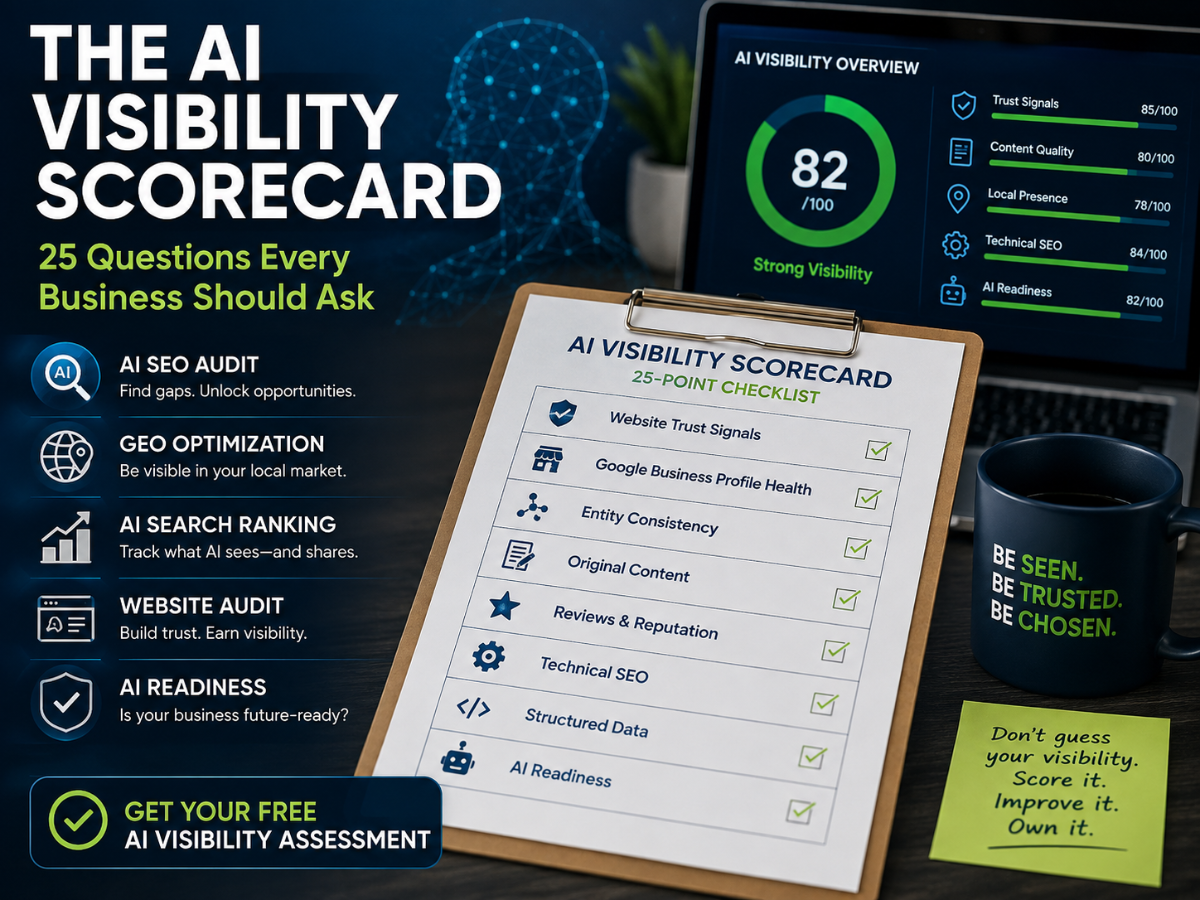
AI Competitor Visibility Gap analysis, and it looks at nine key areas:
- Entity clarity — How clearly AI understands who you are and what you do
- AI citations — Whether AI tools actually name and cite your business
- Review strength — Quantity, quality, recency, and content of your reviews
- Content depth — How well your content answers real customer questions
- Local authority — Your standing in local search and Google Maps
- Brand mentions — How often trusted sources reference your business
- Trust signals — Overall credibility markers across the web
- Structured data — Whether your site is formatted for AI to read easily
- Competitive visibility — How you stack up against direct competitors in AI results
Score each area for your business and for two or three top competitors. The gaps you find are your roadmap. If a competitor scores high on reviews and content while you score low, you know exactly where to focus first.
Here's a practical example. If three Reno businesses offer the same service, AI needs evidence to decide which one is most relevant, credible, experienced, and trustworthy for a specific customer's question. The business with the strongest evidence wins the recommendation, regardless of who actually does the best work.
Your 90-Day AI Visibility Improvement Plan
Closing an AI visibility gap doesn't happen with one blog post or one profile update. It takes consistent, strategic work. Here's a realistic 90-day plan.
Days 1–30: Build the Foundation
- Audit and correct your business information everywhere it appears online
- Fully optimize your Google Business Profile with accurate categories, services, and descriptions
- Fix inconsistent name, address, and phone number listings across directories
- Run the AI Competitor Visibility Gap™ analysis to establish your baseline
Days 31–60: Build Evidence and Content
- Create content that answers your customers' most common questions clearly
- Add service pages with real detail—process, pricing guidance, service areas
- Launch a review generation system to bring in fresh, detailed reviews
- Add structured data so AI tools can read your site more easily
Days 61–90: Build Authority and Validation
- Pursue mentions from local publications and credible third-party sources
- Publish evidence of real experience, case studies, project examples, results
- Re-run your AI visibility test across ChatGPT, Google AI Overviews, Perplexity, and Gemini
- Compare your new results to your baseline and double down on what's working
Ninety days won't make you the only recommendation in every AI tool. But it will close measurable gaps, strengthen your evidence, and make you a far stronger candidate for that short list of recommendations.
The Business That Gets Chosen Is the One With the Most Evidence
Your competitor showing up in AI search before you isn't a verdict on the quality of your work. It's a signal that they've given AI systems more reasons to trust and recommend them.
That's actually good news. Evidence can be built. Reviews can be earned. Content can be created. Listings can be corrected. The gap between you and your competitor is a problem you can solve if you approach it strategically and stay relentless about it.
The businesses that win in AI search over the next few years will be the ones that start closing these gaps now, while their competitors are still wondering what happened.
Want to know exactly where you stand? Request your
AI Competitor Visibility Gap Analysis and see precisely why competitors are showing up before you, and what it will take to catch them.
validation. Meaningful, lasting visibility comes from consistent effort over time, not a one-time fix.