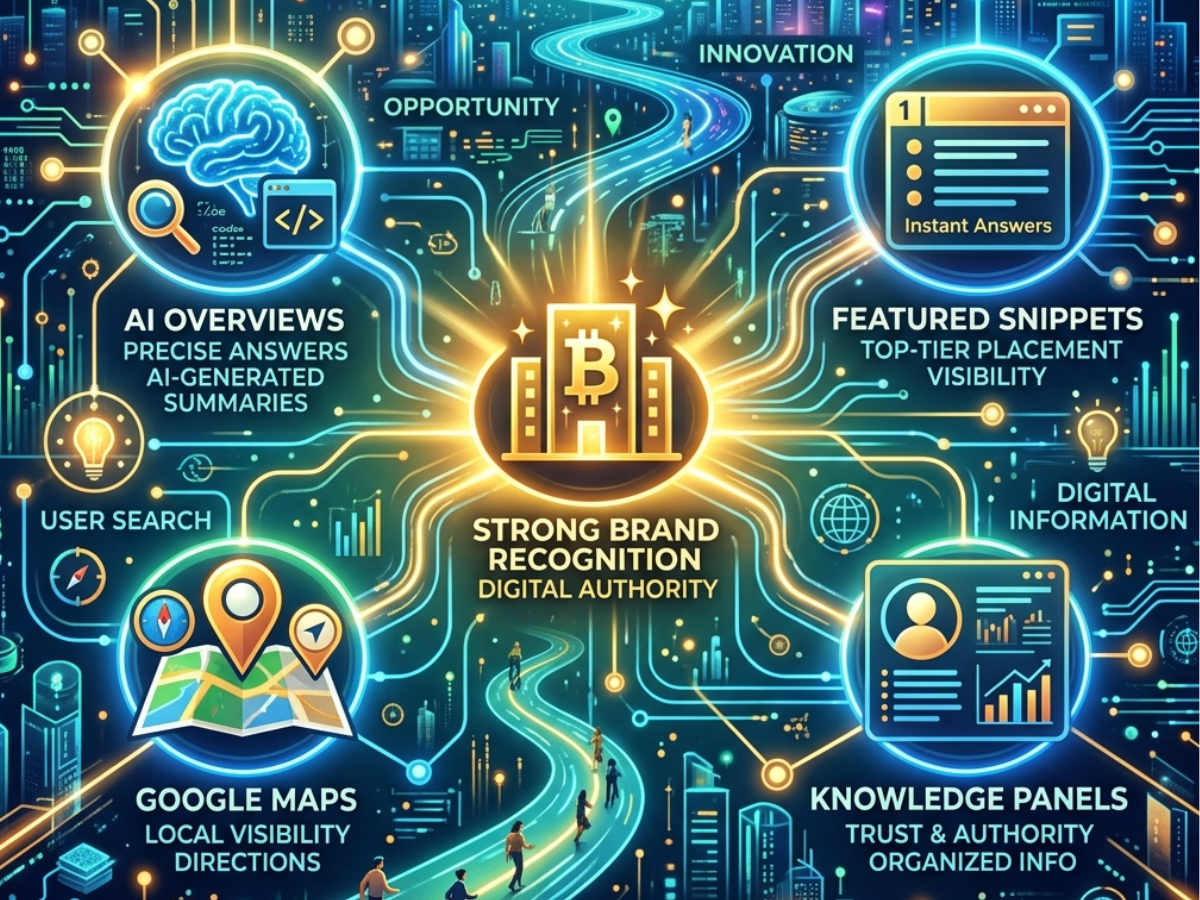
Quick answer: An AI citation gap happens when competitors have stronger, more accessible online evidence than you do: more reviews, more third-party mentions, clearer business listings, and more structured website content. AI tools like ChatGPT and Google AI Overviews don't recommend businesses because they're better. They recommend businesses they have more proof about. Closing the gap means building evidence, not just claims.
Here's something most business owners don't know: AI doesn't actually know your business. It knows what the internet says about your business. And if the internet says more, and says it more clearly, about your competitor, guess who gets recommended when a customer asks ChatGPT, "Who's the best plumber near me?"
This isn't a ranking algorithm quirk. It's a trust problem. AI systems build their answers from evidence: your website, your Google Business Profile, your reviews, what other websites say about you, and whether any of it is original enough to be worth citing. If that evidence is thin, inconsistent, or missing compared to your competitor's, AI has no choice. It recommends the business it can verify.
We call this the AI Citation Gap. And for most small businesses, it's wider than they think.
What Is an AI Citation Gap?
An AI citation gap is the difference between how much credible evidence exists online about you versus your competitor for the same service, in the same market.
It's not about who has the better business. It's about who has the better paper trail. If your competitor has 200 Google reviews, a listing on three industry directories, and a mention in a local news article, and you have 12 reviews and nothing else, AI has far more to work with on their side. It cites them. Not because it likes them more. Because it trusts what it can see.
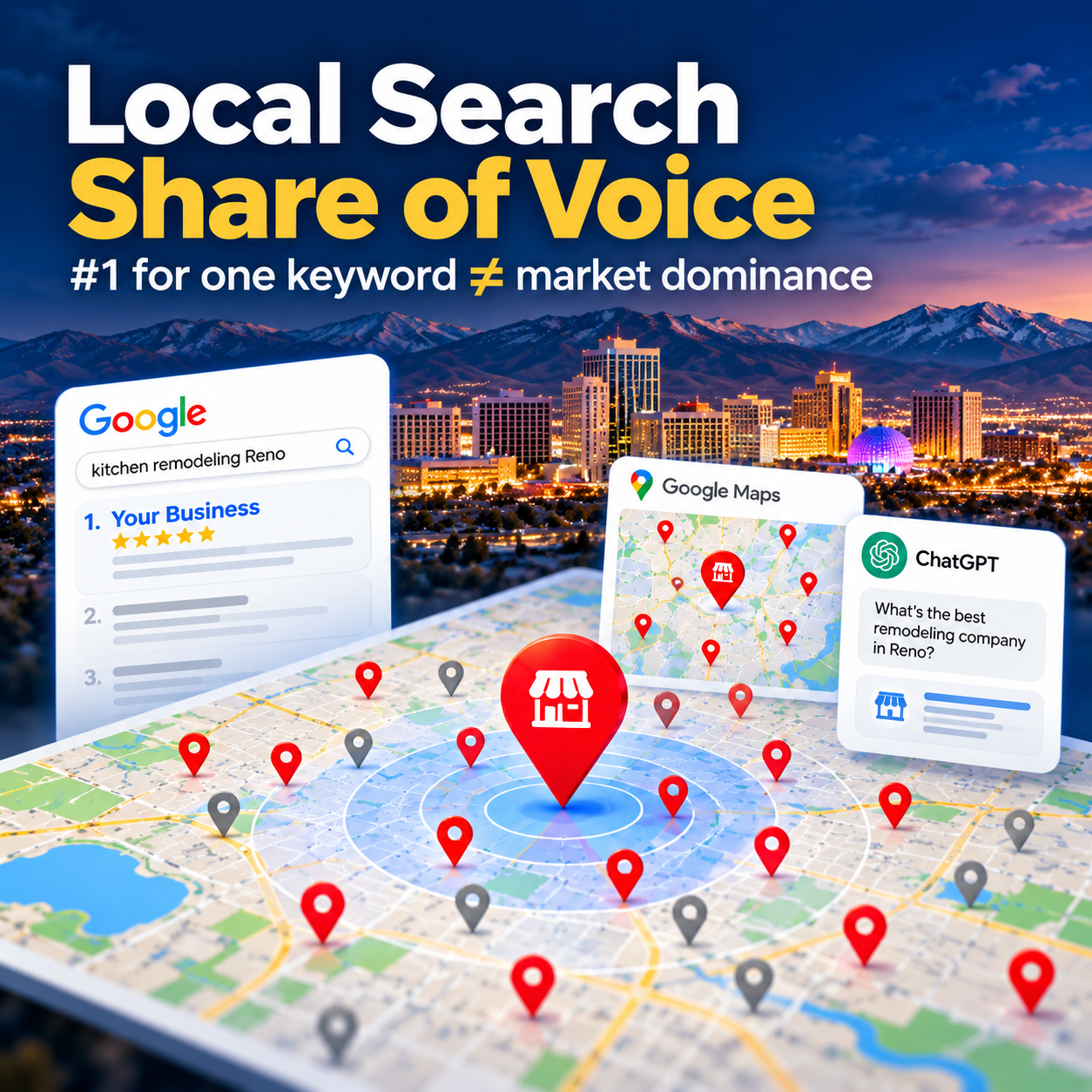
This matters more every month. Gartner predicts 25% of search will move to AI engines by 2026. And unlike a Google results page, AI search doesn't scroll. There's no page two. A customer asks a question, and the AI gives one to five recommendations. If you're not one of them, you're not in the conversation at all.
AI Needs Evidence Before It Can Build Confidence
Think about how AI actually builds an answer. When someone asks an AI assistant for a recommendation, the system doesn't consult a private database of "good businesses." It scans what's publicly available: websites, listings, reviews, articles, forum threads, and pieces together an answer based on patterns of agreement across multiple sources.
That means confidence is earned through corroboration. One glowing testimonial on your homepage carries far less weight than the same claim showing up independently on Google, Yelp, and a local directory. AI is essentially asking: can I verify this? Do multiple sources agree? Is there enough structure here for me to understand exactly what this business does and where?
If the answer is no, AI either skips you or hedges with vague, unhelpful language. If the answer is yes, you become part of the answer.
Mentioned vs. Understood vs. Trusted vs. Cited vs. Recommended
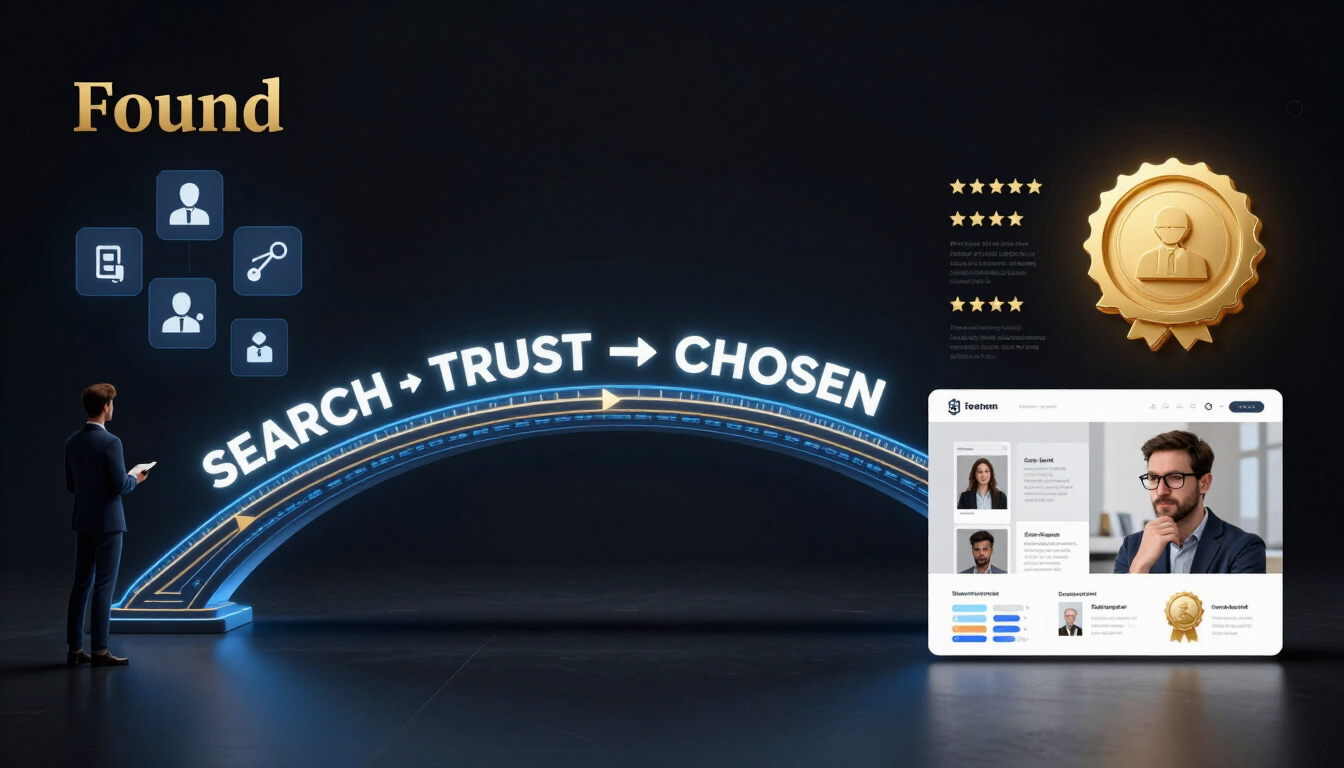
Closing an AI citation gap requires moving through five distinct stages. Most businesses assume they're further along than they are.
Stage 1: Mentioned. Your business name appears somewhere online: a directory listing, a social profile, a passing reference. This is the baseline. It's necessary, but it's nowhere near sufficient.
Stage 2: Understood. AI can accurately determine what you do, where you operate, and who you serve. This requires consistency: the same business name, category, address, and service description across your website and every listing. Inconsistent information doesn't just confuse customers; it confuses the systems trying to recommend you.
Stage 3: Trusted. Independent sources back up your claims. Reviews, third-party mentions, and credible citations confirm that what you say about your business is actually true. This is where most businesses stall, because trust can't be self-declared. It has to be demonstrated by others.
Stage 4: Cited. AI actively references your business in an answer. This is the payoff stage: the moment your name shows up in a ChatGPT response or an AI Overview.
Stage 5: Recommended. AI doesn't just mention you. It positions you as the best or most relevant option for the customer's specific need.
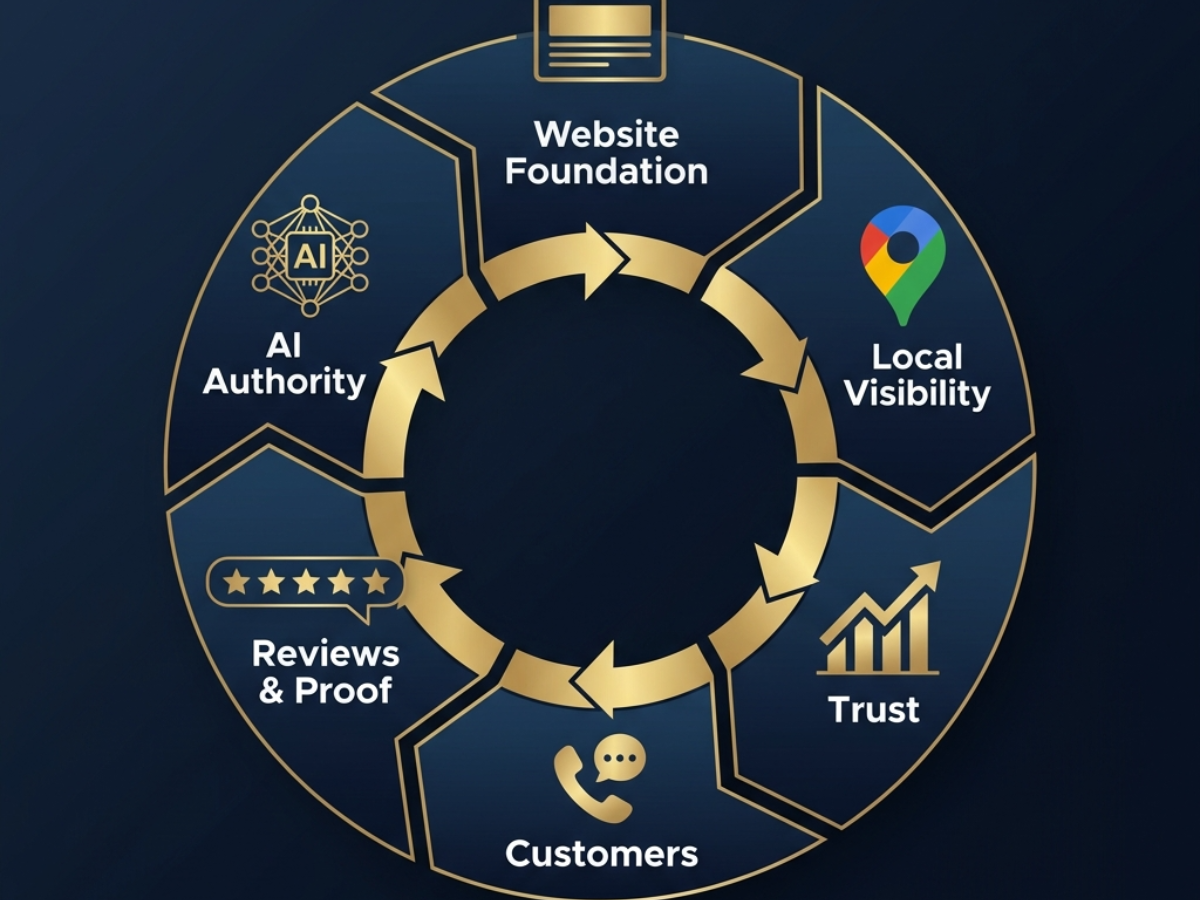
Most businesses are stuck between Mentioned and Understood. Getting to Cited and Recommended requires deliberately building evidence at each of the five sources AI actually pulls from.
Source #1: Your Own Website
Your website is where you have the most control, but it's also the weakest evidence source on its own. Why? Because research from the GEO paper accepted at KDD 2024, confirmed across multiple studies, shows that AI answer engines cite third-party sources far more often than brand websites. In fact, across major platforms, a business's own website accounts for only about 9% of the mentions that show up in AI-generated answers.
That doesn't mean your website doesn't matter. It means it can't be your only evidence source.
What it needs to do is give AI something clear and structured to work with: a consistent business name, explicit service descriptions, location details, and content that answers the specific questions customers are already asking AI. A page that says "we offer quality service" gives AI nothing to cite. A page that clearly states what you do, for whom, and where gives AI something it can quote with confidence.
Source #2: Business Listings and Entity Data
Business listings aren't digital phone books anymore. They're a primary data source AI search engines use to confirm who you are. Your Google Business Profile, Yelp listing, Bing Places profile, and industry-specific directories all feed into the picture AI builds of your business.
The problem is consistency. If your business name, phone number, category, or hours differ across platforms, AI reads that as ambiguity, and ambiguous entities get passed over in favor of businesses with a clean, matching footprint everywhere. This is entity clarity, and it's foundational. Before AI can trust you, it has to be certain it knows exactly who you are.
Source #3: Reviews and Customer Evidence
Reviews do double duty. They build trust with human customers and provide evidence for AI. Platforms like Reddit alone account for roughly 21% of AI citations across major platforms, largely because detailed, upvoted, specific feedback reads as credible, independent verification.
A handful of generic five-star reviews won't move the needle much. What helps is volume, specificity, and recency. Reviews that mention particular services, particular outcomes, and particular details give AI concrete, quotable evidence something closer to a case study than a compliment.
Source #4: Third-Party Mentions
This is the evidence source most businesses ignore entirely, and it's the one that matters most. Ahrefs' study of 75,000 brands found that brand mentions across the web correlate with AI citations at nearly three times the strength of backlinks. Being talked about on industry blogs, local news sites, comparison articles, forum threads, and roundup posts predicts AI visibility far better than traditional link-building ever did.
Remember that 91% figure: the vast majority of what AI cites comes from sources other than your own site. If your name never comes up anywhere else, you're relying on just 9% of the available evidence pool while your competitor is building across the other 91%.
Source #5: Original Research and Expert Content
The fifth source is the hardest to build, and the most powerful once it exists. Original data, first-party case studies, and genuinely useful expert content give AI something it can't get anywhere else: a unique, citable fact. Princeton's GEO research found that adding citations and statistics to content boosted AI visibility by up to 40%, and that even a business ranked fifth in search results saw a 115.1% increase in AI visibility simply by citing sources properly.
You don't need a research team to do this. A results page with real, specific numbers from your own work, a short case study with named outcomes, or a locally relevant data point no one else has published all qualify. These become reference points other sites and AI systems start pointing back to.
Why Repeating the Same Claim on Your Own Website Isn't Authority
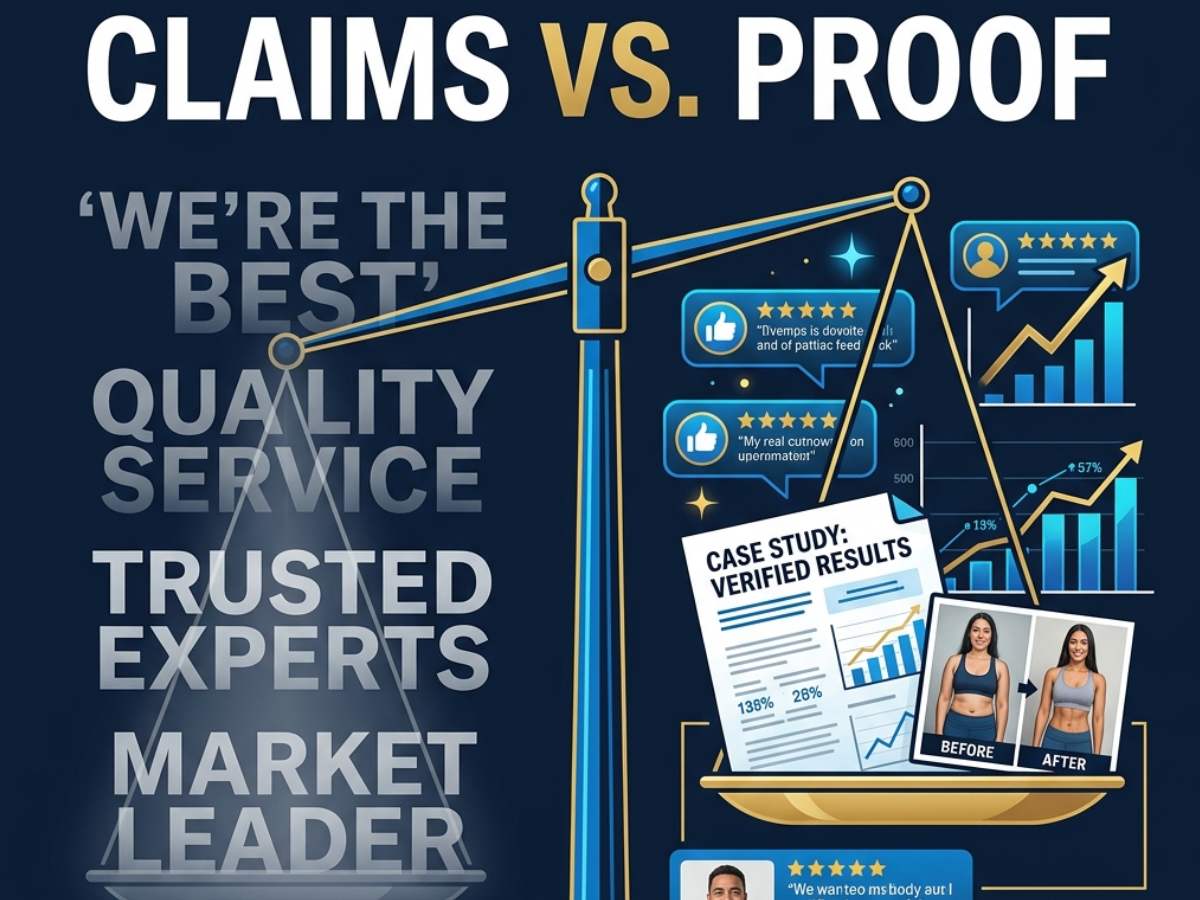
Here's the mistake that keeps the gap open longer than it needs to be: saying "we're the best" or "trusted by hundreds of customers" on your own homepage, over and over, in different words, across different pages.
AI doesn't treat repetition as proof. A claim made only by the business making it carries little evidentiary weight, no matter how many times it's repeated. This is the same logic behind E-E-A-T (Experience, Expertise, Authoritativeness, Trustworthiness), which search engines have used for years. Authority has to come from somewhere other than you. A claim backed by a third-party review, a press mention, or a data point an industry site chose to cite is worth more than a dozen self-published superlatives.
If your current content strategy leans heavily on self-praise, that's likely one of the biggest contributors to your citation gap.
How to Perform an AI Citation Gap Analysis
You can get a real sense of where you stand in about twenty minutes. Open ChatGPT, Google AI Mode, or Perplexity and run these queries, substituting your actual business details:
- Your business name directly: does AI know who you are and what you do?
- Your category and location: "best [your service] in [your city]"
- A problem-based query a customer would use: "who can fix [specific problem] near [your city]"
- A recommendation query: "who should I hire for [your service]"
- A comparison query: "[your business] vs [competitor]"
Note whether you're mentioned at all, whether the information is accurate, whether you're cited alongside sources, and critically who shows up instead of you. That competitor is your benchmark.
The gap between what AI says about them and what it says about you is the gap you need to close.
How to Build Citation-Worthy Content
Closing the gap comes down to giving AI more to work with, in a form it can actually use.
Structure your most important pages around the direct answer first: state the fact or conclusion plainly in the first sentence, then explain it. Use clear headings that mirror how customers actually ask questions. Keep your business name, category, and location identical everywhere they appear online. Add FAQ sections that answer the specific questions customers ask AI tools, not just the ones you'd put in a brochure. Pursue mentions outside your own site: guest content, local press, industry roundups, and directory listings all count as evidence. And refresh your highest-value pages regularly, since AI systems favor content that's been updated recently over content that's been sitting untouched for years.
None of this replaces the fundamentals of local search; it builds directly on top of them.
The 90-Day AI Authority Plan
Days 1–30: Establish entity clarity. Audit your business name, category, address, and phone number across your website, Google Business Profile, and every listing you can find. Fix every inconsistency. This is the foundation everything else sits on.
Days 31–60: Build trust signals. Launch a consistent review request process. Add FAQ content to your top service pages, written in the plain language customers actually use when they ask AI for help. Start pitching one local publication or industry site for a mention.
Days 61–90: Earn citations. Publish one piece of original content with real numbers—a case study, a local data point, a results summary. Pursue two to three third-party mentions. Re-run your AI Citation Gap Analysis queries and compare the results to where you started.
This isn't a one-time fix. It's the same principle behind everything else in local search: find the opportunity, build the strategy, execute, measure, and do it again.
Does AI Have More Evidence About Your Competitors Than You?
If the web contains more credible evidence about your competitor than it contains about you, AI has more reason to recommend them. That's not a permanent condition it's a gap you can measure and close.
We build the entity clarity, review strategy, and third-party authority that turns AI from a tool working against you into one working for you. Request an
AI Visibility & Citation Gap Analysis and find out exactly where you stand against the competitors AI is currently recommending instead of you.