Quick answer: The search-to-trust gap is the distance between a customer finding your business online and feeling confident enough to contact or buy from you. Businesses close this gap with strong reviews, clear messaging, real proof of experience, accurate information, professional websites, and visible trust signals.
You ranked number one. The traffic is coming in. So why is the phone still quiet?
Here's the hard truth most SEO agencies won't tell you: getting found and getting hired are two very different things. A customer can land on your listing, glance at your website, and move on to a competitor in seconds, not because that competitor is better, but because they looked more trustworthy in the moment that mattered.
That distance between visibility and trust is where deals quietly die. We call it the Search-to-Trust Gap. This article breaks down why customers choose competitors even when you're easy to find, the specific trust signals that make or break the decision, and how to audit your own gap before it costs you another customer.
The Mistake Most Businesses Make About Rankings
Most business owners treat rankings like a finish line. Get to the top of Google, and the customers follow. Simple.
Except it isn't.
Ranking earns you a look. That's it. It puts your name on the shelf next to your competitors. What happens next, whether the customer picks you or the business two listings down, has almost nothing to do with your ranking and almost everything to do with trust.
Clicks are nice. Customers are better. If you're paying for visibility but not converting that visibility into calls, appointments, and paying customers, the problem usually isn't your ranking. It's the gap between being seen and being trusted.
What Is the Search-to-Trust Gap?
The Search-to-Trust Gap is the moment of hesitation between a customer finding you and deciding to reach out.
Think about how people actually search. When someone searches for a contractor in Reno, an attorney in Sacramento, or a flooring company in Dallas, the search result is only the beginning of the decision. They don't stop at the first name they see. They start comparing. They open three or four tabs, scan reviews, glance at websites, and look for reasons to trust one business over the others.
Every one of those seconds is a test. Do you look established? Do you look credible? Do you look like the safe choice?
If the answer is unclear, the customer moves on, and you never even know they were there.
The Moment Your Customer Starts Comparing You
Picture a homeowner who needs a plumber fast. They search, and three businesses appear in the Google Maps Map Pack. All three rank well. All three are technically "found."
Now the real decision begins.
One has 240 reviews averaging 4.9 stars. One has 11 reviews and a photo of an empty parking lot. One has no photos at all and a website that looks like it hasn't been touched since 2015.
Which one gets the call?
The customer isn't running a background check. They're making a fast, gut-level judgment based on the signals in front of them. Getting found earns you consideration. Building trust earns you the customer. And in the few seconds it takes to compare, trust wins every time.
Trust Breaker #1: Weak or Outdated Reviews
Reviews are the single loudest trust signal in local search. A business with a handful of old reviews looks risky next to a competitor with dozens of recent, detailed ones, even if the two do identical work.
Customers read reviews to answer one question: "Will this business do right by me?" Thin or stale reviews leave that question unanswered, and an unanswered question is a reason to look elsewhere.
Trust Breaker #2: A Website That Doesn't Match Your Reputation
You can be the best in your market and still lose the customer at your website.
A slow, cluttered, or dated site sends a message you never intended: "This business may not be as sharp as it claims." When your online presence doesn't match the quality of your work, customers believe the website, not the work they haven't seen yet.
Your website is often the first real conversation a customer has with your business. Make it match who you actually are.
Trust Breaker #3: No Evidence of Real Experience
Anyone can say they're experienced. Proof is what closes the gap.
If your online presence shows no completed projects, no photos of real work, no case studies, and no evidence you've done this before, customers have nothing to lean on. They're left guessing, and guessing makes people cautious. A competitor who shows their work gives customers something yours can't: confidence.
Trust Breaker #4: Confusing or Inconsistent Business Information
Here's a quiet killer. Your phone number is one thing on Google, another on your website, and something else on a directory listing. Your hours don't match. Your business name appears three different ways.
To a customer, inconsistency reads as carelessness. To Google and AI search tools, it reads as unreliability, which can hurt your rankings and your recommendations. Accurate, consistent information across every platform isn't a technicality. It's a trust signal.
Trust Breaker #5: Generic Marketing Claims
"Quality service. Competitive prices. Customer satisfaction guaranteed."
Every competitor says the exact same thing. Which means it says nothing.
Generic claims don't build trust because they don't differentiate. When your messaging could belong to any business in your industry, customers have no reason to believe it belongs to the best one.
Trust Builder #1: Specific Customer Outcomes
Vague promises lose. Specific results win.
Instead of "we deliver great work," show what great work looks like: the project you finished two days early, the emergency you handled on a Sunday, the customer who called you back for three more jobs. Specifics feel real because they are. And real is what earns trust.
Trust Builder #2: Real Photos and Real People
Stock photos fool no one. Customers can spot a generic handshake image from a mile away.
Real photos of your team, your work, your trucks, and your finished projects do something stock images never can: they prove you exist and that you deliver. Put a face to the business. People hire people, not logos.
Trust Builder #3: Transparent Processes
Uncertainty is friction. When customers don't know what happens after they call, they hesitate.
Spell it out. Explain how you work, what the first step looks like, what to expect, and how you handle problems. Transparency lowers the perceived risk of choosing you, and lower risk means more calls.
Trust Builder #4: Clear Expertise
Show customers you know your craft. Answer the questions they're already asking. Explain the things competitors leave vague.
When your content demonstrates genuine expertise, customers stop wondering whether you're qualified and start assuming you are. That assumption is worth more than any slogan.
Trust Builder #5: Consistent Third-Party Validation
Your word matters. Other people's words matter more.
Reviews, ratings, industry recognition, accreditations, and mentions in credible sources all tell customers the same thing: "Other people trusted this business, and it worked out." Third-party validation carries weight precisely because it doesn't come from you.
How to Audit Your Own Search-to-Trust Gap
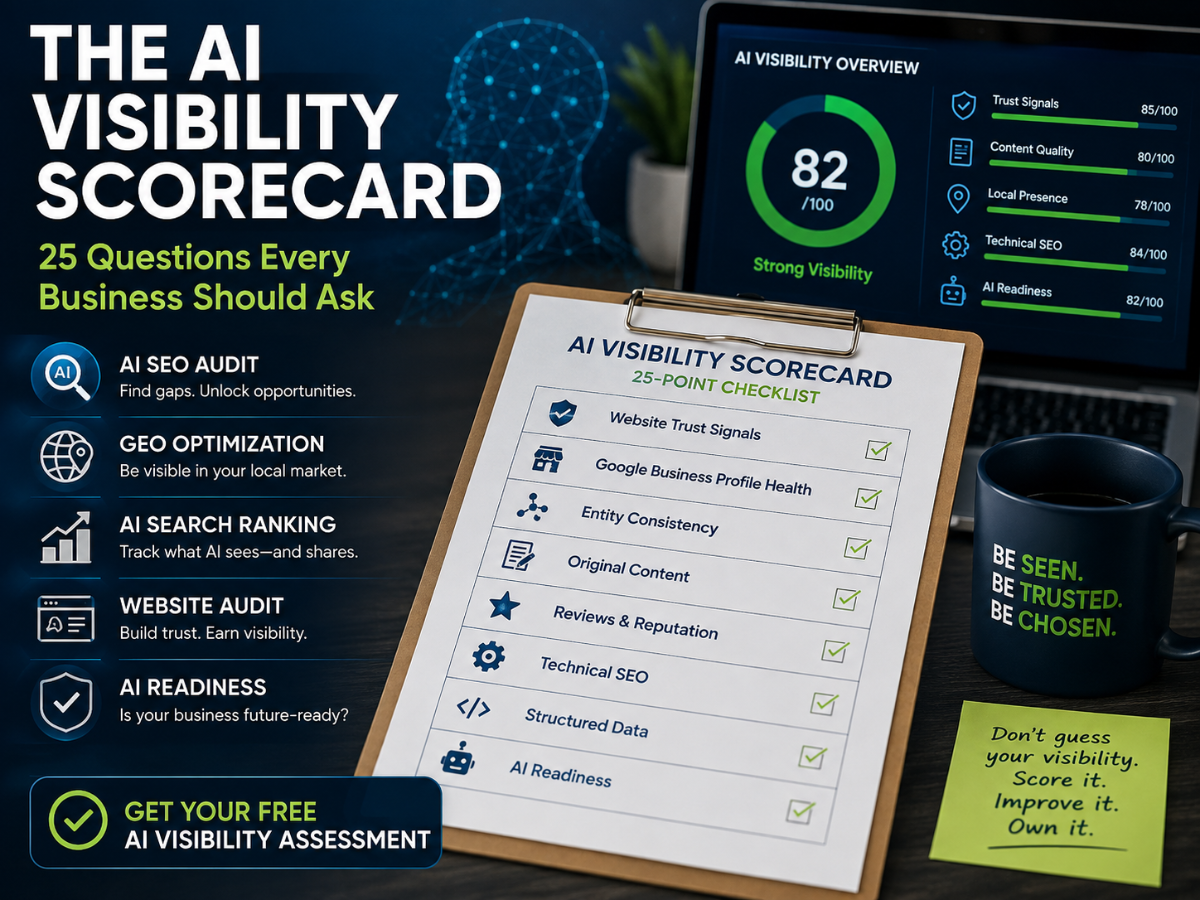
Want to see your gap the way a customer does? Run through this Trust Evidence Checklist. For each item, ask yourself: is this clearly visible to someone comparing me to a competitor right now?
- Named expert: Is there a real person, with a name and a face, behind your business?
- Years of experience: Is your track record clearly stated and easy to find?
- Customer reviews: Do you have recent, detailed reviews in strong numbers?
- Case studies: Do you show real examples of completed work and results?
- Original photos: Are you using genuine images of your team and projects, not stock?
- Clear contact information: Is your phone number, address, and hours accurate and consistent everywhere?
- Transparent services: Is it obvious what you do, how you do it, and what customers can expect?
- Industry mentions: Are you recognized, accredited, or cited by credible third parties?
Every box you can't check is a crack in your trust, and a reason for a customer to choose someone else.
From Visibility to Revenue: The Relentless Business Mastery Approach
At
Relentless Business Mastery, we don't stop at rankings. Rankings are the starting line, not the goal.
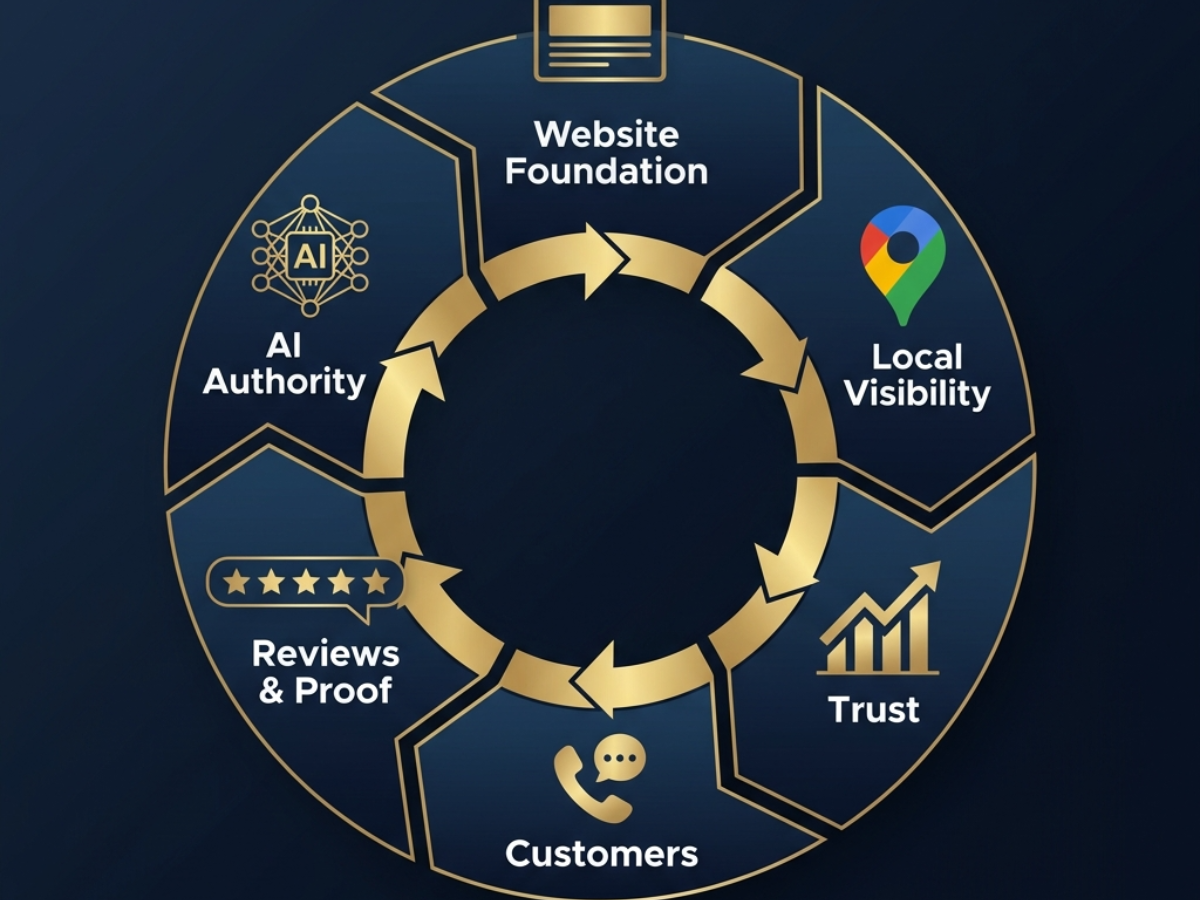
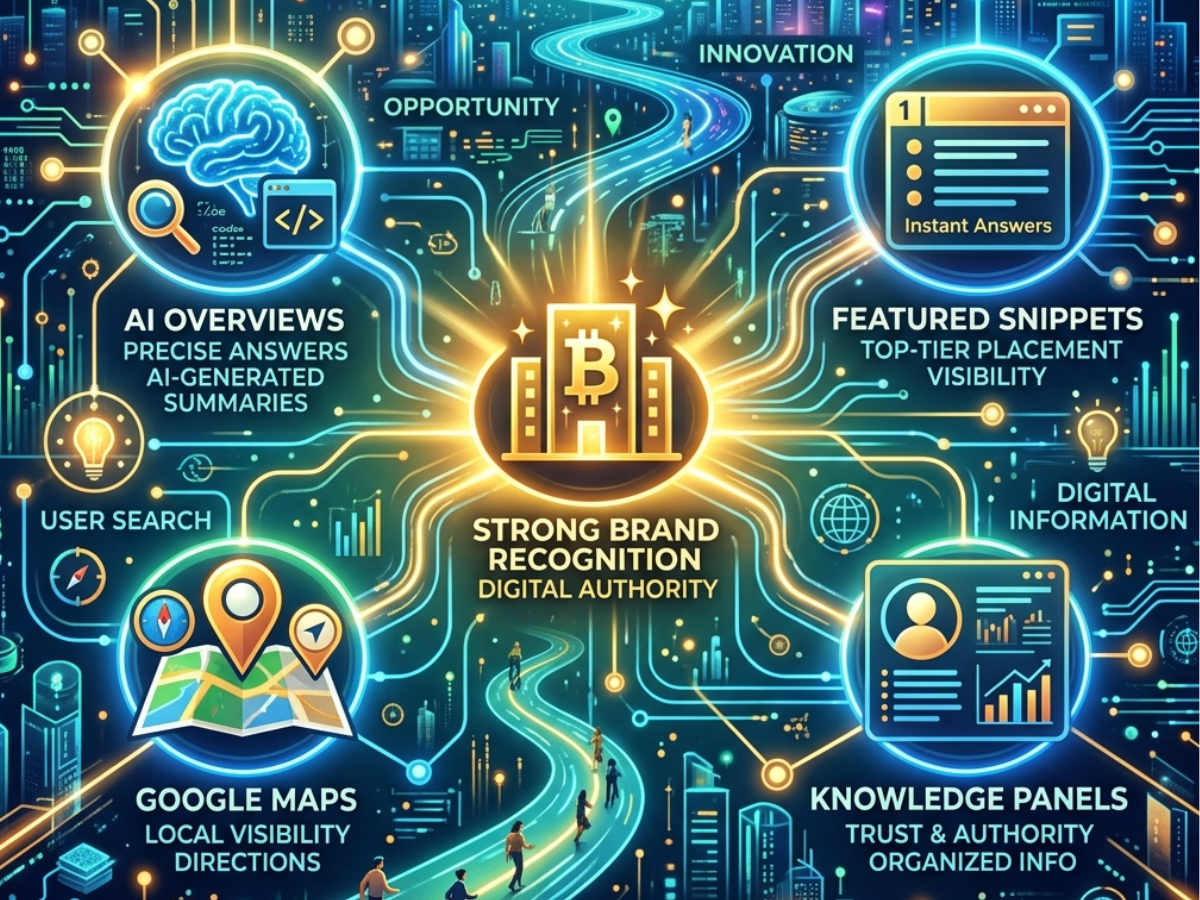
We focus on the entire journey, from the moment a customer searches to the moment they become a paying client. That means building the visibility that gets you found, and closing the trust signals that get you chosen. Strong reviews. A website that converts. Accurate business listings across every platform. Content that proves your experience. Visibility in Google Maps and in AI-driven search.
The result is what matters to a business owner: more qualified leads, more phone calls, more booked appointments, and more customers. Not vanity metrics. Real business.
If you want to see where your business stands, we can help you find the trust signals your competitors may already have, and you don't.
Are customers finding you but choosing someone else?
Request a free
Marketing Gap Evaluation, and let's identify exactly where your business is losing customers and how to win them back.