Why Most Local SEO Campaigns Fail (And How to Fix Yours)
Quick Answer: Most local SEO campaigns fail not because of bad luck, but because of predictable, fixable mistakes, inconsistent business information, ignored reviews, weak location pages, duplicate Google profiles, thin content, poor internal linking, low local authority, and no long-term strategy. Fixing these issues systematically can restore and significantly improve local search rankings.
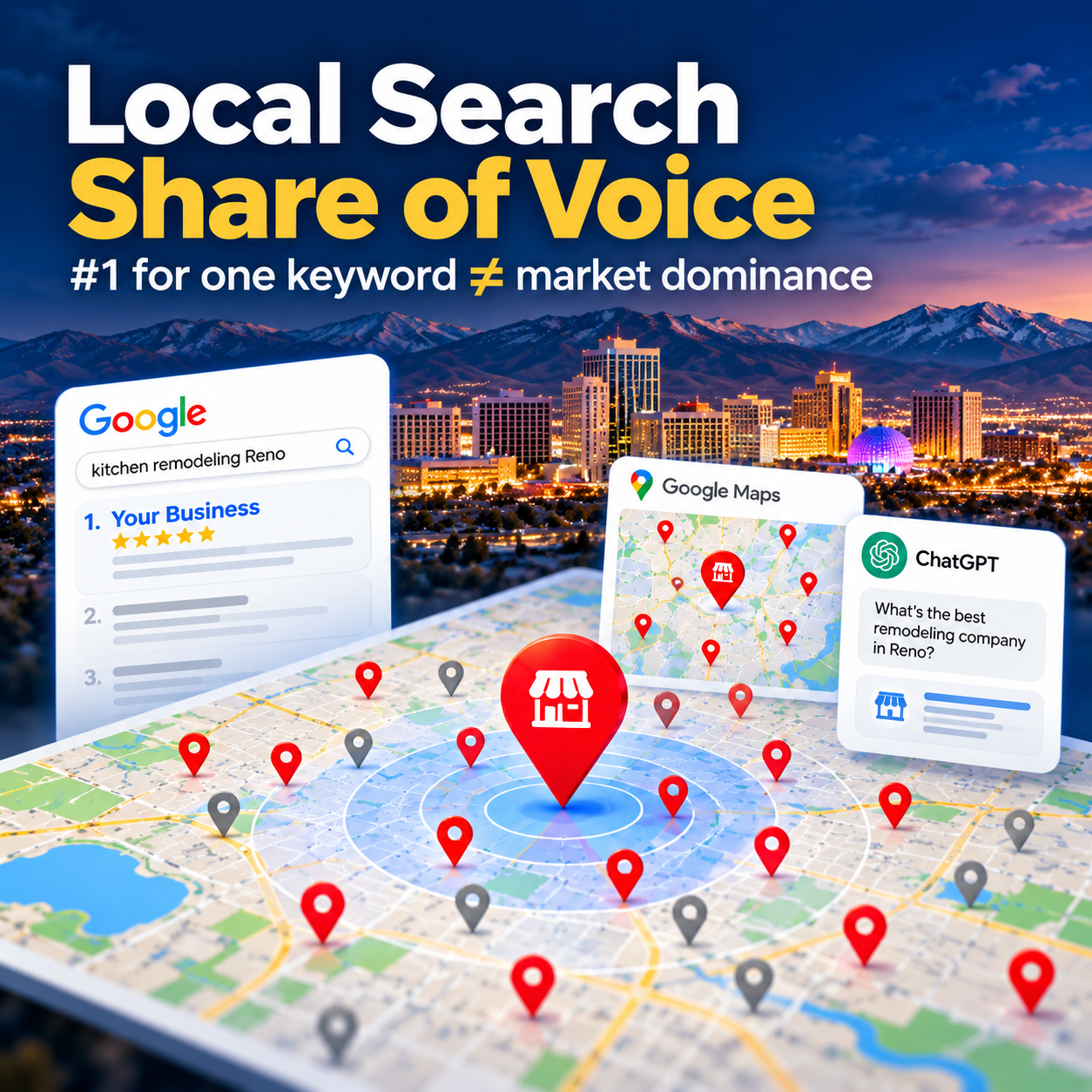
Local search is one of the most valuable sources of new customers a small business can tap. Someone nearby is already searching for what you sell. They need help today. They have their phone in hand. The only question is whether they find you or they find your competitor.
Most business owners understand this. So why do so many local SEO campaigns fall flat?
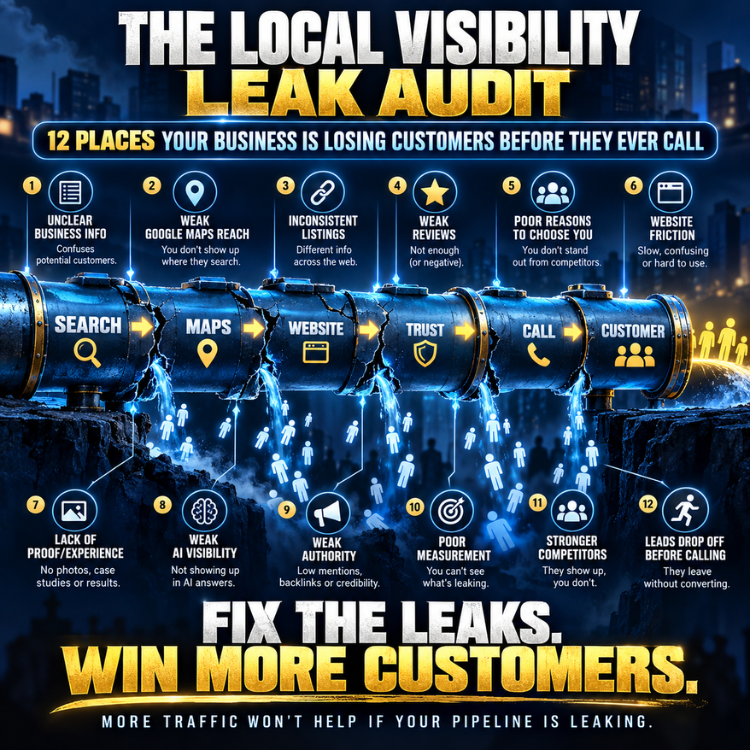
The answer is rarely a lack of effort. It is almost always a collection of specific, avoidable mistakes that quietly drain visibility month after month. Mistakes that get overlooked. Mistakes that compound. And mistakes that send high-intent customers straight to competitors who got the basics right.
This guide breaks down the eight most common local SEO mistakes, explains exactly why each one hurts your rankings, and shows you how to correct them. If your local search performance has stalled, or disappeared entirely, the problem is almost certainly somewhere on this list.
Why Is Local SEO So Hard to Get Right?
Local SEO involves more moving parts than most people realize. Google evaluates hundreds of signals to decide which businesses appear in Maps results and local search listings. Get several of those signals wrong, and your business becomes nearly invisible, regardless of how good your product or service actually is.
The good news? Most of the common failure points are correctable. Businesses that identify and fix these mistakes systematically almost always see meaningful improvements in visibility and lead quality.
Here is where most local SEO campaigns go wrong.
Mistake #1: Inconsistent Business Information Across the Web
Google cross-references your business name, address, and phone number, commonly called NAP, across dozens of online directories, review platforms, and data aggregators. When that information is inconsistent, Google loses confidence in which version is accurate.
Less confidence means lower rankings.
A business that lists itself as "Reno HVAC Experts" on its website, "Reno HVAC Experts LLC" on Yelp, and "RHVAC Experts" on a local directory is sending mixed signals. Google treats each variation as a potential data conflict.
How to fix it: Conduct a full citation audit across major platforms: Google Business Profile, Yelp, Bing Places, Apple Maps, and industry-specific directories. Standardize your NAP information everywhere it appears. Use a consistent format and maintain it over time, especially after address changes or rebranding.
Mistake #2: Ignoring Customer Reviews (And Review Signals)
Reviews are not just social proof. They are a local ranking factor. Google weighs review quantity, review velocity (how frequently new reviews come in), review sentiment, and how often a business responds to reviews.
A business with 12 reviews collected three years ago and no response to any of them sends a clear signal: this business is not actively engaged. Competitors with consistent new reviews and prompt responses will rank higher and convert better once customers find them.
One Reno-area service business, a home services company, went from fewer than 20 reviews to over 80 within six months by implementing a simple post-job review request process. Their Maps ranking moved from outside the top 10 to a consistent top-three position for their primary service keywords.
How to fix it: Build review generation into your standard customer workflow. Ask for reviews at the right moment, after a successful service, after project completion, or following a positive interaction. Respond to every review, positive or negative. Aim for a steady stream of new reviews rather than a single burst of activity.
Mistake #3: Weak or Generic Location Pages
Many businesses rely on a single "Contact Us" page with an address listed in the footer. That is not a location page, and it is not enough to rank for location-specific searches.
Google wants to see evidence that your business is genuinely relevant to a specific geographic area. That evidence lives on your location pages. A thin location page with a business name, address, and a phone number carries almost no ranking weight.
How to fix it: Build dedicated location pages for each area you serve. Each page should include locally relevant content, references to nearby landmarks, neighborhoods, or service contexts.
Include customer testimonials from local clients, embedded maps, and clear descriptions of the services offered in that location. The page should be detailed enough to be genuinely useful to someone in that area.
Mistake #4: Duplicate Google Business Profiles
Duplicate Google Business Profiles are more common than most business owners expect. They can arise from old listings that were never claimed, automatic listings generated by Google, or profile duplications created by former employees or agencies.
A duplicate profile splits your ranking signals. Reviews, citations, and engagement that should concentrate on one authoritative listing get distributed across multiple entries—weakening all of them.
How to fix it: Search Google Maps for your business name and review every result. If duplicates exist, claim the correct profile and request removal of the duplicates through Google Business Profile support. Once the correct profile is the only active listing, your accumulated signals begin working together rather than against each other.
Mistake #5: Thin Content That Ignores Local Search Intent
Local search queries are often highly specific: "emergency plumber Reno NV," "best pediatric dentist near me," "commercial cleaning service Reno." If your website content does not address these specific queries, you are invisible for the searches that matter most.
Thin content- generic service descriptions without local relevance, keyword density, or informational depth- fails to satisfy both search engines and the people doing the searching.
How to fix it: Map your content to real local search queries. Research the specific terms your target customers use. Create service pages and blog content that directly addresses those queries with locally relevant, specific, and useful information. Avoid filler content that inflates word counts without adding substance. Every page should answer a real question a local customer might ask.
Mistake #6: Poor Internal Linking Structure
Internal links tell search engines which pages on your website are most important. They also pass authority from high-performing pages to pages that need a rankings boost.
Many local business websites have weak internal linking. Service pages are buried under multiple clicks. Location pages are not linked from the homepage. Blog content never connects back to conversion pages.
The result is a website where valuable pages are starved of ranking power they could otherwise receive.
How to fix it: Audit your internal link structure and identify your most important pages, service pages, location pages, and conversion-focused content. Link these pages prominently from your homepage and other relevant content. Use descriptive anchor text that tells both users and search engines what the linked page is about.
Mistake #7: Lack of Local Authority and Backlinks
Domain authority matters in local SEO, but local authority is a more specific concept. It refers to how many credible, locally relevant websites link back to your business.
Links from local news outlets, regional business associations, neighborhood directories, community organizations, and industry-specific publications signal to Google that your business is a legitimate, trusted part of the local ecosystem.
A business with no local backlinks competes at a significant disadvantage against businesses that have earned coverage and links from their local community.
How to fix it: Pursue local link-building opportunities intentionally. Sponsor local events. Get listed in local business directories and Chamber of Commerce websites. Build relationships with complementary local businesses that might naturally reference or link to your site. Reach out to local media when you have a genuine news angle. Each local link strengthens the authority signal Google uses to evaluate your business.
Mistake #8: No Long-Term Local SEO Strategy
This is the most common and most costly mistake of all. Many businesses treat local SEO as a one-time project: claim the Google Business Profile, add some keywords, wait for results. When results plateau or disappear, there is no system in place to diagnose and adapt.
Local SEO is not a switch you flip. It is a competitive, ongoing process. Competitors are actively optimizing. Google regularly updates how it evaluates local rankings. AI-powered search tools, including Google AI Overviews, ChatGPT, and Gemini, are adding new layers of visibility that require additional strategy.
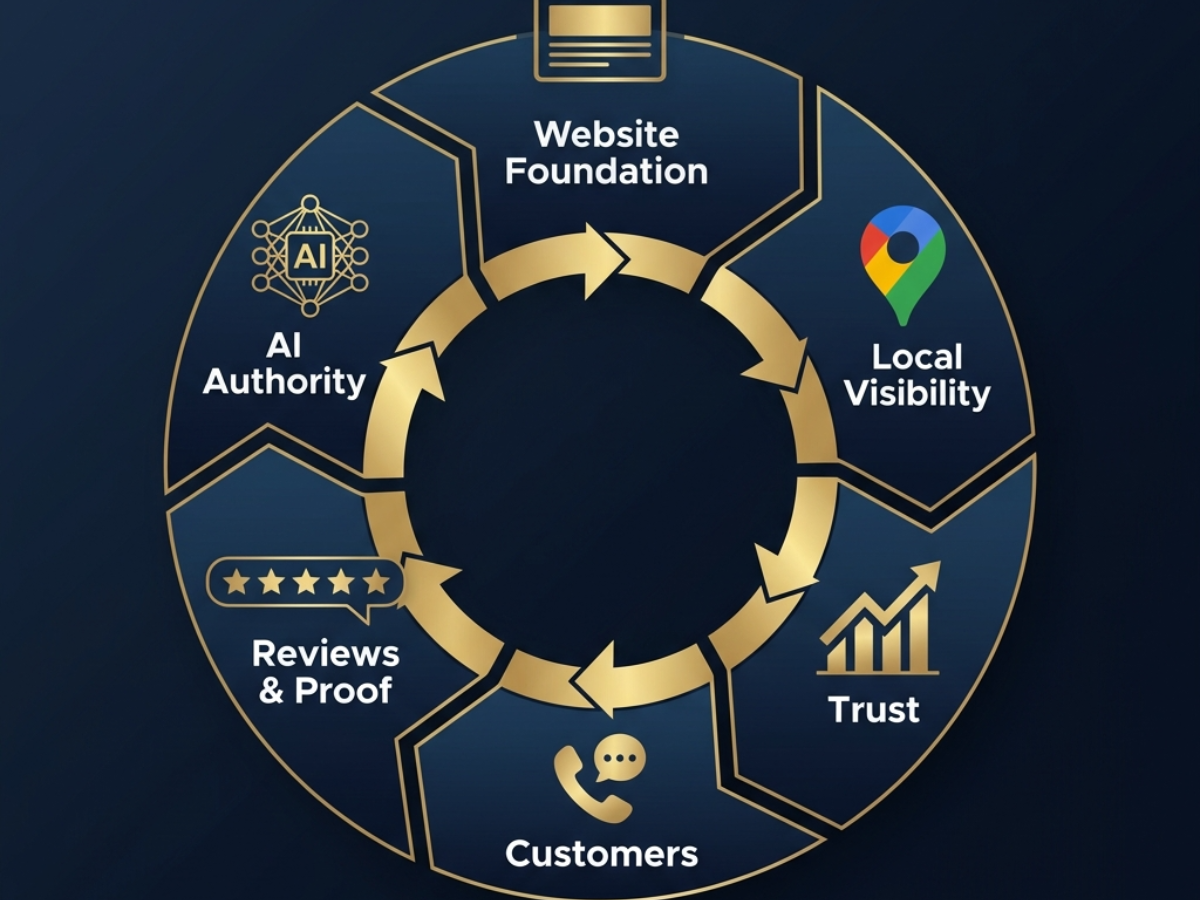
Businesses that win in local search over the long term are the ones treating it as a continuous investment rather than a one-time setup task.
How to fix it: Build a quarterly local SEO review process. Track rankings for your primary keywords. Monitor your Google Business Profile performance, views, calls, and direction requests. Audit your citations, reviews, and content at regular intervals. Update your strategy when conditions change. Most importantly, connect every activity to actual business outcomes: qualified leads, phone calls, booked appointments.
How Long Does Local SEO Take to Produce Results?
Realistic timelines matter here. Businesses that go in expecting results in two weeks will be disappointed and may abandon a strategy that was just beginning to work.
For businesses correcting major foundational mistakes (inconsistent NAP, duplicate listings, thin content), meaningful improvements in local rankings often appear within 60 to 90 days of corrections being made. Competitive markets may take longer.
One anonymized case from a Reno-area service business: after resolving duplicate profiles, standardizing citations, and building out location pages, they saw their Google Maps calls increase by more than 80% within 90 days, and the quality of those calls improved significantly.
Their own words describe it well: "Instead of 80% junk leads, roughly 80% of the calls were qualified. That changes everything for a business owner."
Sustained growth compounds over time. A business that commits to local SEO consistently over 12 to 18 months builds a competitive position that becomes harder for competitors to close.
Your Local SEO Campaign Is Either Building Visibility or Losing Ground
There is no standing still in local search. Competitors are actively working to rank above you. Search behavior is evolving. AI-powered tools are changing how customers discover businesses.
The businesses that show up consistently in Maps results, organic search, and AI-generated answers aren't the ones that got lucky. They are the ones that fixed foundational mistakes, built strategic authority over time, and refused to accept mediocre results.
If your local SEO campaign is underperforming, the fix starts with understanding exactly where the gaps are.
Request a free Local SEO Gap Analysis from Relentless Business Mastery. We will review your current local search presence, identify the specific mistakes costing you customers, and show you a clear path to stronger visibility, better leads, and measurable business growth.
Get Your Free Local SEO Gap Analysis
Frequently Asked Questions About Local SEO Mistakes and Strategy
Why did my local search rankings suddenly disappear?
A sudden drop in local search rankings is typically caused by one of several issues: a Google Business Profile suspension or penalty, a significant increase in competitor activity, a Google algorithm update affecting local results, the appearance of duplicate listings, or a major change to your website (such as a redesign) that disrupted existing SEO signals. Conduct an immediate audit of your Google Business Profile status, check for duplicate listings, and review any recent website changes.
How long does local SEO take to show measurable results?
Most businesses begin seeing meaningful movement in local rankings within 60 to 90 days of correcting foundational mistakes. Competitive markets may require 4 to 6 months before significant ranking improvements are visible. Long-term authority building, including consistent reviews and quality local backlinks, compounds over 12 to 18 months into a durable competitive advantage.
Can a small business do local SEO without professional help?
A business owner can handle some foundational elements, claiming a Google Business Profile, maintaining consistent NAP information, and actively requesting reviews. However, the more technical and strategic elements- citation audits, content optimization for local search intent, link building, and adapting to AI search changes- typically require specialized expertise to execute effectively. Mistakes at the technical level can cost months of ranking potential.
How much content does a local business website actually need?
A local business website needs enough content to clearly signal relevance for every service offered in every area served. At minimum, this means dedicated pages for each primary service and each geographic area. Most competitive local markets require ongoing blog content that addresses local search queries, supports internal linking, and demonstrates expertise. Quality and local relevance matter far more than volume.
What is the difference between local SEO and Google Maps SEO?
Local SEO refers broadly to optimizing your entire online presence, website, citations, reviews, and authority, for local search results. Google Maps SEO is a subset of local SEO specifically focused on improving your ranking within Google's Map Pack, which are the top three businesses displayed in the map section of a local search result. Google Maps SEO is driven by proximity, prominence (reviews, links, citations), and relevance signals from your Google Business Profile and website.
Will AI search tools like ChatGPT affect my local SEO results?
Yes. Customers increasingly use AI-powered tools, including ChatGPT, Google AI Overviews, and Gemini, to find business recommendations. These tools pull information from across the web and make recommendations based on trust, authority, and the clarity of your business information. Businesses that invest in Generative Engine Optimization (GEO) alongside traditional local SEO are positioning themselves to capture visibility in both search environments as AI-driven discovery continues to grow.
Have any more questions?
Recent Posts